
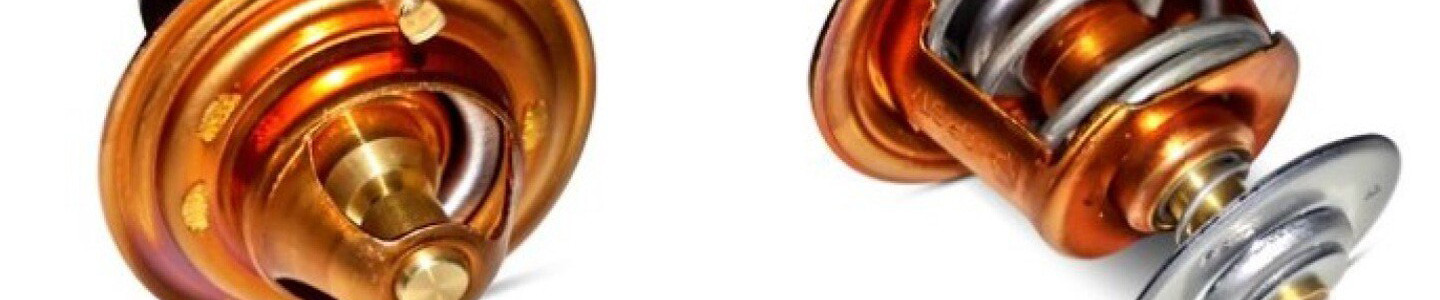
The Short Version: Thermostats are very simple in their operation but play a crucial role in maintaining the health of your engine. They control the flow of coolant and ensure that it not only reaches operating temperature as soon as possible, but also that it stays there as well. We dig into exactly how they function, as well as when and why it’s wise to replace them.
When you consider that temperatures within an engine’s combustion chambers reach over 2,000 degrees Fahrenheit, it’s a marvel how effective engine cooling systems are at removing that heat and keeping things around a more mild 200 degrees.
A typical cooling system includes a water pump that circulates liquid coolant within the engine block, picks up combustion heat, and sends it to a radiator that disperses that heat into the outside air. A thermostat, mounted in a housing on the engine’s block, serves as a switching station for directing coolant around the engine and radiator.
Vehicle manufacturers don’t always specify a mileage or date interval for thermostat replacement like they do for an air filter or timing belt, because thermostats aren’t typically considered routine maintenance items – usually they’re replaced if and when they fail. Rather than waiting for that to happen, here’s how you’ll know when it’s a good time for replacement.
Signs That A Thermostat Is Malfunctioning
Nothing lasts forever, and neither do thermostats. When they malfunction, they most often either get stuck open or closed.
Symptoms Of A Thermostat Stuck Open
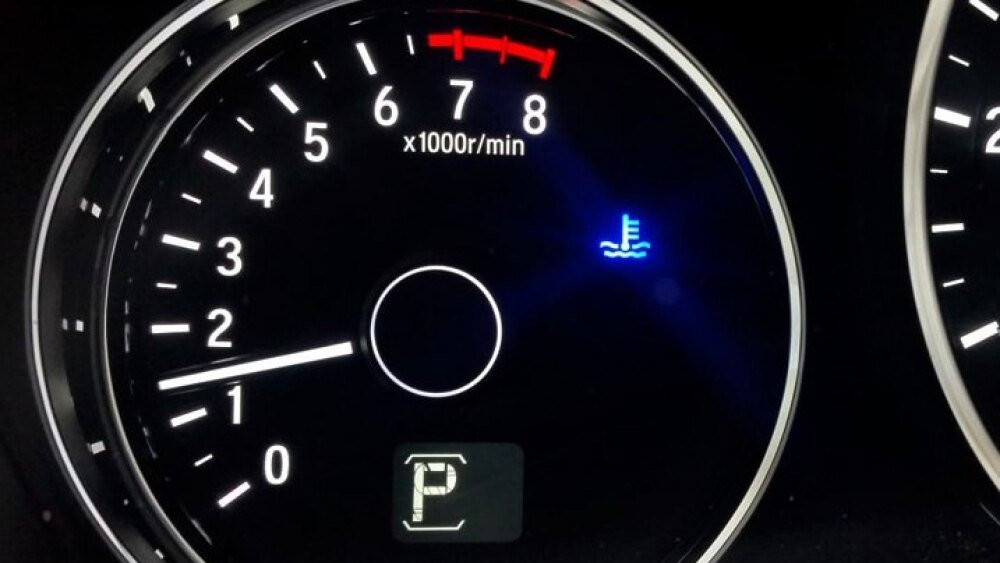
Whether a car has a temperature gauge or merely a small dummy light, it’s easy to tell if the engine is running cool. Either the needle won’t rise to the middle of the gauge or that blue light will remain illuminated, indicating in both cases that the coolant has not yet reached full operating temperature. A thermostat that has failed open will result in coolant that never gets hot enough.
A thermostat that’s stuck open will circulate coolant through the radiator at all times, even during cold starts. As a result, the engine may never reach full normal operating temperature, and the coolant temperature gauge may hover at a point that’s colder than usual. This has a negative effect on combustion and means unburned fuel will contaminate exhaust and engine oil. You may notice the interior of your vehicle never gets very warm during winter months either, because the coolant running through the heater core isn’t warm enough to produce heat. A thermostat fails open this way if the spring breaks, or gunk in the system prevents the valve from fully closing.
Symptoms Of A Thermostat Stuck Closed
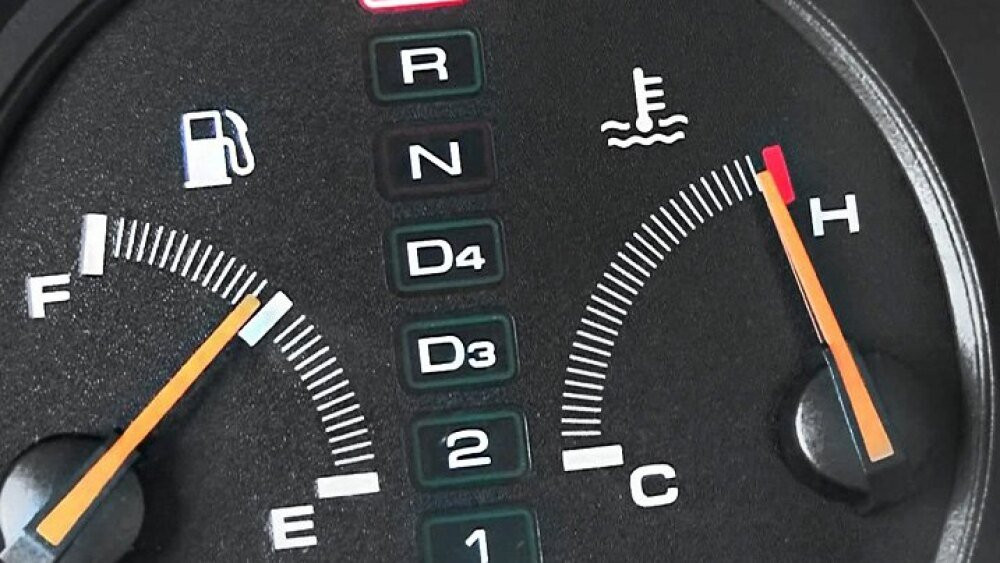
Conversely, a thermostat that’s stuck in the closed position will completely block coolant flow to the radiator. This is where its heat is dispersed in the outside air, so it’s quite crucial. Engine temperatures climb rapidly and dangerous overheating soon follows. Typically, a thermostat fails “closed” this way if it has been corrupted by corrosion or by a previous overheating condition.
Damage And Other Conditions
Note that if your temperature gauge reaches the red line for any reason, the thermostat should be examined for any possible damage and considered for replacement, even if it wasn’t the original cause of the overheating. This is because metal housings may have warped and lost their original shape and the properties of the wax cylinder inside the thermostat have been compromised. As you might imagine, a thermostat suffering this kind of damage won’t be able to function normally and do its job.
Sometimes, a malfunctioning thermostat will stick in a partially open position, or it may open and close erratically. Coolant temperature will fluctuate, and you may see a gauge reading that frequently changes between the center point where it should be. Depending on your make and model, improper temperature gauge readings can trigger a check engine warning light as well.
How A Thermostat Works
When we mention a thermostat serves as a switching station, we mean the thermostat is essentially a valve that opens and closes in proportion to the temperature of the coolant. When the engine first fires up, it’s important for the sake of engine efficiency and emissions to get things warmed up as fast as possible. To do this, the thermostat stays fully closed – blocking any coolant flow into the radiator where it would lose heat. Instead, the coolant is redirected back into the engine block to ensure it reaches its ideal temperature – around 190 degrees – sooner, regardless of how hot or cold the outside air temperature is.
The Components of a Typical Engine Thermostat
Thermostats are mechanically simple with little ability to deteriorate or break with age. Here are the basic components of a typical unit:
- Metal spring
- A flange
- A frame assembly
- A valve with a piston embedded in a special wax
When the coolant starts warming up, the thermostat automatically begins to open. This is thanks to pressure from a piston that’s pushed upward in the valve as a wax pellet melts and expands at a certain temperature, and from one of the two springs.
As the thermostat opens, the flow of coolant is gradually diverted into the radiator to maintain a temperature that ensures peak engine operation.
Thermostats have a temperature rating (such as 180 or 190 degrees Fahrenheit) which is the temperature at which the thermostat opens. It will reach the fully open point approximately 15 to 20 degrees higher. This temperature rating is usually stamped visibly on it, too, for quick reference. To prevent air in the cooling system from being trapped and creating hot spots, most thermostats have some kind of check valve that allows air to pass through.
Some Thermostats Are Integrated Into Housing Assemblies
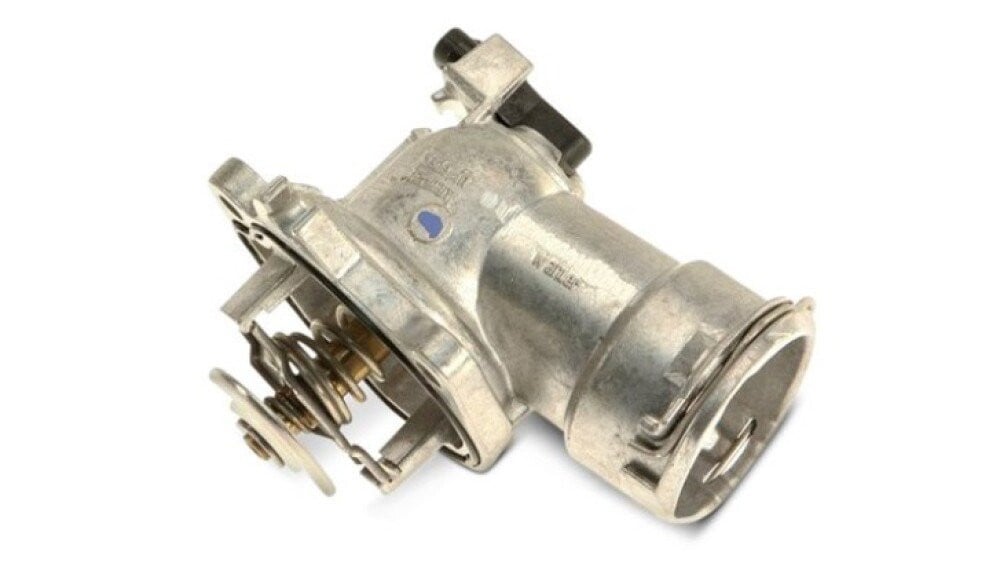
Since the early 2000s, many automakers have transitioned to thermostats that are part of an integrated housing assembly located on the engine block or cylinder head. A pipe on the housing acts as the coolant outlet. Traditional stand-alone thermostats also sit inside housing assemblies – however, they can be replaced independently of the housing.
An integrated thermostat works the same way as a stand-alone unit, with the benefit being that the integrated housing is easier to access and replace as a whole. This is a plus, because housing assemblies can also become damaged if a prior overheating condition occurred. Additionally, the likelihood of a thermostat being installed in the wrong position is eliminated.
More recently, electronically controlled thermostats that operate via temperature sensors are more common, such as in many modern BMWs. This ensures even more efficient operation which in turn improves fuel economy and emissions.
Opportune Times To Replace A Thermostat
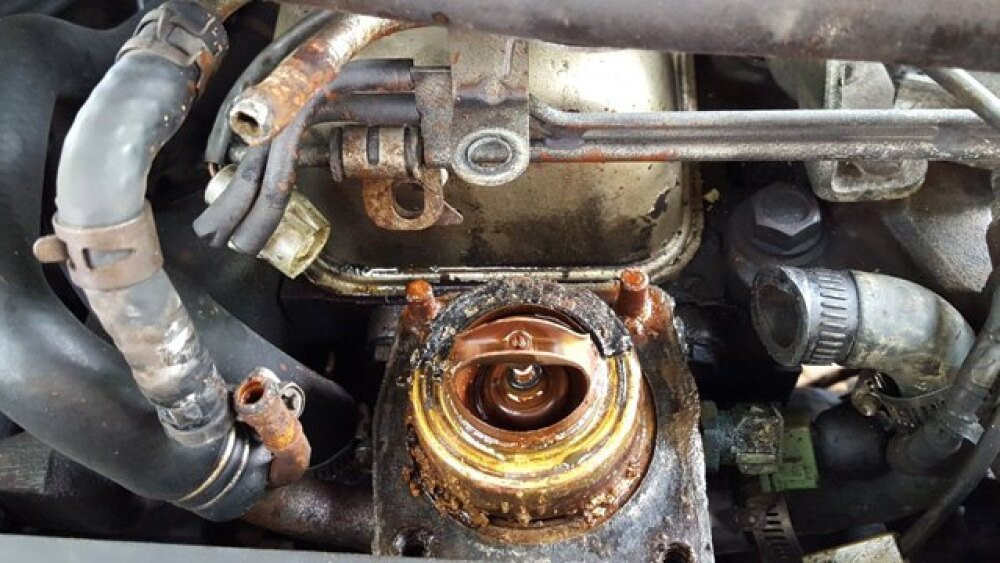
As we mentioned before, automakers shy away from prescribing a set time or mileage to replace a thermostat. We tend to agree that thermostats normally last a long time, and so replacing them too soon might not be the best use of your money.
However, there are multiple reasons why you should consider replacing the thermostat before it fails:
- The part is relatively inexpensive (many on CARiD cost $25)
- On many engines, it’s quite accessible and easy to replace
- Waiting until it fails can multiply the repair cost exponentially (an overheated engine might need internal repairs costing thousands of dollars)
- The thermostat can and should be replaced when performing other cooling system service work, such as replacing the water pump, radiator hoses, or flushing the coolant – it’s one of the most effective “while you’re in there” uses of your time and money
Buying a New Thermostat at CARiD
CARiD has a Shop by Service Type tool that lets customers search for the type of work their vehicle needs, and pinpoints exactly what’s needed by selecting their own make, model, and year. We carry a massive variety of thermostats by reputable brands, as well as everything you need to revamp your car’s cooling system.
FAQ
Can you drive a car with a bad thermostat?
Ideally, you should replace a broken thermostat as quickly as possible to avoid catastrophic engine damage. However, in case of emergency, if you’re able to keep an eye on the coolant temperature via gauge or OBDII scanner, drive the car easily and make sure it doesn’t overheat. It’s best to research your own vehicle’s peak operating temperature, but this is usually around 200 degrees Fahrenheit.
Will a bad thermostat throw a check engine code?
There’s a good chance it will, as usually there’s a coolant sensor in the system helping keep an eye on things. After all, modern fuel-injected cars’ ECUs usually take it into consideration for optimal operation.
Does a car thermostat affect the air conditioning?
The coolant moving through the AC lines and engine coolant running through the heater core are on separate circuits, but the latter is still used to regulate temperature. Another potential sign of a failing thermostat is if the AC doesn’t cool down enough.
How much does it cost to replace a thermostat?
This varies by the vehicle’s complexity, but for most, it takes no more than one-to-two hours of labor, plus parts. Which is why we’re here; read up and do-it-yourself!
Is it possible to upgrade a thermostat?
Besides making sure to purchase an OE-quality thermostat, it’s worth considering buying one with a lower temperature, especially if you either live in a hot climate or intend to put more stress on the engine than usual, such as attending track days, towing, and driving off-road.