

Coolant leaks can sneak up on even the most diligent drivers, often leading to overheating and costly repairs if ignored. But don’t worry—catching the signs early and understanding what’s going on under the hood can help save you time and money.
In this guide, we’ll walk you through the symptoms, common causes, and straightforward solutions to keep your engine running cool and your commute worry-free.
What are the Symptoms of a Coolant Leak?
From puddles under your car to a creeping temperature gauge, spotting these common symptoms of a coolant leak will help you catch minor issues before they turn into major headaches.

Coolant Puddles
One of the most obvious signs of a coolant leak is a bright green, orange, blue, or pink puddle under your vehicle (especially near the front). The source could be coolant leaking from the water pump, radiator, hose, or gasket and its seal. If the coolant in your system is rusty, or if you’re running just water in your cooling system, it may be rusty-colored water.
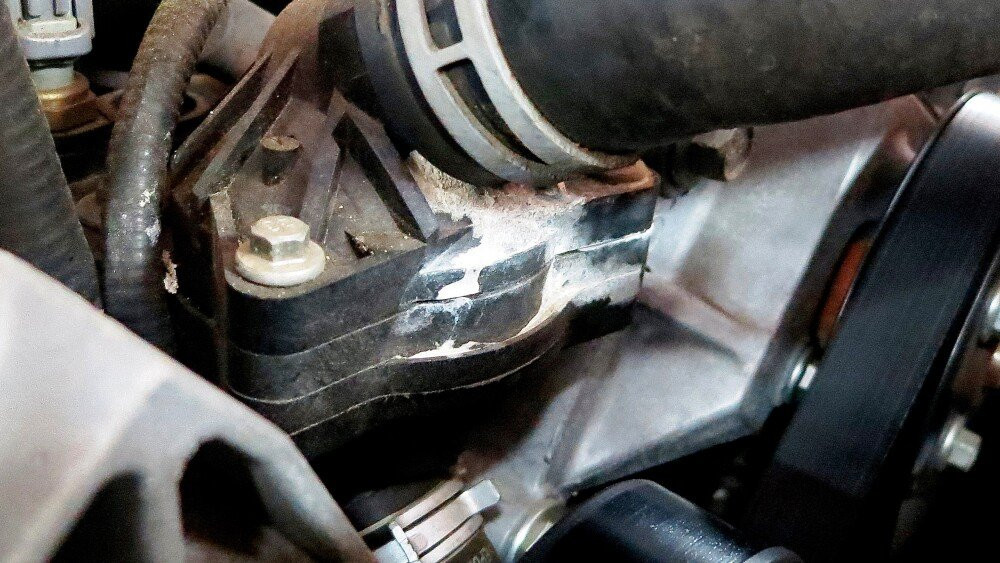
Not every coolant leak will result in a puddle—and if it does, that usually means the leak is severe and the source needs to be addressed as soon as possible. Sometimes, you might just notice stains, like the white residue in the photo below.
Sweet Smell
Your sense of smell can help you detect possible engine coolant leaks. Coolant has a distinct, sweet scent. If you notice this smell inside the cabin, it could indicate a leak in the heater core, allowing coolant to puddle in the A/C plenum and make its way onto the carpet. Sometimes, coolant will be seen coming from the A/C evaporator drain. It won’t feel like water on the carpet— it’ll have a slimy feel, along with the previously mentioned sweet smell.
You may also notice this smell emanating from under the hood after you turn off your vehicle.
Overheating Engine
If your engine is running hotter than normal, or the temperature gauge is rising higher than usual, this could be due to low coolant levels caused by a leak.

CAUTION: NEVER OPEN THE COOLING SYSTEM WHEN THE ENGINE IS HOT—YOU WILL SUSTAIN SERIOUS BURNS.
One way or another, you’ll need to check your coolant level, but again, wait until the engine is cool or look at the plastic surge tank or degas bottle to see where the coolant level is. If your degas bottle is so rusty that you can’t tell, consider replacing it with a new one.
In severe cases, the rising temperature may trigger a warning light or cause the engine to overheat.
Illuminated Check Engine Light (When Overheating)
Low coolant levels might cause your Check Engine Light to turn on, but it usually won’t unless the engine is overheating. The low coolant light is there for a purpose.
Note that a bad coolant sensor can also cause your Check Engine Light to turn on. Some GM cars have radiator coolant sensors that will turn on the low coolant light when the coolant/water mix is wrong, even if the radiator is full of liquid.
Engine Performance Issues
Coolant leaks can cause your engine to overheat, which compromises its performance and efficiency. Symptoms to watch out for include fluctuations in engine temperature, frequent misfires, poor fuel economy, and rough idling.
If you hear knocking noises (detonation), check your temperature gauge and pull over to a safe spot to see what’s going on. But, again, don’t open the cooling system while it’s hot.

White Smoke from the Exhaust
A badly blown head gasket (or some other faulty component) could cause coolant to enter the engine’s combustion chamber, leading to white, sweet-smelling smoke coming out of the exhaust.
A slightly blown head gasket won’t produce any white smoke—the coolant will just get low periodically. But there are other ways head gaskets can fail—they don’t always put coolant in a cylinder.
Low Coolant Levels
If you constantly need to refill coolant but cannot find any visible leaks or puddles, there may be an internal leak inside the engine (think head gasket) or a slow external leak that evaporates quickly.
Also, many modern vehicles have a warning light that illuminates when coolant levels drop too low. This is an obvious indicator of severe coolant loss and the issue needs to be addressed quickly.
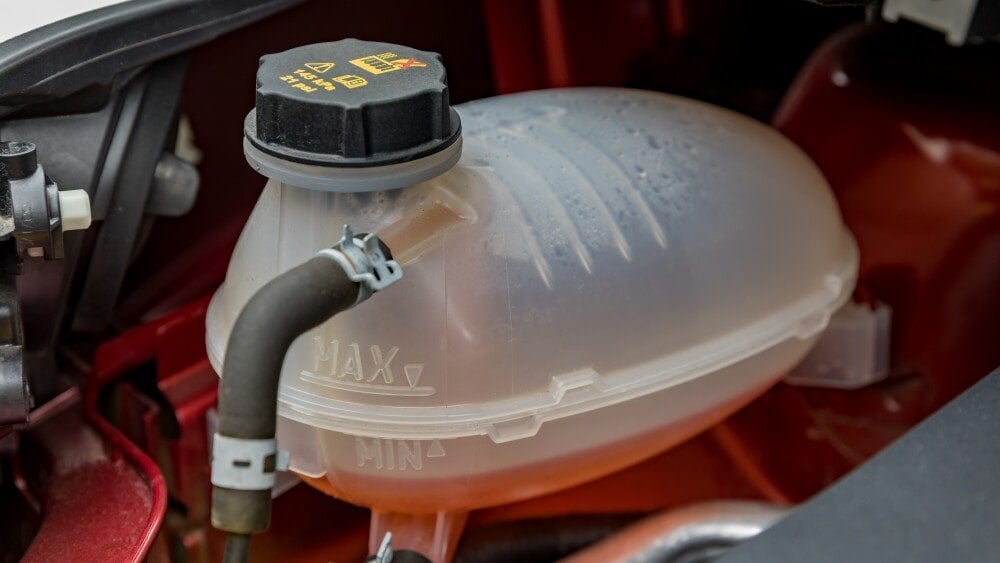
But if you plan to add coolant, make sure you know where it goes. Don’t pour coolant into the crankcase.
What Causes Coolant to Leak?
Coolant leaks can stem from a variety of sources, each with its own unique warning signs and repair needs. Here are the seven most common causes of a coolant leak:
Radiator Damage
The radiator, which is responsible for cooling the hot coolant, can develop leaks due to corrosion, wear and tear, or physical damage.
For example, while rare, a stray rock can damage the radiator. The plastic radiator tank can also crack, and if it fails suddenly, you may need a new engine. Consider replacing the radiator if your car has over 100,000 miles.
Modern radiators are usually made of plastic and aluminum, while pre-1990 vehicles typically had radiators made of brass and copper. These materials are highly susceptible to deterioration over time. Plastic radiator tanks are particularly prone to failure, as are other plastic parts that carry hot coolant under pressure.
Occasionally, the rubber seal between the radiator core and the plastic tank will fail, causing a leak.
Hoses and Connection Issues
Coolant hoses connect various parts of the engine to the radiator. If these hoses or their connections become loose, cracked, or worn over time, they won’t be able to seal as well and will leak coolant.

This hose failed catastrophically even though it looked okay on the outside. This kind of hose failure can destroy the engine.
Coolant hoses can be weakened by oil on the outside and very old coolant on the inside. They will eventually start to leak without warning.
Most newer hoses are made to last practically the life of the vehicle, however, so this is only likely if you have an older car or truck.
Leaky Radiator Cap
The radiator cap is responsible for creating a tight seal that keeps the cooling system at optimum pressure. Over time, the seal around the radiator cap can deteriorate, or the spring might start to wear out. If it’s not sealing properly, coolant can leak around the cap or cause pressure issues that cause leaks elsewhere.
Blown Head Gasket
The head gasket seals the engine’s combustion chamber and prevents fluids from leaking. This component sits between the cylinder head and the engine block. When it develops a leak, it’s referred to as a “blown head gasket.”

A blown head gasket will no longer be able to keep the engine oil and coolant separate, which can result in engine failure. This can also cause coolant to leak outside of the engine, causing the engine to overheat.
Water Pump Failure
The water pump helps ensure that coolant is being circulated throughout the cooling system. This component connects to the lower hose of the radiator. This hose connection can become loose or corroded over time, causing coolant to leak. External damage to the water pump and worn seals can also cause the coolant to leak.
The water pump also has a weep hole where the coolant will leak out if the water pump seal fails.
Expansion Tank Issues
The expansion tank is a plastic container that absorbs excess coolant and reduces pressure in the engine cooling system. It’s usually connected to the radiator by a rubber hose and sends or receives coolant to and from the radiator.
Over time—and as a result of frequent temperature changes—the plastic and the parts attached to it will weaken. The container could crack or the cap could leak, resulting in a coolant fluid leak.
Replace a leaking expansion tank immediately. In most modern vehicles, the radiator fill cap is attached to a heavy-duty plastic tank designed to hold pressure. Older vehicles used a non-pressurized degas bottle with a simple snap-on cap. Check your vehicle type: if the pressure-holding tank is leaking, replace it to avoid serious engine damage.
Faulty Heater Core
The heater core is a small radiator in the cabin that is used to heat the air. If it’s damaged, coolant can leak inside the cabin, often showing up as a fogged-up windshield or damp floor.
How to Fix a Coolant Leak
The amount of effort needed to fix a coolant leak will depend on the leak’s location and severity. If you’re confident in your skills, you can fix minor coolant leaks yourself.
Take note of the following recommendations.
Observe the Proper Safety Precautions
Coolant is a toxic and potentially harmful substance. To protect yourself, take note of the following:
- Wear safety glasses and gloves
- Wear long-sleeved clothing
- Wear a face mask (optional; to avoid inhaling fumes in poorly ventilated spaces)
Have the following equipment on hand:
- Catch pan or container (to catch any dripping coolant)
- Towels or rags (to clean up spills)
- A coolant funnel (to refill coolant without spills)
- A flashlight (to illuminate dark spots)
- A jack stand (if you need to raise your vehicle)
Make sure to only inspect or work on the cooling system once the engine is completely cool. This is to avoid burns from hot coolant and pressurized steam. Also, used coolant should be disposed of according to local hazardous waste regulations.
Fixing Minor Coolant Leaks
- Always Identify the Leak Source: Check common leak sources, like the radiator, hoses, water pump, thermostat housing, and coolant reservoir. Coolant puddles on or under the engine can help you pinpoint the leak source.
- Replace Damaged Hoses: If the leak is coming from a hose, inspect it for cracks or looseness. Tighten any loose clamps. If you notice any damage, replace the hose entirely.
- Tighten or Replace the Radiator Cap: If the radiator cap cannot be tightened or if its seal is broken, make sure to replace it.
- Replace the Water Pump: If the leak is coming from the water pump, replace it since it’s difficult to repair.
- Use a Coolant Leak Sealant: As a temporary solution, a leak sealant can be added to the coolant. It flows through the system and may plug small leaks. However, this is only a short-term fix and may not work for larger leaks or damaged components.
- Refill and Bleed the Cooling System: After performing repairs, refill the cooling system with the appropriate coolant mixture. Bleed the system to remove air pockets, as trapped air can lead to overheating.
- Monitor for Future Leaks: After the repair, check your coolant levels regularly to ensure the leak is fully resolved.
- In short, replace any part that’s leaking, though this can sometimes be a challenging job. Remember, filling a vehicle’s cooling system isn’t as simple as pouring water into a bucket—some engines have bleed screws to release air, while others require specific procedures. If done incorrectly, it can lead to overheating.
If you’re unsure, you can remove all the air by running the engine and letting the thermostat cycle while adding coolant, it’s best to have a professional handle it.
Fixing Major Coolant Leaks
More complex repairs—like those that require you to replace a damaged radiator, blown head gasket, or damaged heater core—would require the expertise of a professional mechanic.
Consult a mechanic if you’re unsure about the source of the leak, or if the issue persists after you’ve made repairs. A certified mechanic can perform a thorough inspection, diagnose the issue accurately, and perform the necessary repairs.
FAQ
How long does it take to fix a coolant leak?
The time needed to fix a coolant leak will depend on the leak’s location, the type of repair needed, and whether you’ll be doing it yourself or going to a mechanic. Minor repairs (like replacing hoses or clamps) can take an hour or less. Larger repairs (like replacing a coolant reservoir) can take three to four hours. Major repairs (like replacing a head gasket) can take a day or more.
What DTC codes relate to a coolant system leak?
Numerous Diagnostic Trouble Codes (DTCs) are associated with coolant system leaks. P0128 is triggered when the ECM detects that the coolant temperature isn’t reaching the expected level after startup. This could be due to a coolant leak causing low coolant levels. P2181 signals a problem with the cooling system’s overall performance. This DTC can be triggered by a coolant leak.
Can you drive with a coolant leak?
It is generally inadvisable to drive with a coolant leak, as this can lead to serious engine damage. Without sufficient coolant to regulate the temperature of your engine, it may overheat. This could lead to warped engine components, a blown head gasket, or engine failure. Low coolant levels could also lead to erratic engine performance, poor fuel economy, and difficulty starting (especially in cold weather).