

Dashboard warning lights alert the driver when something’s wrong with the vehicle. They’ve been on vehicles as early as 1933—specifically on a 1933 Hudson Super Six.
Warning lights have come a long way since. Nowadays, we have a wide array of them. There are the basics like the Check Engine light, plus a few others you may or may not have seen before—like that triangle with an exclamation point that you see in some modern vehicles.

Interpreting this warning light can be confusing because it depends on the vehicle’s make. What does this light mean and what should you do if you encounter it? Let’s find out.
What Does a Triangle with an Exclamation Point Mean?
The triangle with an exclamation point, also called master warning light or general warning light, is a warning light often found on hybrid vehicles.
The general warning light indicates an issue in the car that needs to be addressed. This light doesn’t point to a specific issue but, in most cases, it’s accompanied by another warning light.
On some vehicles, the triangle with an exclamation point illuminates in different colors. Here’s a general idea of what these colors mean and what causes them:
Yellow Triangle with an Exclamation Point
When the triangle with an exclamation point or general warning light is yellow, it generally indicates a non-critical warning. This means the issue isn’t necessarily an emergency or something that could possibly lead to a dangerous situation, but having your vehicle checked immediately is recommended.
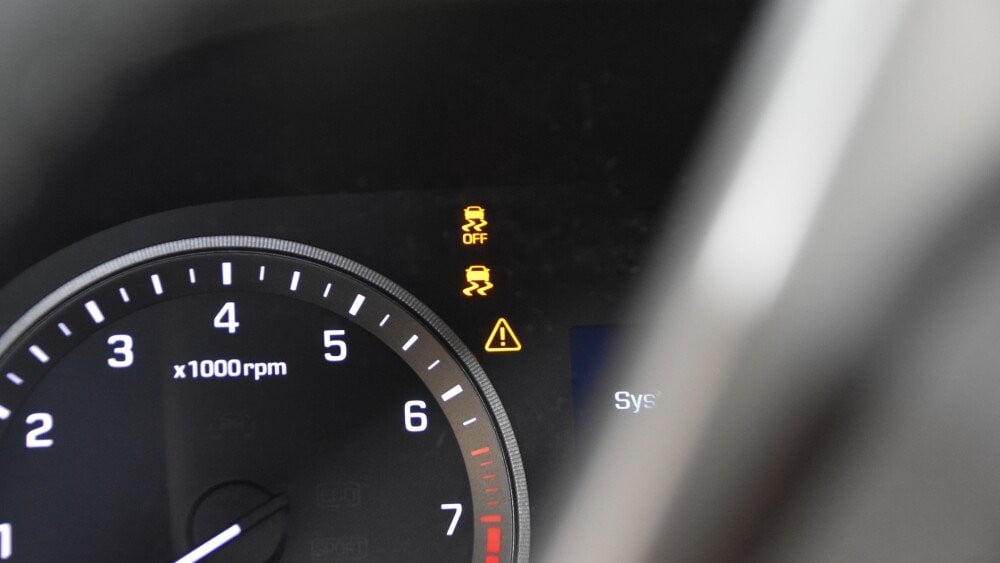
Some of the most common causes of a yellow triangle light with an exclamation point include (but are not limited to) the following:
- Malfunctioning exterior lights
- Low tire pressure
- Open doors or trunk
- Low windshield washer fluid
- Faulty vehicle stability assist (including ABS)
- Low fuel
- Low windshield washer fluid
- Door ajar
- Maintenance reminders
Let’s discuss a few of the more important ones in a bit more detail.
Bulb Failure
Interior and exterior lights, such as headlights, tail lights, brake lights, and courtesy lights, can fail over time and trigger the yellow master warning light. This issue won’t cause drivability problems but may pose navigation issues, especially in low-visibility driving conditions.
Low Tire Pressure
Your vehicle has a tire pressure monitoring system (TPMS), which keeps track of your tire’s air pressure. If the air pressure has dropped by 25 percent, it can trigger the yellow general warning light.

Faulty Anti-Lock Braking System (ABS)
The anti-lock braking system (ABS) prevents your wheels from locking up when you apply the brakes suddenly. This helps decrease the risk of skidding and gives the driver more control during hard-brake conditions. In this case, the ABS light will also be illuminated and the triangle light may be red if the condition is serious enough.
Common ABS issues that can illuminate the yellow triangle include a malfunctioning ABS control module, low hydraulic fluid levels, and bad wheel sensors.
Engine Maintenance
In some vehicles, a yellow triangle with an exclamation point illuminates when you need to perform certain maintenance tasks. These include oil changes, coolant top-us, battery performance checks, and filter replacements.
Orange Triangle with an Exclamation Point
The orange and the yellow master warning lights both indicate a non-urgent issue in your vehicle. It’s less urgent than a red master warning light, but having the issue diagnosed and fixed immediately is highly recommended.
Some vehicle makers like Toyota use an orange warning light to remind you that a scheduled service is due, specifically for the Vehicle Stability Assist system.
Red Triangle with an Exclamation Point
Compared to the yellow and orange lights, the red master warning light or triangle with an exclamation point indicates a more urgent warning. It often points to a safety-related issue or a problem related to the engine condition. Here are some of the common reasons why the red warning light illuminates:
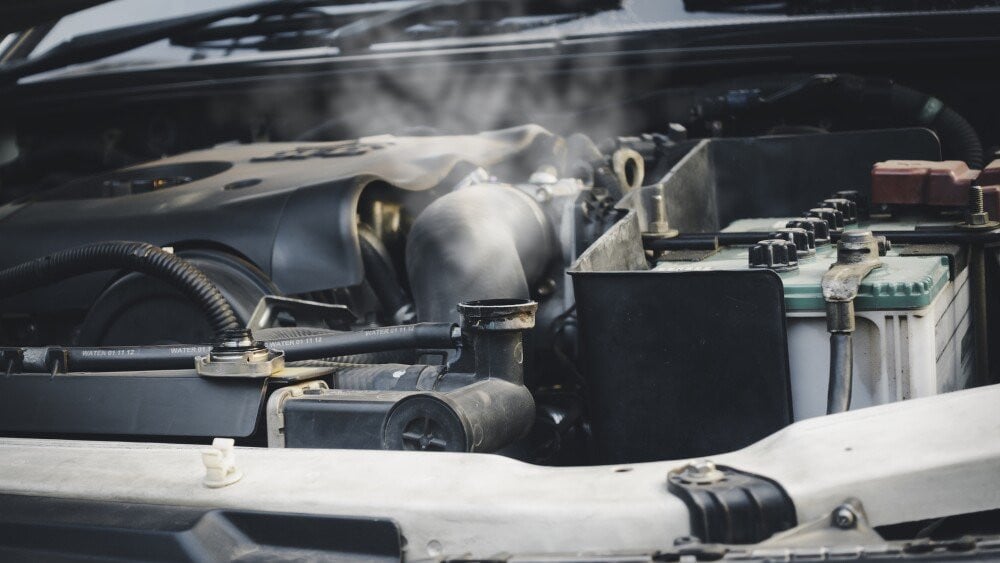
Overheating Engine
An overheating engine is often caused by low coolant levels. Other issues that can cause an overheating engine include a blocked radiator, a defective fan clutch or electric fan, or a broken fan drive belt. Incorrect ignition timing, a faulty thermostat or water pump, or blocked coolant passages can also cause this issue.
Transmission Problems
Your transmission is responsible for transferring power from your engine to your wheels and requires regular maintenance. Problems with your transmission can easily lead to drivability problems and expensive repairs if left unchecked.
Faulty Airbags
Airbags are car safety features that mitigate passenger injury in the event of a collision. Airbags can develop issues over time and cause the general warning light to illuminate. These issues include faulty sensors, a malfunctioning airbag module, a faulty clock spring wire coil, etc.
Low Oil Pressure
Your vehicle’s engine needs proper lubrication to function. Low oil pressure means that your engine may not be getting enough lubrication. This may be caused by large leaks, a damaged or worn-out oil pump, or incorrect oil viscosity.
What Does a Triangle with an Exclamation Point Mean on Your Car?
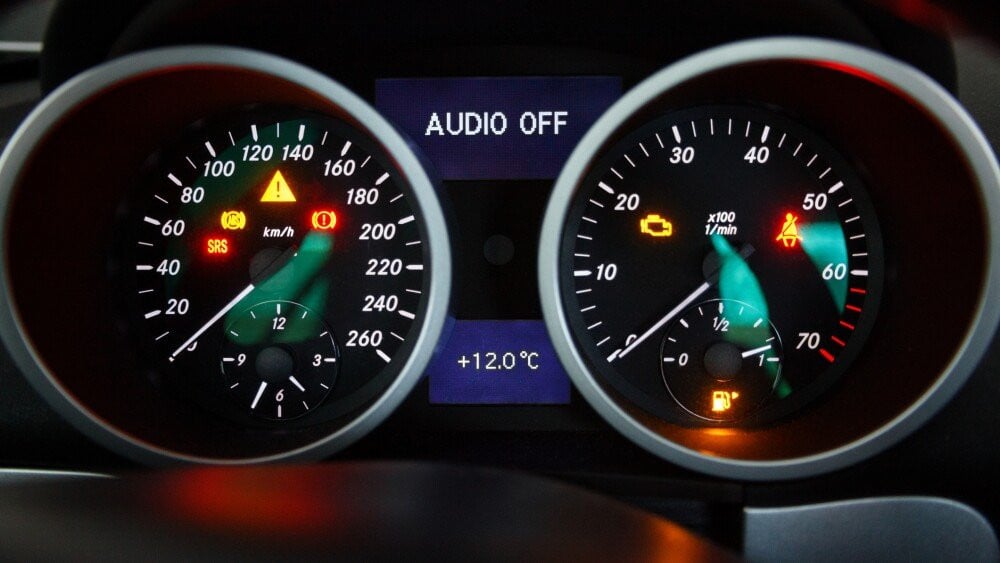
The triangle with an exclamation point warning light can have different meanings across different makes. Here are some of the most common makes and what the warning light means on each one:
Triangle with Exclamation Point on a Hyundai
On Hyundai vehicles, the triangle with an exclamation point is the master warning light. The LCD display should show more information about the issue.
Triangle with Exclamation Point on a Nissan
The master warning light on Nissan vehicles looks like a yellow triangle with an exclamation point. This warning light indicates that one or more of the automatic warning systems are malfunctioning.
Triangle with Exclamation Point on a BMW
On a BMW vehicle, a triangle with an exclamation point is a general warning symbol. This warning light can be triggered by low fuel levels, insufficient tire pressure, burned-out bulbs, or other system malfunctions.
Triangle with an Exclamation Point on a Toyota
As for Toyota vehicles, the triangle with an exclamation point warning light alerts the driver that the door, hood, or trunk is ajar while the vehicle is moving at more than 3 miles per hour. It can also point to a potential problem with the coolant, cruise control, or oil pressure. When this light flashes, it can also indicate a message is showing on the multi-information display.
What to Do When You Get This Warning

When the master or general warning light illuminates or is flashing, it’s best to pull over to a safe spot on the road so you can attempt to figure out the problem.
You can check your owner’s manual for more information about the master warning light and its meaning for your specific vehicle. If you have an on-board diagnostics II (OBD-II) scan tool, use it to see if there are any diagnostic trouble codes (DTCs) stored. These may offer clues as to the location and nature of the problem.
Do not attempt to drive your vehicle until you can diagnose and repair the root cause of the issue.