
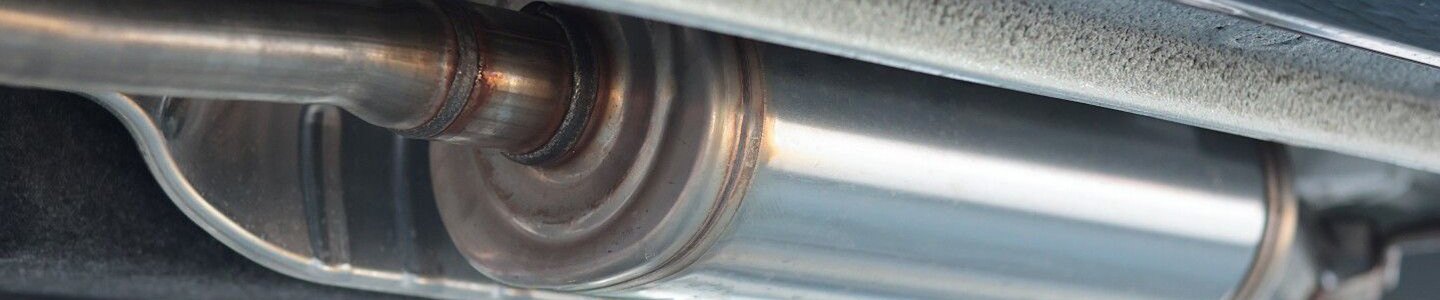
Internal combustion engines that run on gasoline produce harmful gases such as carbon monoxide (CO), hydrocarbons (HC), and nitrogen oxide (NOx)—all of which are expelled from a vehicle’s tailpipe as harmless carbon dioxide (CO2). This is thanks to the vehicle’s exhaust system, which features a catalytic converter that is designed to help control engine fumes by converting them into less harmful emissions.
The “light-off” catalyst, which is nearest to the engine, handles NOx by separating oxygen and nitrogen. The oxidation catalyst is the one farther back in the exhaust system, and it handles the CO and HC—both of which are produced when the engine is running too rich.
If a P0420 code is triggered, that means there’s an issue with the light-off catalyst.
What Does Code P0420 Mean?
If an OBD code starts with P042X (Bank 1) or P043X (Bank 2), it indicates that the catalytic converter in question is not storing oxygen properly and is deteriorating in efficiency.
As the engine’s exhaust gases enter the catalytic converter, the upstream sensor monitors the amount of oxygen produced based on the engine’s exhaust as it burns fuel. The powertrain control module (PCM) uses that input to continually adjust Short Fuel Trim (SFT), which is necessary to keep the engine running at optimum efficiency and with the cleanest exhaust even before it enters the catalytic converter system.
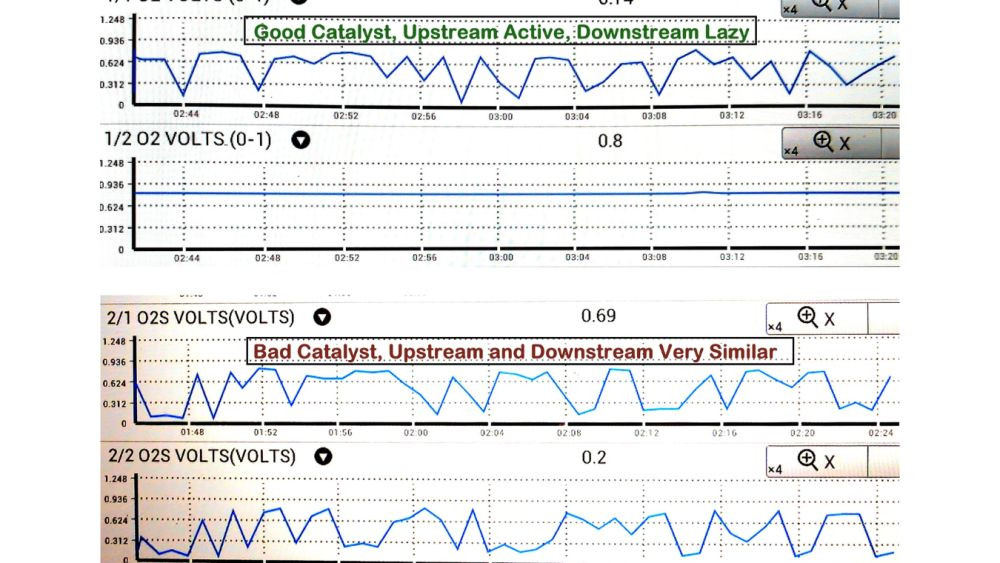
The upstream O2 sensor’s signal should be very active if the sensor is healthy, and the downstream sensor’s signal should be very lazy if the catalytic converter is storing oxygen as it should. If the downstream sensor’s activity is almost the same as the upstream sensor, the P042X or P043X code is set.
The location of Bank 1 always corresponds to the location of cylinder 1, so make sure you are familiar with your engine’s layout.
In summary, the P0420 code is set when the PCM detects that the catalytic converter on Bank 1 is not performing efficiently and oxygen levels do not meet the prescribed threshold. This happens when the downstream O2 sensor’s signal mirrors the upstream sensor’s activity, suggesting the converter is malfunctioning.
What Causes Code P0420?
A variety of exhaust-related issues can cause the P0420 code to show up. Fortunately, you may narrow down the problem based on other codes that appear with it, such as P0171 or P1131, which specifically warns about too much or too little oxygen upstream.
Still, there are specific things that tend to trip this trouble code, such as:
- Using inappropriate fuel
- Malfunctioning O2 sensors
- Failing catalytic converter/s
O2 Sensor Issues
You may wonder if a bad O2 sensor can cause a P0420 code. However, the answer is more complex than a simple yes or no.
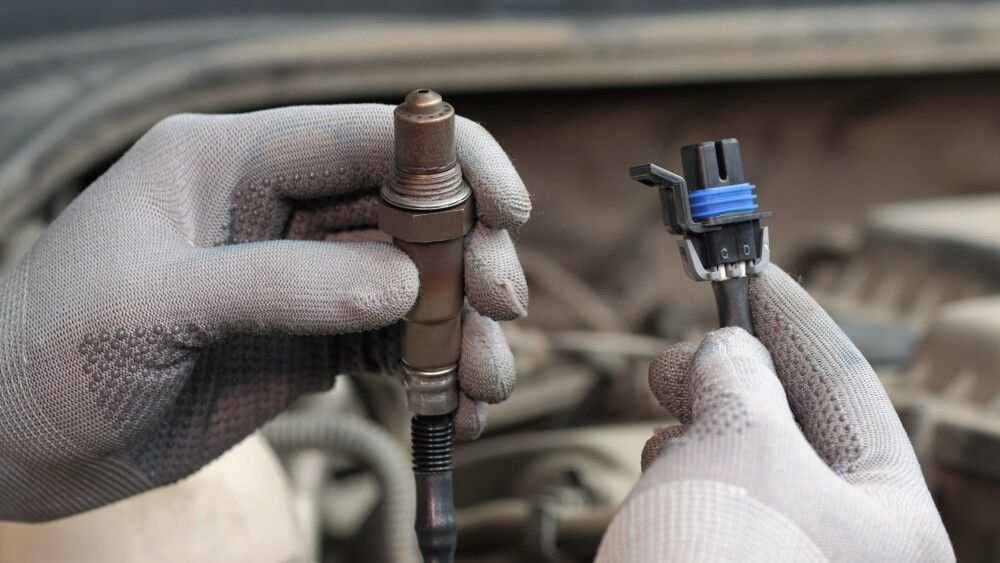
The upstream O2 sensors are in the path of everything that is leaving the engine, so they can get dirty or clogged with soot if the engine is running extremely rich or if a coolant leak into a cylinder has coated the sensor with silicone or some other chemical, rendering it ineffective.
This is evident in the way the O2 sensor’s signal switches causing it to become very sluggish, which can set a code of P0133 or a P0153, depending on the bank.
That same contaminant (soot or silicone) will also coat the catalytic converter’s strata, as well as the rear sensor, so it can cause malfunction and, in some circumstances, trigger the P0420 engine code.
Failing Catalytic Converter
When your catalytic converter goes bad, the toxic fumes from your exhaust can also get out of control. If for any reason this component is malfunctioning or not working, the DTC code will likely appear. It is important to remember, however, that the oxidation catalyst - the one in the rear - is NOT monitored by any O2 sensor and can fail without setting a code.
In rare cases, other issues, such as exhaust manifold leaks and spark timing problems, could cause this engine code. However, the usual culprit is the catalytic converter.
What Are the Symptoms of Code P0420?
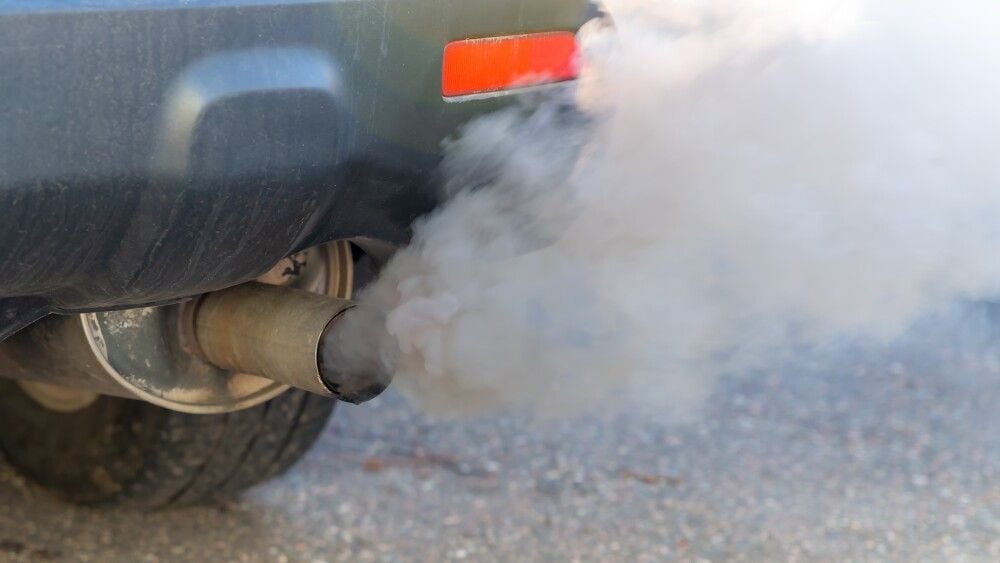
This trouble code often appears with various symptoms related to the engine and the vehicle’s exhaust system. Depending on the extent of the problem and whether there are other issues, the following could happen:
- Check engine light is on (no other symptoms)
- Lack of engine power (catalyst coming apart or clogging)
- Unusual smells from the exhaust
Check Engine Light is On
When something is wrong with your engine, one of the most common signs is when the check engine light becomes illuminated.
Lack of Engine Power
When the catalytic converter is clogged or restricted, you may notice that the engine is not performing optimally and lacks power. But in most cases, they might not notice any difference. This sign might only appear in severe instances. The catalyst can become inefficient while still flowing exhaust freely.
Unusual Smells from the Exhaust (Sulfur Smell)
If the catalytic converter is malfunctioning, your vehicle may emit excessive Hydrogen Sulfide (H2S), which smells like rotten eggs. But that smell can also be produced by a rich air-fuel mixture, for whatever reason.
How to Diagnose Code P0420
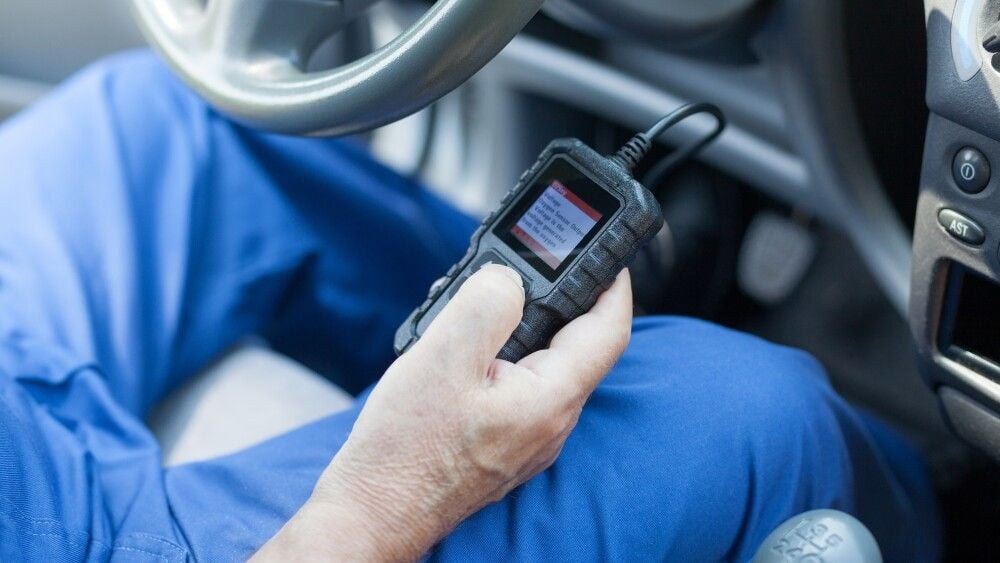
The appropriate approach when diagnosing a P0420 code may vary, depending on the circumstances. Still, there are some basic steps you can take. If you have access to a scan tool, you can use the screenshot shown to determine the health of the catalyst.
Take Down Vital Information
Before performing any repair or replacement procedures, obtaining important information should be the top priority. In this case, list down the trouble codes that appear after doing a scan, as well as the freeze frame information. If you cannot do this on your own, seek a professional who can help you out. Additionally, keeping your vehicle’s VIN can be handy, in case the warranty is still active.
Resolve Any Misfiring or Ignition and Fuel Intake Problems
All of these issues should be addressed before fixing this engine code. If resolving them clears the code, they could be causing it in the first place.
Verify the Sensor Readings With a Test Drive
Doing a test drive can help narrow down the issue through verification. It is important to replicate the freeze frame conditions and see if the 650 millivolt threshold is not met at cruise. After confirming this, it could be safe to deduce that the catalytic converter is the issue.
How to Fix Code P0420
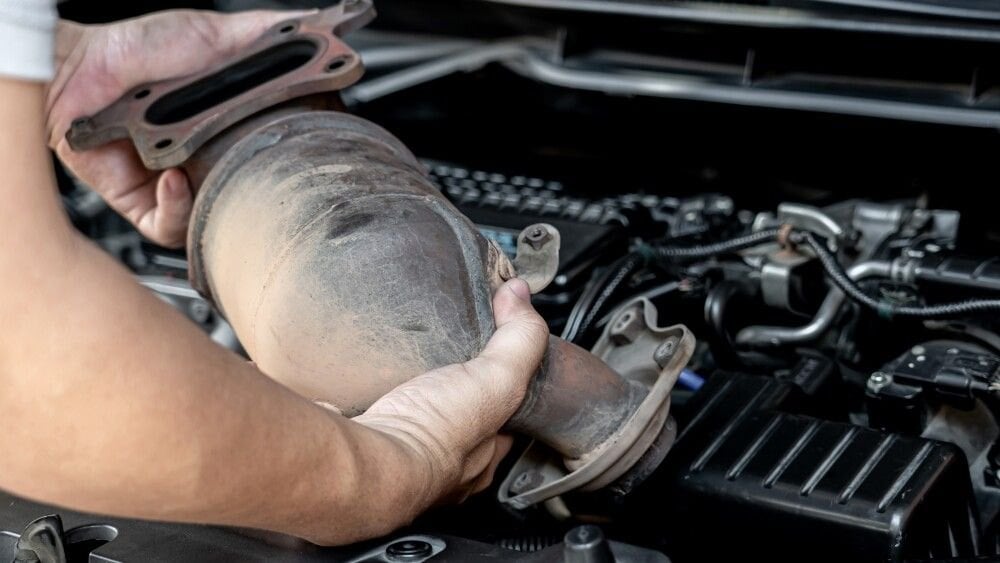
When trying to figure out if you can make a P0420 code go away, the diagnosis results could be a significant factor. Based on these details, you can determine how to repair OBD code P0420.
Determine if the O2 Sensors Are Causing a False P0420 OBD Code
If there is a possibility that the O2 sensors are the problem, you should test them and monitor the data they read. This could be a crucial step since they must be working properly to avoid sending a false P0420 code.
Inspect the Catalyst and Clean or Replace It As Needed
After confirming that they are not faulty, you can check if the catalytic converter is the issue, and whether it requires cleaning or replacement. Some car makes offer extended coverage for catalytic converters, such as Toyota, Audi, Dodge, and Volkswagen.
Other Codes Related to P0420
When dealing with a P0420 OBD code, understanding other related trouble codes is important during diagnosis and repair.
P01XX
Some Ford drivers have reported having it accompanied by P01XX codes, which could provide direction that the issue is with the O2 sensors or there is a manifold leak.
P0300
Some people have reported having different trouble codes popping up, such as the P0300 code. It is possible for this trouble code to appear after replacing parts meant to resolve the P0420 code. Because of these potential outcomes, an accurate diagnosis and repair are crucial to avoid spending on inappropriate parts.
FAQ
How much does it cost to fix a P0420 code?
The price to resolve this code could vary on a case-to-case basis. Some replacements may cost around $20 up to thousands of dollars, depending on which parts need replacement, the complexity of the repair, and on your vehicle’s make and model. If your P0420 code is due to a bad catalytic converter, that will usually be a more expensive repair as cats can be quite pricey.
How long can you drive with a P0420 code?
This trouble code showing up wouldn’t have much effect on your car’s ability to get you where you need to go. However, it is still not recommended as the damage may worsen if it involves the catalytic converter or even your engine.
Will the P0420 code clear itself?
If this code appears because of a bad catalytic converter, it won’t go away on its own. Instead of hoping it resolves itself, this code is worth looking into to prevent further issues from developing, especially if it appears with other OBD codes and engine performance symptoms.