

Certain trouble codes appear less frequently than others—and diagnostic trouble code (DTC) P0003 is one of them. If your vehicle has a common rail diesel (CRD) or gasoline direct injection (GDI) system, it will more likely store this error code than cars with a different engine.
If you’re storing code P0003 for the first time and unaware of how to handle it, you have come to the right place. Read on to find out what the code means, what causes it, and how you can fix it.
What Does Code P0003 Mean?
The P0003 code stands for “Fuel Volume Regulator Control Circuit Low.” This indicates a potential issue with the fuel volume regulator, which is a component of your vehicle’s fuel system, along with the fuel tank, fuel pump, filter, lines, and injectors.
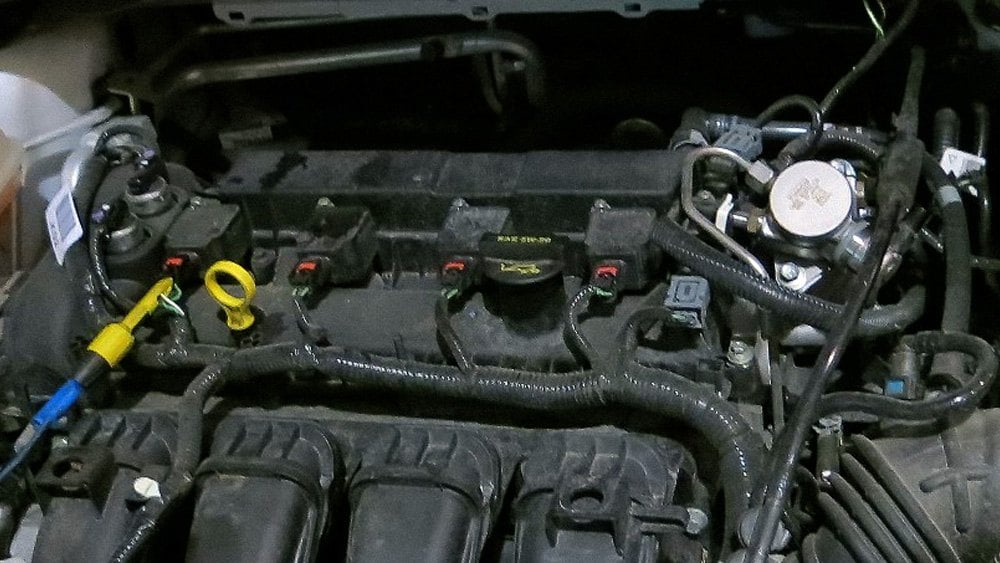
One of the most important parts in the common rail fuel system (both gas and diesel) is the high-pressure fuel pump, whose purpose is to increase the fuel pressure to meet the pressure requirement at the fuel rail for the injectors. The pump feeds the fuel rail with precise pressure based on commands by the powertrain control module/engine control module (PCM/ECM), which responds to feedback from a fuel rail pressure (FRP) sensor. It does this by manipulating a two-wire regulator solenoid in the pump to control the pressure. This is a closed-loop system.
The P0003 code is set when the regulator solenoid in the high-pressure pump has a problem with its electrical circuit, including the wiring, connector pins, and solenoid winding. An electrical reading that is below the typical range triggers the code.
Vehicles such as Chevrolet, Ford, BMW, and Toyota have been reported to store P0003.
What Causes Code P0003?
The error code P0003 may be caused by the following issues:
- Damaged fuel volume regulator
- Wiring or harness issues
- Blown #74 fuse
- Bad PCM
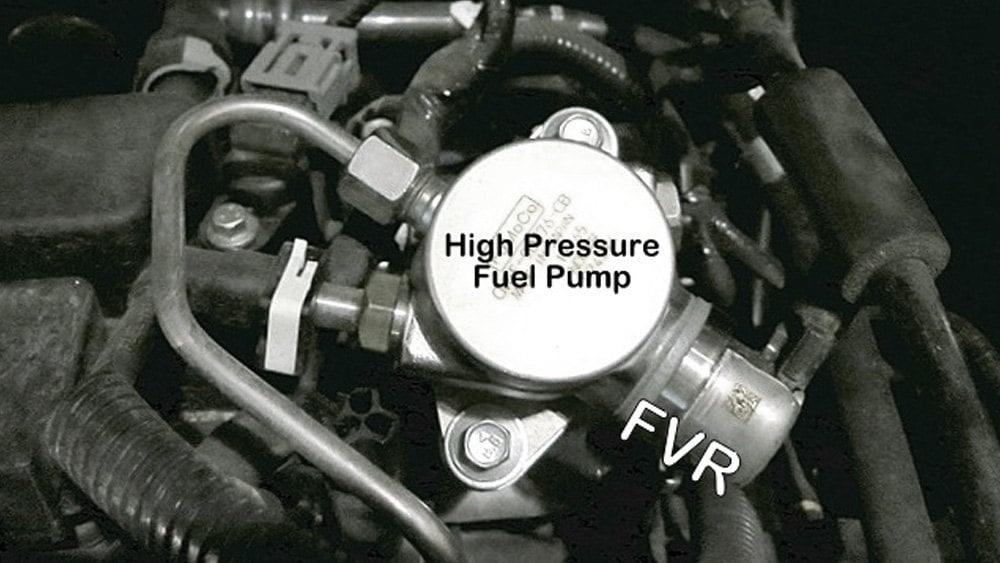
Damaged Fuel Volume Regulator
Physical damage to the fuel volume regulator can lead to an irregular fuel flow, preventing the engine from receiving the correct amount of fuel. Of course, the fuel volume regulator is built into the high-pressure pump, so there isn’t much chance of it being damaged internally. But something could break the connector off.
Wiring or Harness Issues
Corroded, frayed, or loose wiring between the fuel volume regulator and the PCM could lead to erratic signals.
Blown #74 Fuse
In Ford Power Stroke engines, a blown #74 fuse affects power delivery to critical engine components, including the fuel regulator circuit. This could log a P0003 error code.
Bad PCM
A defective PCM won’t be able to properly monitor the fuel system, leading to incorrect fuel regulation. This must be the very last step in the diagnostic process. It’s important to assume that the PCM is in good condition until you’ve checked that it’s not. Don’t replace your PCM immediately under any circumstances.

What Are the Symptoms of Code P0003?
One of the most common symptoms of trouble code P0003 is an active check engine light. Other symptoms you should also look out for are:
- Vehicle refuses to start
- Limp mode
- Engine stalling
- Poor fuel economy
- Bad engine performance
Vehicle Refuses to Start
A faulty fuel volume regulator won’t be able to maintain the right pressure. This could impact the fuel delivery system and prevent the engine from getting the fuel it needs to start.
Limp Mode
Limp mode might be triggered to prevent further damage to the engine when the PCM detects abnormal fuel system pressure.
Engine Stalling
Inconsistent fuel flow can cause the engine to lose power unexpectedly. This often results in the engine stalling during idling or driving.
Poor Fuel Economy
Problems with the fuel volume regulator can lead to an inaccurate air-fuel mixture, resulting in poor fuel economy.
Bad Engine Performance
Irregular fuel delivery affects combustion, leading to sluggish acceleration, misfires, or reduced engine power.
How to Diagnose Code P0003
Learning how to diagnose code P0003 may seem difficult if you’ve never done it before, but it’s relatively straightforward if you’re armed with the right tools and knowledge. Here are some troubleshooting steps you can try to diagnose P0003:
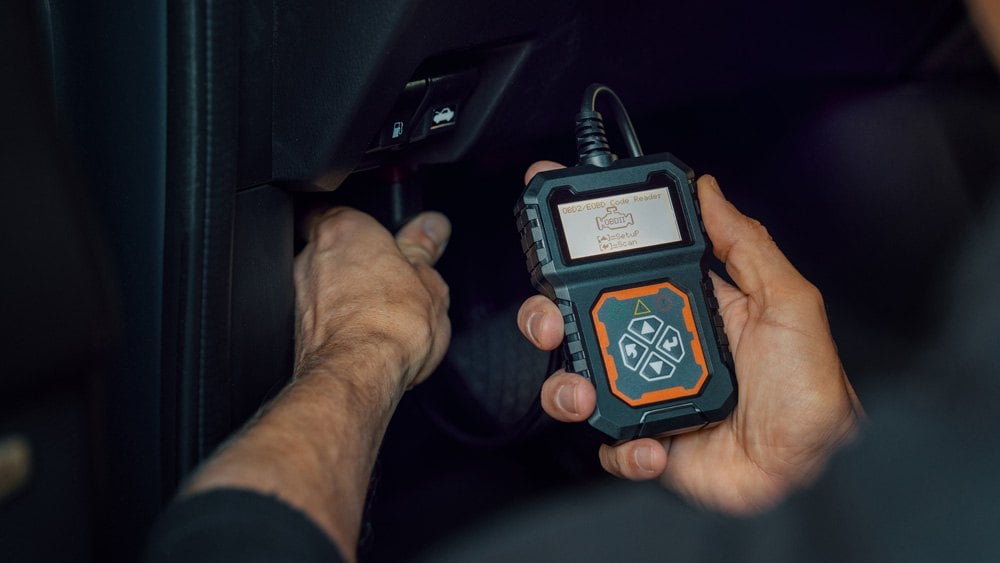
Check Other Set DTCs
If available to you, use an OBD-II scanner to check for any related codes. Often, you’d need to resolve more than one code to clear the stored codes completely.
Conduct Visual Inspection of Connectors and Wirings
Conduct a visual inspection of the fuel volume regulator and its connectors and wiring. Look for signs of damage, corrosion, or loose connections.
Test Fuel Volume Regulator
If the tool is available to you, use a multimeter to measure the resistance and voltage of the fuel volume regulator control solenoid. If the reading doesn’t match the stored value, the fuel volume regulator might be the problem.
Check for Faulty PCM
Check for a damaged or faulty PCM. If all other causes have been ruled out, that might be the issue.

How to Fix Code P0003
Once you’ve determined what caused the P0003 error code, the next step is to fix it. While there’s no single solution for OBD-II codes, there are some common fixes you can try:
Repair or Replace the Damaged Fuel Volume Regulator
Depending on the severity of the repairs needed, a faulty fuel volume regulator should be repaired or replaced with a new one.
Repair or Replace Faulty Wiring or Connectors
Damaged or corroded wiring or connectors affect the signal between the fuel volume regulator and the PCM.
Replace PCM
Although rare, a failing PCM can misinterpret or fail to process the signals from the fuel volume regulator. If all other potential issues are ruled out, replacing the PCM may be necessary.
Other Codes Related to P0003
Other codes related to P0003 also involve errors with the fuel volume regulator. These are some related codes that may also appear:
P0001
This code is set when the PCM detects a potential opening in the fuel volume control valve circuit.
P0002
P0002 is triggered whenever the PCM perceives a problem with the fuel volume regulator or its circuit.
P0004
This code indicates an electrical reading in the fuel volume regulator control circuit that is above manufacturer specifications.
FAQ
Can I drive with a code P0003?
No, it’s not recommended to drive with a code P0003. Since this code points to issues with the fuel volume regulator, it may be unsafe to drive your car when it’s at risk of stalling or entering limp mode involuntarily.