Wheel Alignment Kits & Parts
Browse by Vehicle
Select Department
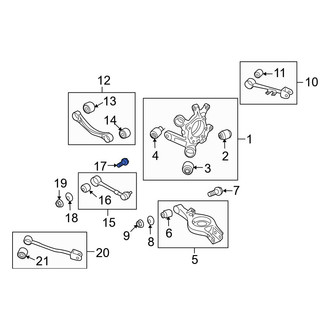
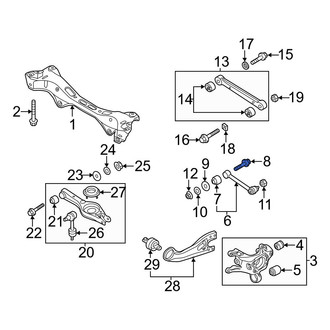
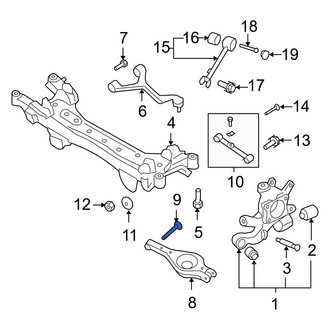
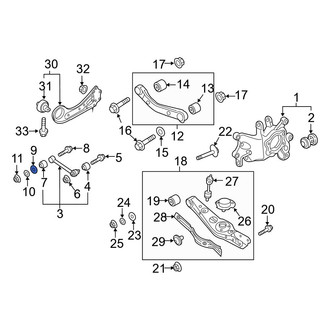
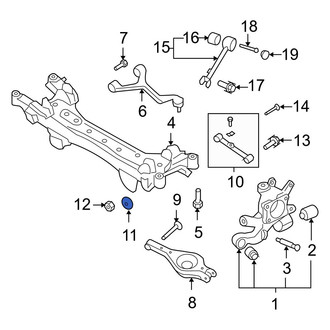
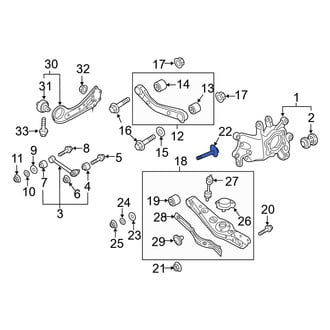
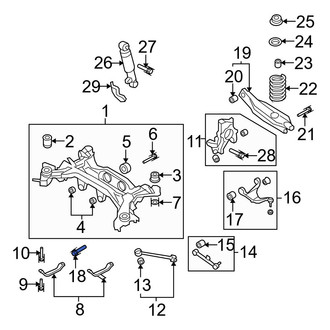
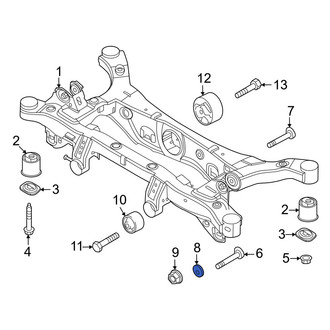
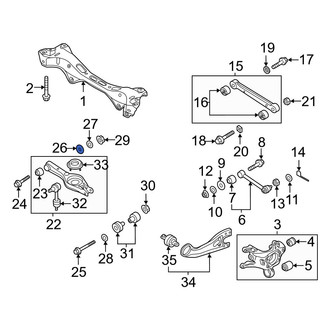
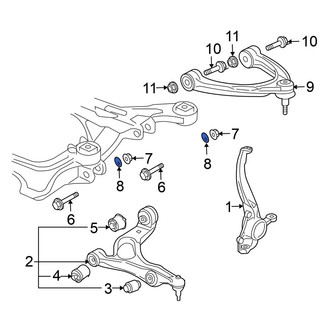
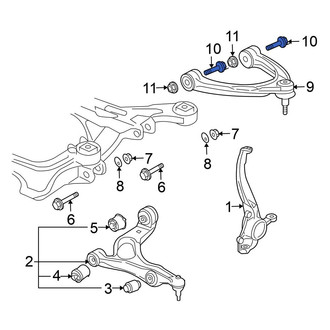
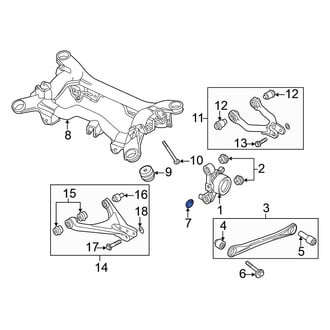
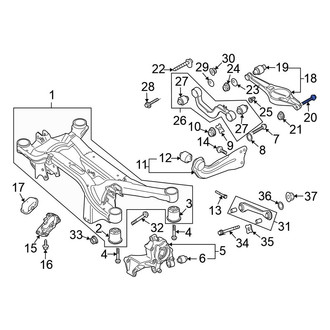
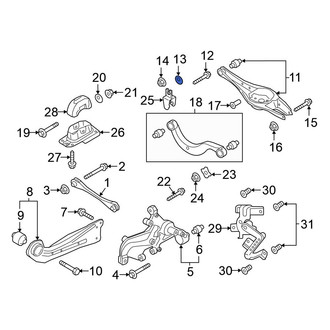
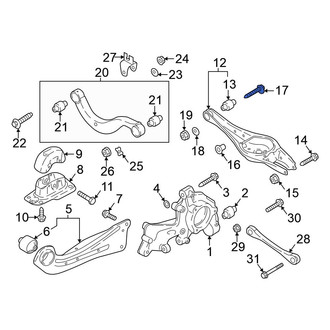
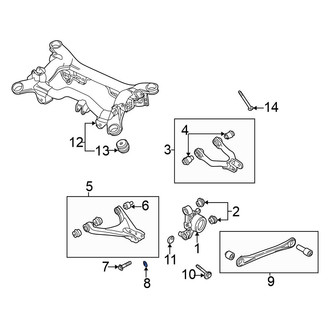
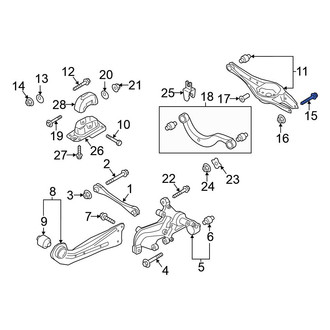
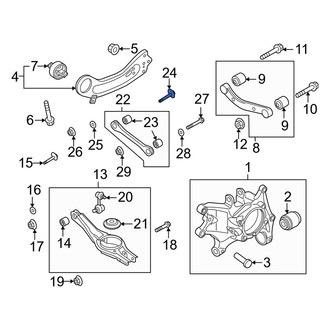
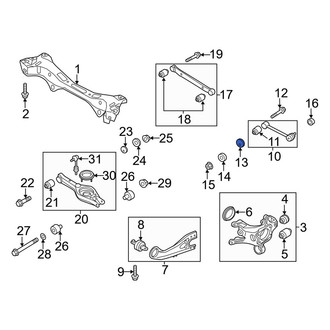
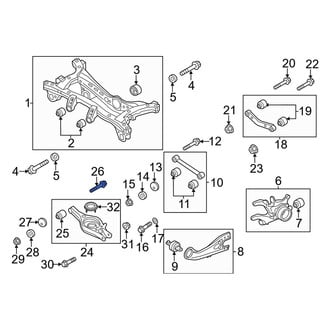
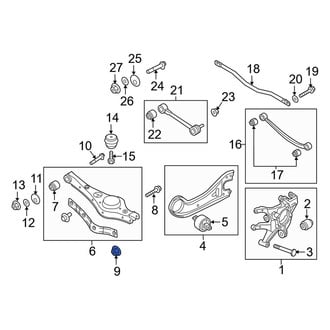
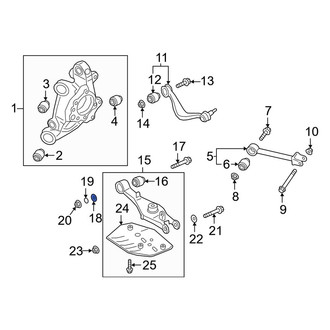
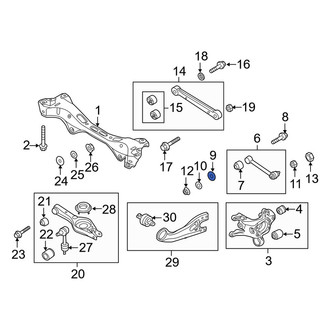
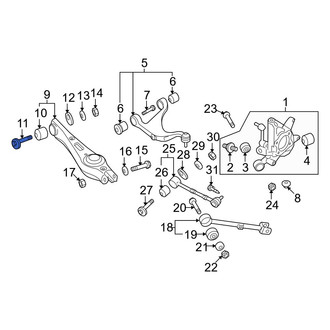
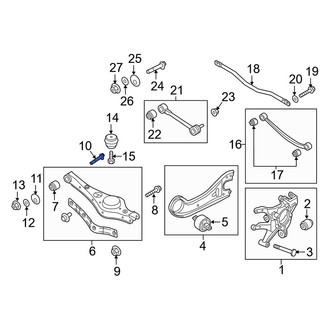
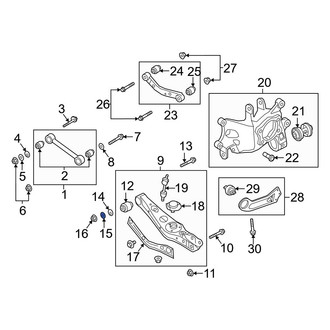
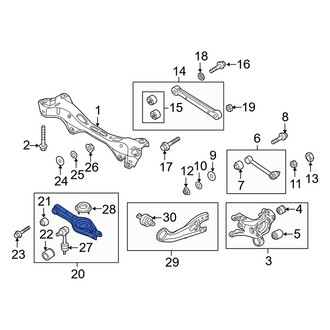
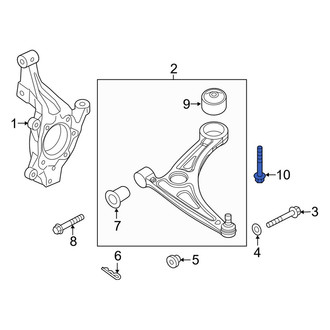
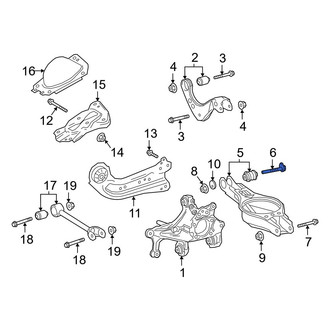
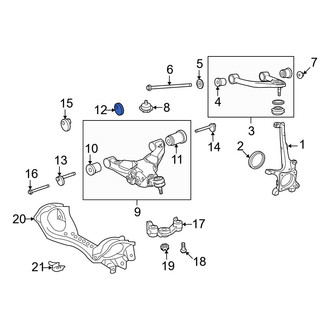
The suspension in your vehicle keeps the wheels in contact with the road for vehicle control and isolates you and your passengers from bumps and other road irregularities for an acceptable ride. The wheels move up and down in angles designed into the suspension system to make sure they maintain their proper relationship to each other and the road. This ensures safe, predictable handling and even tire wear. But driving over rough roads and potholes can disturb these angles, and cause steering pull and abnormal tire wear. Performing a wheel alignment restores these angles to specification, so your car steers easily and handles properly for safe driving, and to ensure you get long life from your tires.
A wheel alignment is also in order when certain suspension components are replaced, and whenever new tires are installed. Front wheel or thrust angle alignments are commonly performed on vehicles with solid rear axles, but a vehicle with four-wheel independent suspension or any adjustability in the rear suspension should get a four-wheel alignment. There are 4 angles that are routinely checked during a wheel alignment: camber, caster, toe, and thrust angle. During an alignment, the measured angles are compared with specifications and the suspension adjusted accordingly. However, on many vehicles angles like camber and caster are not adjustable, and on others the range of adjustment is inadequate to bring the suspension within specifications.
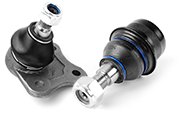
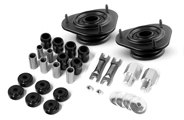
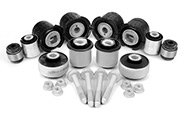
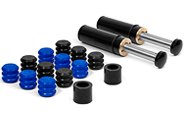
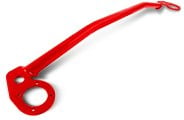
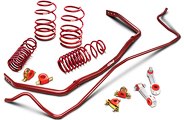
Our replacement suspension component manufacturers developed service solutions in the form of alignment kits to enable proper wheel alignment. These kits have been created to solve alignment problems on specific vehicles. The makeup of kit components will vary according to vehicle and alignment problem. They can include cam bolts to enable camber adjustment; adjustable ball joints to allow caster/camber adjustment; camber adjustable control arms; rear wheel shims for camber and toe adjustment; adjustable bushings for caster/camber adjustment, or other solutions. With the addition of the kit, wheel alignment angles can be brought within specs, so the vehicle can steer and handle according to design, and deliver long tire service life.
OE wheel alignment specifications assume that the vehicle is at or near the standard ride height. These specs can be thrown way off when a vehicle is purposely lowered or lifted for performance, and factory components may not provide the range of adjustment needed to correct angles altered due to the change in ride height. Our performance alignment kits have been designed to provide the adjustment range needed to bring camber, caster, and toe within specs. Installing a performance wheel alignment kit will also allow camber to be adjusted to factory specifications, for even tire wear and better handling and traction.
OE alignment specs also presuppose that the vehicle will be used for its intended purpose – as a street-driven car or truck. But on a vehicle that’s been modified for racing the alignment angles needed to provide optimal handling at speed can be much different than factory settings. Camber may intentionally be set much more negative because when a car is pushed hard in the turns it results in more cornering traction, and caster may be set more positive for greater high-speed stability. Toe can also be set in or out to optimize steering on front-wheel and rear-wheel drive vehicles. But just as with altered ride height, it may not be possible to attain the alignment angles desired for racing with original equipment components.
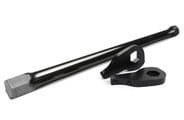
Driveline angle is another dimension that changes when ride height is altered. The angles between the driveshaft and the transmission tailshaft and differential pinion are designed for smooth operation and maximum U-joint life, but when a vehicle is lifted or lowered and these angles change, driveline shudder and vibration and even U-joint failure can result. While both lowering and lifting can cause these problems, they’re much more prevalent on lifted 4WD trucks with front and rear driveshafts. A driveline alignment kit can eliminate driveline vibration by changing the position of components in the driveline like the differential pinion angle, using wedges between the leaf springs and axle, or with eccentrics or adjustable control arms or links on coil spring trucks.
Featured Brands












Related Categories
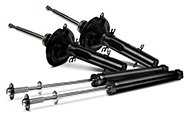
 Shocks & Struts
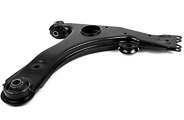
- Control Arms
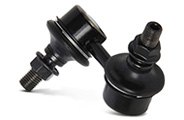
- Stabilizer Bar Links
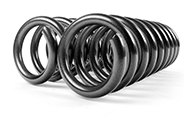
- Coil Springs
- Coilover Kits
- Suspension Kits
- Lift Kits
- Lowering Kits
- Ball Joints
- Shock & Strut Mounts
- Air Suspension
- Sway Bars
- Suspension Bushings
- Leveling Kits
- Leaf Springs
- Conversion Kits
- Helper Springs
- Skid Plates
- Subframe Braces
- Panhard Bars
- Bump Stops
- Strut Tower Braces
- Self-Leveling Sensors
- Torsion Bars
- Handling Kits
- 4 Link Kits & Frames
- Traction Bars
- Torque Arms