Run Flat Tires
-
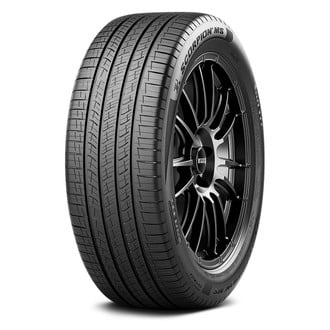 PIRELLI TIRES® - P ZERO MS (RUN FLAT)$349.00 - $633.09
 -
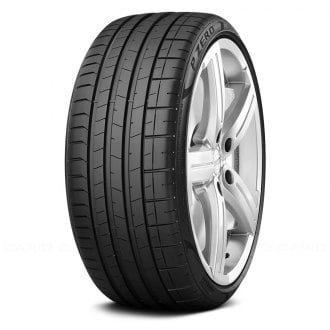 PIRELLI TIRES® - P ZERO (PZ4) SPORT (RUN FLAT)$406.34 - $509.12
 -
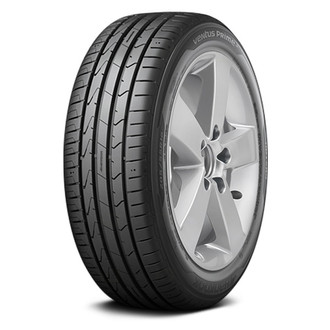 HANKOOK® - VENTUS PRIME3 K125 (RUN FLAT)$134.33 - $215.99
 -
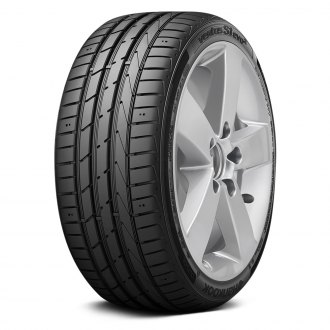
 HANKOOK® - VENTUS S1 EVO2 K117 (RUN FLAT)$225.22 - $530.99
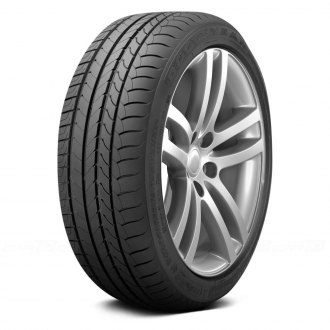
 - GOODYEAR TIRES® - EFFICIENTGRIP ROF (RUN FLAT)$202.73 - $359.35
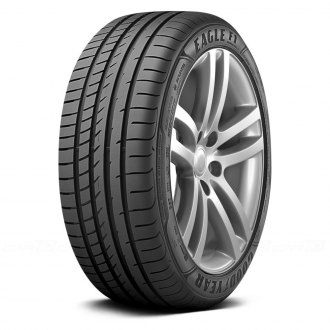
- GOODYEAR TIRES® - EAGLE F1 ASYMMETRIC 2 ROF (RUN FLAT)$287.56 - $521.65
- GOODYEAR TIRES® - EXCELLENCE ROF (RUN FLAT)$480.34 - $667.77
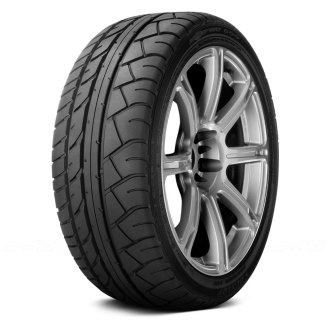
- DUNLOP TIRES® - SP SPORT MAXX GT 600 DSST (RUN FLAT)$498.06 - $541.63
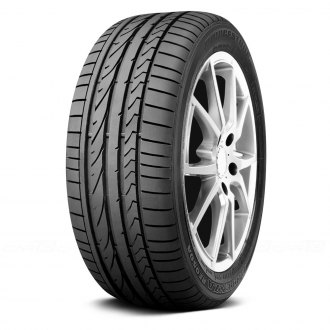
- BRIDGESTONE TIRES® - POTENZA RE050A I RFT (RUN FLAT)$47.71 - $617.23
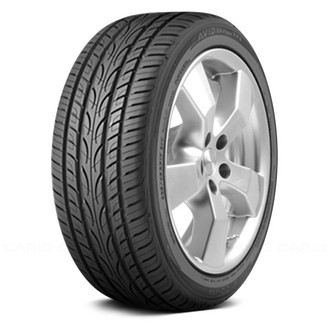
- YOKOHAMA® - AVID ENVIGOR ZPS (RUN FLAT)$240.59 - $358.29
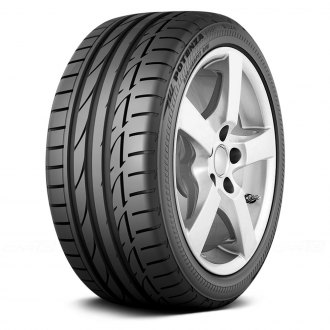
- BRIDGESTONE TIRES® - POTENZA S001 RFT (RUN FLAT)$253.05 - $565.99
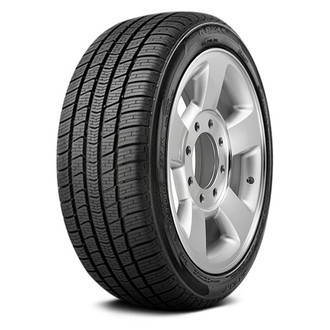
- RADAR® - DIMAX 4 SEASON (RUN FLAT)$100.26 - $131.24

There’s nothing like a flat tire to ruin your trip, and your day. At worst it means getting dirty wrestling with a spare and a jack, at best you’ll be waiting awhile for roadside assistance. The one thing you can count on is being late to wherever you were going. You’ll never be delayed or have to deal with the hassle of changing or repairing a flat tire by the side of the road if your vehicle is equipped with Run Flat tires. Run flat tires allow you to drive a certain distance after loss of air pressure, typically up to 50 miles and at less than 50 mph, so you can safely make it home or to a garage.
While run flat tires are definitely a boon to drivers, making a flat tire one less thing they need to be concerned about during their travels, they were not developed solely to provide peace of mind. A spare tire and its mounting apparatus, and the jacking equipment, are heavy and take up space. By eliminating them a manufacturer is able to make a vehicle that is lighter and has more room for passengers and cargo. A lighter vehicle is more fuel efficient, and with ever more stringent CAFÉ (Corporate Average Fuel Economy) standards, vehicle makers must remove weight wherever they can.
A vehicle is not supported by the tires but rather by the air pressure inside the tires. If air pressure is lost in a conventional tire, either by puncture and slow leak or blowout, the vehicle is not safe to drive, and attempting to creep along the shoulder of the road will destroy the tire in short order. In contrast, a run flat tire is completely safe to drive on if the tire has little or no pressure, providing that the recommended maximum driving distance and speed are not exceeded. Today there are 2 types of run flat tires, self-supporting and auxiliary supported. There are also self-sealing tires. While these are not technically run flat tires, they must be included with any discussion of run flat tires because they provide another option for continued mobility in the event of a puncture.
Self-supporting tires are the most widespread form of run flat tires, and tires with this technology are manufactured by all of the top tire brands. As the name suggests, these tires have sidewalls that are stiffened with additional rubber and cords, enabling them to support the weight of the vehicle for a limited number of miles after loss of air pressure. They also have special beads to keep the tire attached to the wheel if there is a loss of pressure. However, the stiffer sidewalls will not make a tire with low air pressure obvious, as would be the case with a conventional tire, so self-supporting run flats must only be used on vehicles with TPMS (Tire Pressure Monitoring Systems) so the driver can be alerted to a low pressure condition.
The sudden loss of air pressure that occurs when a tire has a “blowout”, can create a dangerous driving situation and make the vehicle hard to control with conventional tires. However, if you should unfortunately experience a blowout with a self-supporting run flat tire, its stronger construction will help keep the vehicle stabilized so you can maintain control. Self-supporting run flat tires are original equipment on many vehicles, and any vehicle with a TPMS can be upgraded to them because they can be installed on all current original equipment and aftermarket wheels. All self-supporting run flat tires bear an identifying run flat system symbol created by ISO (International Organization for Standardization), which resembles an arrow projecting from a flat tire.
A special wheel and tire system is employed in an auxiliary supported run flat tire system. Instead of the tire bearing the weight in the event of air pressure loss, the tire tread rests on a support ring attached to the wheel, so the wheel supports the vehicle. Because this system does not depend on a stiff tire sidewall, a vehicle so equipped can have better ride quality. However, these systems are proprietary to certain OE vehicle applications, and currently not made by many manufacturers. The wheels and tires are designed to work together as a system, and the wheels will not accept any other tires. The tires in an auxiliary supported run flat tire system also bear a unique ISO symbol identifying them as run flat tires with an internal support ring.
Another alternative that can keep you moving along if a tire picks up a nail is a self-sealing tire. Self-sealing tires don’t require unique rims or have strengthened sidewalls. They are constructed just like regular tires with the exception of incorporating an inside lining coated with puncture-resistant sealant. If a screw or nail penetrates the tire, the sealant will prevent air loss and also seal the hole when the object is removed. A self-sealing tire can seal punctures up to 3/16” (5mm). Currently, self-sealing tires are only manufactured by a few prominent tire makers. Unlike self-supporting run flat tires, which must not be intermixed with conventional tires on the same vehicle, self-sealing tires can be used with standard tires, so one can be a good choice for a single replacement.