
Bad piston rings are often a silent killer of your car’s engine. These small, seemingly insignificant rings actually play a crucial role in keeping the engine healthy. When they fail, the ensuing symptoms—like smoke clouds and sluggish vehicle performance—can be hard to ignore.
Let’s dive into what happens when piston rings go bad, and how you can catch the signs early.

What are the Signs of Bad Piston Rings?
When piston rings go bad, the engine doesn’t suffer quietly. You are likely to encounter several warning signs that may mean the rings no longer work the way they should. Let’s take a closer look at some of the most common signs:
Blue Smoke from the Exhaust
One of the most telltale signs of lousy piston rings is when your car starts puffing blue smoke out of the tailpipe. This happens when oil slips past the worn rings and gets ignited in the combustion chamber, giving off that peculiar blue hue through the exhaust.
This symptom is like your engine is sending up a smoke signal that something is seriously wrong. Although a little smoke does not sound like a huge issue, it is a warning sign that the problem is getting worse.
Excessive Oil Consumption
If you find that you are topping off your oil more often than you used to, it’s another key indicator that your piston rings may be going bad. As previously mentioned, failing piston rings will allow oil to enter the combustion chamber, which gets burned off.
Now, if the oil levels aren’t constantly replenished to account for the loss, the engine will run dry. This can lead to severe damage and more expensive problems, like seized pistons, snapped connecting rods, or a destroyed crankshaft.
Loss of Power
If your engine feels sluggish or you notice a significant decline in acceleration, bad piston rings could be the hidden issue.
Piston rings maintain compression in the engine, which is essential for building the pressure it needs to deliver power. However, when those rings go bad, the engine loses that crucial compression, and power is lost at the wheels.
When this happens, you may feel your car not picking up like before and struggling to accelerate whenever you hit the gas.
Rough Idle
Is your engine shaking a little while idling? That’s another sign of bad piston rings. Insufficient compression can cause the engine to run rough, especially when not under load. You may even feel different or more intense vibrations, or maybe hear a rattling noise that wasn’t there before.
Of course, there could be other issues that are causing a rough idle, like worn-out spark plugs. But if combined with other symptoms like smoke or oil loss, then that’s a pretty sure indication that your piston rings may need to be replaced.
Poor Fuel Economy
Bad piston rings don’t just affect power; they can also make your car less efficient. Because your engine has to work harder to achieve the same results, it ends up burning more fuel in the process.
If you notice your fuel economy taking a hit for no reason, it may be because your engine is losing compression and burning extra fuel to compensate for the lost power. This does not seem like a huge problem initially, but as time goes on, extra trips to the gas station start piling up, adding even more costs to the expensive repair looming ahead.
What Do Piston Rings Do?
Now that we’ve talked about the symptoms, let’s take a little time to understand why piston rings are so important to a smooth-running engine.
Sealing the Combustion Chamber
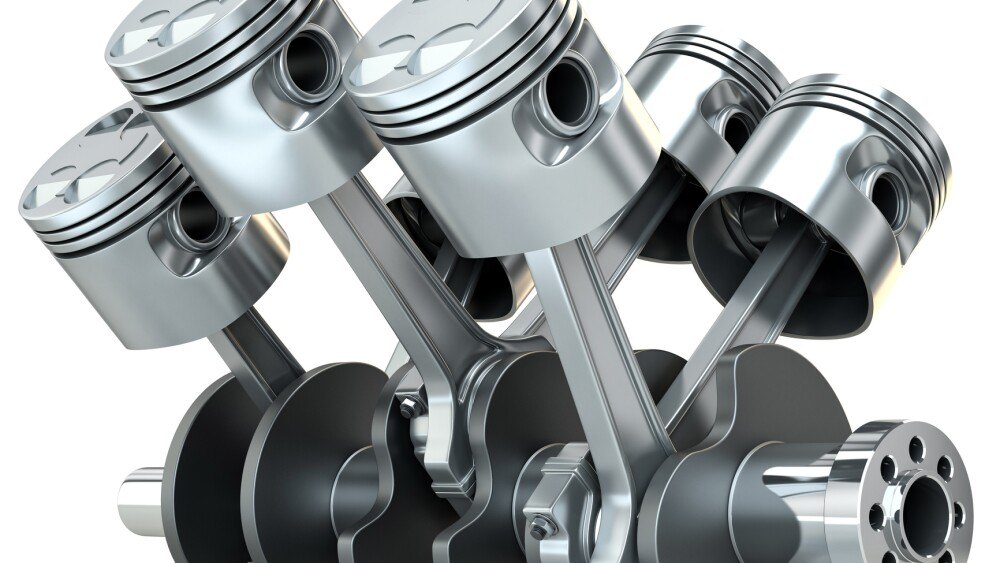
Piston rings seal the gap between the piston and cylinder walls, thereby holding combustion gases inside the combustion chamber. The piston ring provides the seal necessary for your engine to build the required pressure for combustion and, thus, power your vehicle.
With worn-out rings, these gases leak to areas they aren’t supposed to, which causes a loss of power, as alluded to above.
Controlling Oil Consumption
Sealing the combustion chamber is not the only function of the piston rings. They also have a hand in controlling the oil supply within the engine. Generally speaking, there are three piston rings: two to seal and one to control the oil.
The oil control ring ensures that just the right amount of oil coats the cylinder walls enough to lubricate the piston but not so much that oil ends up in the combustion chamber, burning up and manifesting as that blue smoke we mentioned earlier.
Preventing Engine Damage
Aside from maintaining performance, piston rings also serve to prevent damage to the internal components of the engine. When combustion gases leak past worn-out rings, it can raise pressures in the crankcase, causing oil leaks and further wear on the engine.
Without lubrication, friction between the piston and cylinder walls increases, causing wear to take off on both parts. This may lead to scarring in the cylinder, which would be another necessary and expensive repair.
Piston Rings Replacement Cost
This is generally an expensive and labor-intensive job that’ll cost you around $1,000 to $5,000, depending on the year, make, and model of your vehicle. By and large, the cost of labor makes up the bigger portion of this total cost, mostly because the engine has to be taken apart in order to reach the piston rings.
The parts themselves are relatively cheap, typically less than $100 dollars, but because the job calls for a trained mechanic and it may take several hours or even days to do, the cost of labor adds up rather fast. This can increase repair costs even higher if there is further damage incurred by the engine, such as scarring in the cylinder walls from the worn rings.
For those looking to economize on costs, check out CARiD to find an expansive selection of piston rings, engine parts, and other top-quality replacements for do-it-yourselfers and professionals alike.
FAQ
How long can I drive with bad piston rings?
You should only drive for a short period of time with bad piston rings, and even that is risky. If you wait too long, your engine will almost certainly suffer more damage. Symptoms such as blue smoke and oil consumption will only get worse; further, you may even experience a seized engine. It’s best to address the issue as soon as possible.
Is it worth replacing piston rings?
It all depends on how old your car is and what condition it is in. If the car is relatively new and does not have many miles on it, it would be worth fixing. On the other hand, if the car is an older model or has high mileage, it would not be worth the cost. You would be much better off either replacing the engine in such a scenario or buying a new car altogether.