Emission Control Parts for Cars & Trucks
Browse by Vehicle
Featured Brands












Select Department
-
 Autotecnica® - EGR Tube$41.15 - $145.19
 - Save up to 28%Mopar® - Diesel Exhaust Particulate Sensor$119.31 - $718.97$141.78 - $911.42Save up to 28%
-
-

- ACDelco® - Genuine GM Parts™ PCV Valve Oil Trap Tube$68.03 - $84.56
- Mopar® - Crankcase Breather Cover$170.01 - $412.20
- Save up to 26%Mopar® - Engine Crankcase Ventilation Cover$48.88 - $606.48$65.98 - $789.48Save up to 26%
- Save 28%Mopar® - Engine Oil Separator Cover$207.05$287.64Save 28%
- iD Select® - Breather Hose$11.21 - $16.44
- Autotecnica® - Engine Crankcase Breather Hose$5.95 - $19.84
- URO Parts® - Oil Separator Cover$32.47 - $207.51
- Kayser® - Breather Tube$38.69
- Original Equipment® - Crankcase Vent O-Ring$8.84 - $9.97
- Original Equipment® - PCV Valve Hose$22.58 - $85.30
- Elring® - Engine Crankcase Vent Valve Seal$6.11 - $24.43
-
-
- MTC® - PCV Valve Seal$3.06
- ACDelco® - GM Original Equipment Evaporative Emission Pipe$81.38 + Free Shipping with iD FastTrack
- Genuine® - Emission Check Valve$78.88 - $484.46
- The Right Stuff® - Vapor Canister Hoses$78.95 - $120.95
- ID Select® - Oxygen Sensor Gasket$3.88 - $4.93
- ACDelco® - Genuine GM Parts™ EGR Valve Connector$27.20 - $57.87 + Save up to $2.90 with iD FastTrack
- Save 12%Mopar® - EGR Cooler Nut$4.27$4.87Save 12%
- Save up to 28%Mopar® - EGR Tube Connector$3.61 - $244.17$4.08 - $315.18Save up to 28%
- Save up to 22%Mopar® - EGR Valve Bolt$3.15 - $25.44$3.57 - $31.62Save up to 22%
- Save 27%Mopar® - EGR Valve Control Solenoid Filter$75.44$104.04Save 27%
- Genuine® - EGR Tube$111.03 + Free Shipping with iD FastTrack
- Genuine® - EGR Tube Seal$14.40 - $27.83
- SKP® - EGR Valve Gasket$1.03 - $1.71
In the 1950s and 60s, emissions from automobiles were identified as a major cause of air pollution, and the first emission controls like Positive Crankcase Ventilation (PCV) and secondary air injection began to appear. In the decades since, clean air regulations have become tougher, and the emission control system more complicated. But thanks to our great selection of emission control parts, you can keep your vehicle’s emission control system in top shape.
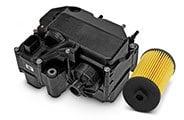
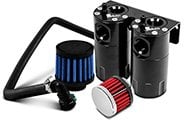
Combustion gases that leak past the piston rings, called “blow-by”, can pressurize the crankcase and cause oil leaks if not allowed to escape. Since these gases contain harmful Hydrocarbons (HC) emissions they can’t be released to the atmosphere, so the PCV system routes them to the air intake, where they combine with the air/fuel mixture and are burned. If your PCV valve is clogged, we have the replacement that’s right for your engine.

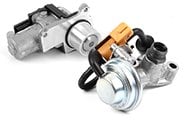
High combustion chamber temperatures can cause oxides of nitrogen (NOx) to form, which cause smog. The Exhaust Gas Recirculation (EGR) system sends a metered amount of engine exhaust into the intake air stream to cool combustion and reduce NOx. It may sound odd to cool with hot exhaust, but since it is an inert gas (contains no oxygen) and will not burn, combustion temperature is reduced. The EGR valve is the major component in the system, but there are also sensors, switches, solenoids and relays that can fail. No matter which part of the system breaks down, we have the parts for a successful repair.
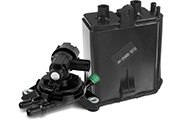
Up until the early 1970s, fuel vapors were allowed to escape from the fuel tank and carburetor. This was recognized as a major contributor to HC emissions, and the evaporative emission control system (EVAP) was developed in response. With EVAP, the fuel system is sealed, and a carbon canister is used to collect and store the fuel vapors, which are ultimately routed to the engine when it’s running and burned in the combustion chambers. We have all common EVAP system parts like filters, vapor canisters, and purge valves and solenoids, for a successful repair.

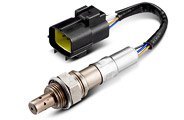
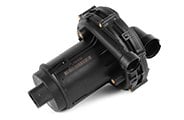
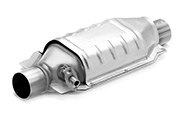
The secondary air injection system pumps air into the exhaust system to cause further oxidation of unburned fuel in the exhaust, reducing Hydrocarbons (HC) and Carbon Monoxide (CO) emissions. The catalytic converter contains precious metals that act as catalysts to convert HC and CO to CO2 (Carbon Dioxide) and water, and reduce NOx emissions. The catalytic converter works in concert with the oxygen sensor, which signals the exhaust oxygen content to the ECM to control the air/fuel mixture. An overly rich mixture can overheat and damage the converter.