

When your car starts acting up, it can feel like solving a complex puzzle under the hood. Is it the spark plugs, the fuel injectors, or something entirely different? One often overlooked component that could be causing the trouble is the manifold absolute pressure (MAP) sensor. This small but vital part plays a significant role in your engine’s performance, so it’s worth understanding what it does and how to recognize the symptoms when it malfunctions.
What Are the Signs of a Bad MAP Sensor?
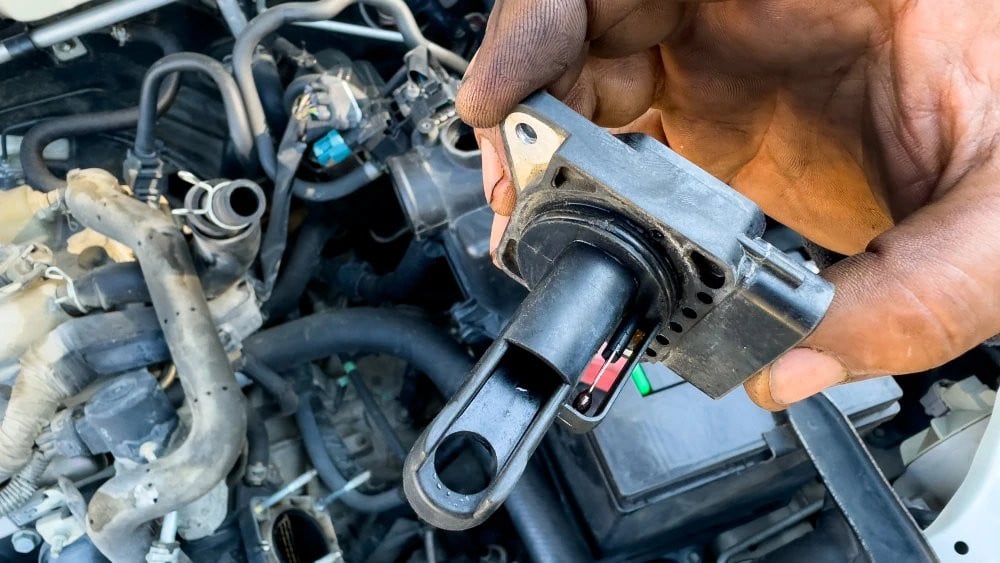
Whether you’re a car enthusiast or simply want to keep your engine running smoothly, understanding the MAP sensor is crucial. We’re here to guide you in recognizing when it might be malfunctioning. The following are the most common bad MAP sensor symptoms:
Engine Misfiring
A misfiring engine is often a sign of a problem under the hood, such as a faulty MAP sensor. When the sensor sends incorrect data to the engine’s computer, it can disrupt ignition timing and fuel delivery, leading to cylinder misfires.
Rough Idling
Does your car shake or vibrate while you’re stopped at a stop light? A rough idle is more than just a slight irritant; it could also mean that your MAP sensor is acting up, among other potential issues.
A faulty sensor may send spurts of erratic signals to the onboard computer that cause an imbalance in the air-fuel mixture when idling. This imbalance makes the engine struggle to maintain a consistent RPM, hence the unsettling shakes.
Poor Fuel Economy
Been spending a lot at the gas pump lately? You might want to check your car’s MAP sensor. When this sensor malfunctions, it may send the wrong signals to your car’s computer, making the engine run rich. Your vehicle then ends up wasting fuel as it dumps too much into the cylinders that can’t be properly burned off.

Stalling
There is nothing worse than your engine dying in traffic. If your car suddenly turns off at any moment, especially when speeding up or slowing down, it could be due to a bad MAP sensor.
When incorrect pressure is read at the manifold, it could tell the engine to dump too much or too little fuel into the combustion chamber. If the air-fuel ratio gets too far away from its natural state, it can lead to unexpected stalls.
Check Engine Light
That ominous glow of the check engine light is enough to send chills down the spine of any driver. While this warning can mean anything from a minor fault to a catastrophic issue, one of the more common triggers is a bad MAP sensor.
When the vehicle’s onboard computer detects inconsistent data from the sensor, it triggers the check engine light to alert you that something just isn’t quite right.
Lack of Power
If your car’s ability to get up and go has taken a hit, one of the possible causes for lack of power when accelerating is a failing MAP sensor.
As mentioned, a bad MAP sensor can lead to an imbalance in the air-fuel mixture due to its incorrect calculation of the engine load, and the car may be unable to deliver the right amount of fuel. When this happens, your car can feel sluggish or slow under hard acceleration.
What Does a MAP Sensor Do?
Now that you know some of the most common symptoms of a bad MAP sensor, let’s dive into the nitty-gritty details of what a MAP sensor is and what it does.
What is a MAP Sensor?
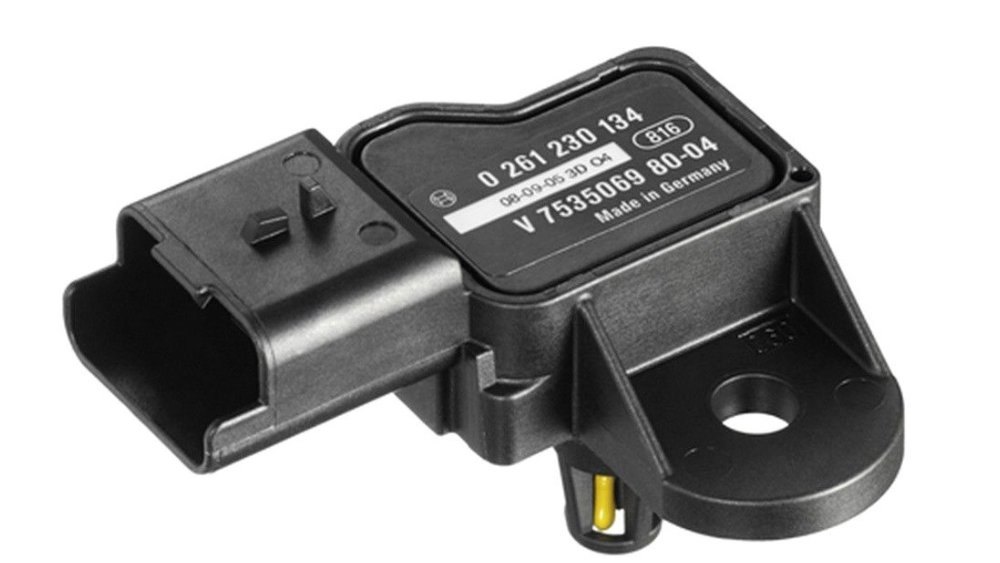
The MAP sensor is a crucial component of your car’s engine management system. It measures the pressure inside the intake manifold and sends this data to the engine control unit (ECU), which uses it to adjust engine performance. By monitoring changes in air pressure, the MAP sensor helps the ECU determine the right air-fuel mixture for optimal combustion.
Monitors Engine Load
At the core of your engine’s operation is its ability to measure how hard it is working at any given moment. The MAP sensor plays a crucial role by reading the air pressure inside the intake manifold, which reflects the engine load.
This is critical because the information it receives tells the ECU how hard it is working, whether on a flat road during a cruise or an uphill climb. The ECU then tells the various systems to deliver the right amount of air and fuel into the combustion chamber.
Air-Fuel Mixture Adjustment
The secret to a smooth-running engine lies in maintaining the perfect blend of air and fuel, and the MAP sensor is key to adjusting this air-fuel mixture. The sensor constantly feeds pressure information to the ECU, which then adjusts the fuel injection accordingly to ensure optimal combustion.
Whether you’re accelerating, decelerating, or idling, the MAP sensor helps keep the air-fuel ratio balanced for efficient performance and improved fuel economy.
Assists in Ignition Timing
Proper timing is vital to a lot of things, especially where an engine’s performance is concerned. The MAP sensor assists in ignition timing, drawing information from the engine load and manifold pressure.
With this information, the ECU is capable of changing the timing at which the spark plugs fire to make sure the combustion process occurs at the appropriate time.
Helps Control Emissions
Proper timing promotes better engine efficiency and power output while eliminating the possibility of engine knock or ping.
Nowadays, with environmental issues at an all-time peak, MAP sensor function helps clean up exhaust emissions. By helping the ECU maintain the correct air-fuel ratio, the sensor ensures that fuel is used efficiently and fully combusted, preventing excess fuel from being wasted and released into the atmosphere.
Efficient fuel combustion leads to fewer unburned hydrocarbons and other pollutants, meaning a well-functioning MAP sensor benefits both your vehicle’s performance and the environment.
MAP Sensor Replacement Cost
Prices for a new MAP sensor can vary based on the year, make, and model of your car. Generally speaking, however, the sensor itself can run anywhere from $50 to $200.
Note that if you opt to have this MAP sensor installed by an expert, the cost of labor will be added to the total price that you can expect to pay. Mechanics can charge as much as $80 to $150 depending on the complexity of the job or the sensor location on your vehicle.
FAQ
Is it possible to clean a map sensor?
Yes, it’s possible to clean a MAP sensor, and it can be an easy fix if the sensor is simply clogged by debris or oil. To clean it, remove the sensor and use an electronic parts cleaner or MAP sensor cleaner spray. Gently spray the sensor to remove any buildup, let it dry completely, and then reinstall it. Note that cleaning may not resolve issues caused by internal sensor failures and replacement may still be required.
What should a map sensor read at idle?
On most vehicles, a good MAP sensor will read between 1 to 1.5 volts or around 10 to 20 inches of mercury in vacuum pressure at idle, depending on the specifications and your attitude. These readings would mean that the sensor is correctly reading manifold pressure with the engine not under any kind of load. If these readings are considerably off, then it may mean that the MAP sensor is malfunctioning.