

A bad throttle position sensor (TPS) can lead to an imbalance in the air-fuel ratio in the engine, which can cause issues such as sudden surges and unexpected stalls.
If you suspect that your vehicle has a failing TPS, read on to find out more about the symptoms so you can diagnose your vehicle, get the problem fixed, and spare yourself from being potentially stranded and having to call a tow truck.
What Are the Signs of a Bad Throttle Position Sensor?
Identifying the symptoms of a bad TPS is the first step in getting your car back in good working order. These are the most common bad throttle position sensor symptoms to watch out for:
Engine Hesitating and Jerking
The most common symptom of a faulty TPS is hesitation whenever you hit the accelerator. This could cause your car to jerk or stumble because the malfunctioning sensor is not sending proper data about the position of the throttle, causing an imbalance in the air-fuel mixture, which is needed for regular acceleration.
Unstable Idle
If your engine’s idle speed is acting up and fluctuating without rhyme or reason, a faulty TPS could be the culprit. An erratic idle can happen when the sensor sends inconsistent signals to the engine control module (ECM), leading it to mismanage idle speed. Since the ECM can’t see the true position of the throttle, it can misread the actual amount of air coming in.
Poor Fuel Economy
A defective TPS can cause wasteful fuel consumption. Since the ECM uses throttle data as input to get the right ratio of air and fuel, a malfunctioning sensor may make the engine run either rich or lean, which can negatively affect your car’s fuel efficiency.
Sudden Stalling
Sudden stalling—especially when stopping or when in an idle state—might indicate a failing TPS. As the sensor sends incorrect signals about the throttle position to the ECM, the onboard computer may not know how to react, and the engine can become starved for air or fuel, causing it to shut down.

Difficulty in Shifting Gears
A malfunctioning TPS can affect the shifting within an automatic transmission. You may experience aggressive or late shifting because the information from the TPS is one of the many data points used by the ECM to tell the transmission when to shift.
If the data from the TPS is incorrect, it can cause hard or late shifting, which not only puts your transmission under unnecessary stress but also leads to your car burning more gas, since you’re shifting at higher RPMs than normal.
Illuminated Check Engine Light
Lastly, as with many other issues under the hood, a bad TPS will typically illuminate the check engine light. To be sure that the TPS is the problem, you can use an OBD-II scanner to read the diagnostic trouble codes and find out if any of them are related to the TPS.
Most of the local auto parts stores near you will also read the code for free and tell you why the light’s on.
What Does a Throttle Position Sensor Do?
The throttle position sensor is a small but essential component for managing your vehicle’s engine performance. It’s responsible for monitoring the position of the throttle and ensuring that the correct amount of air enters the engine for optimal fuel combustion.
What is a Throttle Position Sensor?
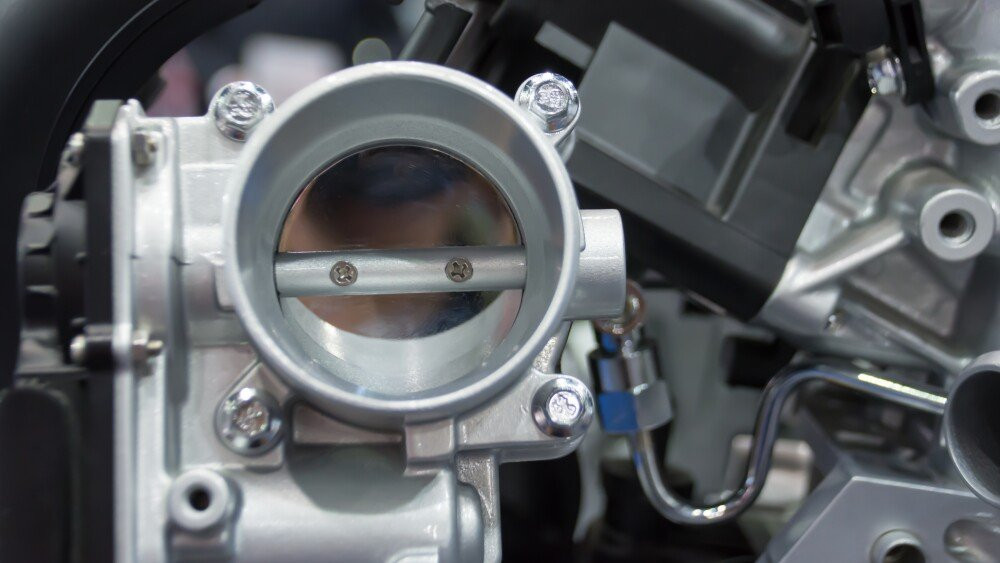
The throttle position sensor is an electronic device that monitors the position of the throttle valve, which opens and closes as you press the accelerator pedal. This sensor communicates with the ECM to regulate the air-fuel ratio, ensuring smooth engine operation.
Essentially, the TPS tells your engine how much power to deliver based on how far you press down on the gas pedal. Without it, the ECM can’t accurately control the throttle, leading to any of the symptoms noted above.
Where is the Throttle Position Sensor Located?
The TPS is typically located on the throttle body, which is part of the air intake system. It’s usually mounted near the throttle valve, directly attached to the throttle shaft. The exact location can vary slightly depending on the make and model of the vehicle, but it’s generally easy to access near the intake manifold.
What Does a TPS Sensor Do?
The main job of the throttle position sensor is to monitor the throttle valve’s position and send that data to the ECM. When you press down on the gas pedal, the throttle opens, allowing more air into the engine. The TPS reads this movement and signals the ECM to adjust the fuel injectors, ensuring the engine gets the right amount of fuel.
This coordination allows for smooth acceleration, efficient fuel usage, and proper engine performance. Without accurate readings from the TPS, the ECM can’t control the air-fuel mixture, resulting in performance issues.
Throttle Position Sensor Replacement Cost
Due to the relative affordability of the part itself and the ease of replacement, changing out the TPS is one of the cheaper repairs you might have to do on your car. Depending on the vehicle’s year, make, and model, replacement throttle position sensors usually range from $24 to a little over $200.
On most vehicles, swapping the sensor is just a couple of bolts and 15 minutes of your time, so it should be pretty straightforward for someone with basic experience turning wrenches. That said, if you are uncomfortable doing it yourself, you can always have a mechanic knock it out. According to estimates from RepairPal, the typical labor rate for this job is around $55 to $69.
FAQ
Can a throttle position sensor be cleaned?
While cleaning the throttle body itself may improve performance, the throttle position sensor is a sealed unit and, as a rule, is never to be cleaned internally. Despite this, the exterior portions may be subjected to dust and grime, along with potential debris getting into the electrical connector. These surfaces can be wiped off or blown out to fix a small issue, but more often than not, a faulty TPS should just be replaced.
How do you reset a throttle position sensor?
The reset procedure for a TPS will vary from one vehicle to the next, so always check your owner’s manual for what you need to do. Sometimes, just disconnecting the battery for five minutes will do the trick. Other times, you need to disconnect the battery, turn the key on, and fully press the accelerator a few times.