
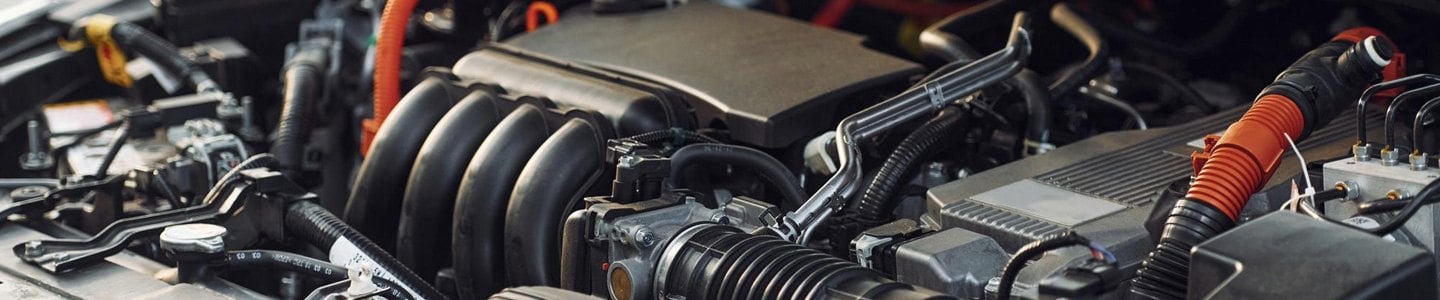
The powertrain control module (PCM) is the main computer that controls some of the major functions of your car’s engine and transmission. If it begins to fail, a faulty PCM can cause a wide variety of problems related to vehicle performance and normal operation.
Understanding the signs of a failing PCM will go a long way in saving you from further damage and expensive repair costs. In this article, we’ll go over the symptoms of a bad PCM, what exactly this component does, and how much it would cost to replace it if it does go bad.
What are the Signs of a Bad PCM?
Recognizing the symptoms of a bad PCM early will save you from potentially bigger problems down the road. Here are some of the most common signs of a failing PCM:
Check Engine Light Will Not Go Away
One of the first symptoms of a failing PCM is a check engine light on your dashboard that does not go away. The light can come on due to many different things, one of which may be the failure of the PCM, and if you clear it, the light will just keep coming back on.
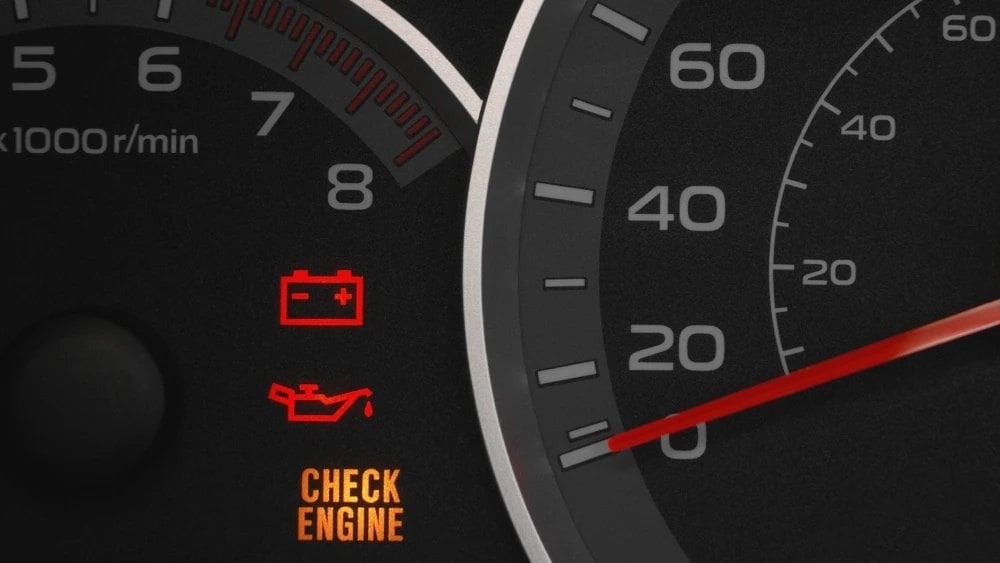
Using an OBD-II scanner or code reader is an easy way to confirm what’s causing the check engine light to come on. Most of the codes relating to the PCM begin with P06.
Engine Performance Issues
A faulty PCM will send the wrong signals to the powertrain, which affects engine timing, fuel injection, and overall engine management. This could come to fruition in the form of misfires, rough idling, stalling, and lackluster acceleration.
In short, a failing PCM can cause all sorts of powertrain performance issues, which can simply make your car or truck run poorly across the board.
Poor Fuel Economy
If you’ve been filling up the tank more often than you usually do, it could be because a bad PCM is causing inadequate fuel delivery to the cylinders. A faulty PCM might misread the necessary amount of air and fuel that the engine needs, causing the injectors to dump more fuel into the cylinders.
Difficulty Starting or Failure to Start
In some cases, a faulty PCM can render your car hard to start—or it might not even start at all. If you have eliminated easier problems like a dead battery, poor ground connection, or a bad starter relay, then it’s likely that a failing PCM could be the culprit. Since it controls the major systems within your car, a bad PCM can send the wrong signals to the ignition system, meaning it simply won’t fire or turn over.
Transmission Issues
Since the PCM also controls transmission functions, you may encounter shifting issues such as erratic or rough gear shifts, slipping, or the car refusing to shift out of a particular gear. This could be caused by the PCM thinking that the car is at a different RPM than it is, or by the shift timing being affected.
Nonsensical Diagnostic Trouble Codes
When you are getting irrelevant or nonsensical trouble codes from your OBD-II reader, or the PCM fails to communicate with the scanner at all, it’s a good indication that there is some kind of issue with the PCM.
A healthy PCM will help provide the right trouble code related to the system or part that is failing, so if it’s telling you things that don’t make sense, the PCM itself may be the culprit.
Failed Emissions Test
A bad PCM can also result in a failed emissions test. Since the PCM controls important functions related to fuel combustion and exhaust emissions, a malfunction can cause the engine to run inefficiently, leading to higher emissions than allowed by regulations.

This is also commonly caused by a bad catalytic converter, so that’s the other main thing to look into outside of the PCM if your vehicle fails an emissions test.
What Does a PCM Do?
The PCM serves as the central computer that manages both the engine and transmission. To understand its importance, it’s essential to break down what a PCM is, what functions it performs, and where it is located in your vehicle.
What is a PCM?
Basically, the PCM is the brain of your vehicle. As the primary onboard computer, it coordinates the operation of the engine and transmission, handling crucial tasks like fuel injection, ignition timing, controlling the air-fuel ratio, and transmission shift management. Modern vehicles rely on this single unit to make real-time adjustments that keep the car running smoothly and efficiently.
What is the Function of a PCM?
The PCM takes input from sensors around the vehicle and uses that data to determine how the vehicular systems should react. It ensures optimal engine and transmission performance by controlling processes such as fuel delivery, air intake, ignition timing, and shifting.
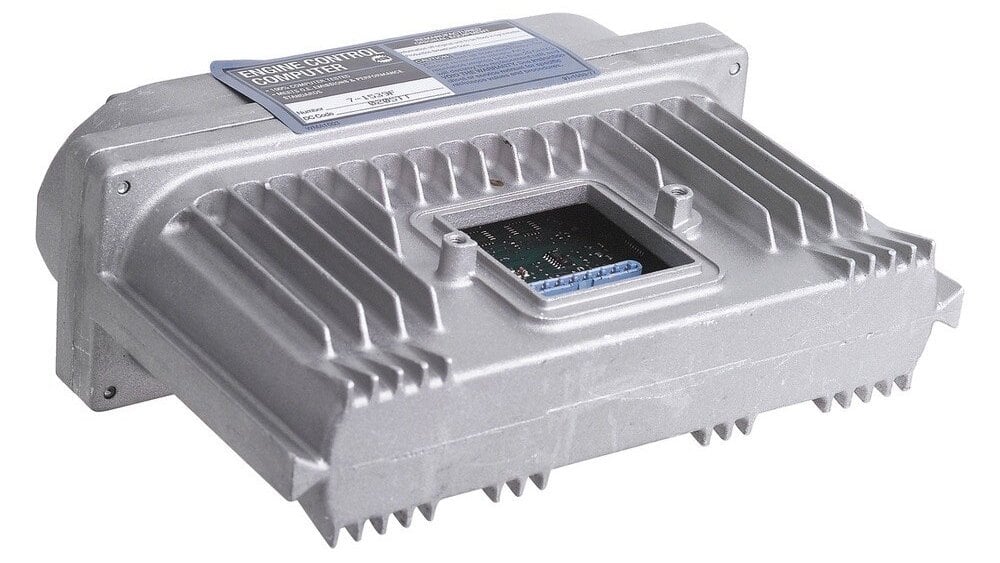
Though often confused with the ECU (Engine Control Unit) or ECM (Engine Control Module), which only manages the engine, the PCM manages the entire powertrain. This integration allows for better efficiency and coordination, ensuring that all drivetrain components work in harmony.
Where is the PCM Located?
The PCM is typically located within the engine bay. It’s often found mounted on the firewall or in a sealed compartment to protect it from heat and moisture. However, the exact location can vary depending on the make and model of the vehicle, so always be sure to refer to the owner’s manual for the part’s exact location.
PCM Replacement Cost<
Replacing a PCM is a significant investment, but it’s often necessary to get your vehicle running smoothly again if it has gone bad. Like many repairs, the cost of replacing a PCM varies widely depending on your vehicle’s make and model.
PCM replacement costs average $1,028 to $1,098, though the vast majority of this price is the cost of the unit itself. The labor cost of the actual replacement only accounts for about $78 to $98.
That said, replacing the part itself is not where the job ends. Most new PCMs need to be programmed to your vehicle’s specifications, which can add another $80 to $150. PCM reprogramming ensures that the new module can correctly interface with the existing sensors and components in your car.
While many people prefer to leave PCM replacement to a professional mechanic, it’s not an impossible task for experienced DIYers, provided you have the right tools and knowledge. If you’re considering a DIY replacement, you can find PCMs for a wide range of vehicles at CARiD, which also offers 24/7 customer support to make sure you’re ordering the right one for your vehicle.
FAQ
Can a bad battery cause PCM problems?
A bad or failing battery can indeed cause PCM issues, but it does not usually cause permanent damage. A weak battery leads to voltage fluctuations that disrupt the normal operation of the PCM, leading to malfunctions. However, once the battery is replaced, the PCM should return to normal function.
What causes lost communication with the ECM/PCM?
Loss of communication between the PCM and other vehicle modules might be caused by damaged or corroded wiring, loose or damaged connectors, or a faulty bus system. All of these can prevent the signals from effectively passing between the PCM and the sensors of the vehicle.