
Vehicles have built-in protections against serious damage, one of which is the knock sensor. This small but essential component detects engine knocking caused by mistimed ignition and fuel combustion, which can lead to damage. Keeping it in good condition ensures smooth, reliable driving.
This article covers symptoms of a failing knock sensor, its role in your vehicle, replacement costs, and answers to common questions to help keep your engine running safely.
What are the Signs of a Bad Knock Sensor?
Unlike a bad engine thermostat or oil pressure sensor, determining if your engine knock sensor is malfunctioning can be a little challenging. Here’s how to tell if your knock sensor is bad:
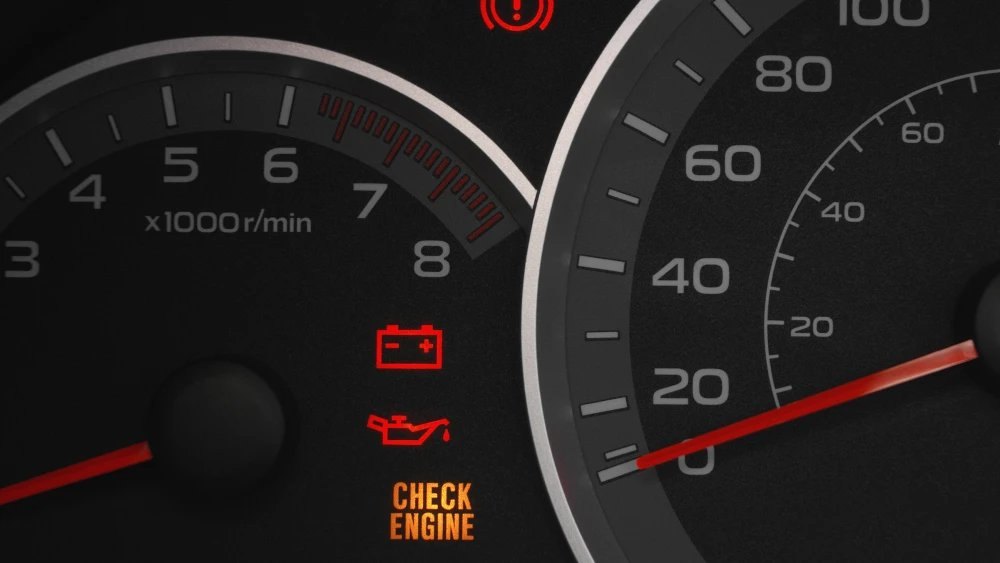
Check Engine Light
The most common and most obvious symptom of a bad knock sensor is the check engine light. If this is accompanied by any of the other symptoms below, it’s highly advisable to have your knock sensor and engine components checked by a mechanic.
Error Code
The knock sensor will sometimes produce no symptoms at all, but it will usually throw a trouble code. Using a specialized OBD-II diagnostic scanner, you may be able to read trouble codes that indicate abnormal engine behavior, which could be caused by a bad knock sensor.
Codes ranging from P0325 to P0328 are most indicative of a bad knock sensor, as they include wiring problems, low or weak knock sensor signals, excessive engine noise, and incorrect fuel mixtures.

Engine Knocking
Engine knocking, often called “pinging,” is what the knock sensor is designed to prevent. This occurs when the fuel-air mixture in one or more engine cylinders ignites prematurely. It typically happens if you’re using fuel with too low of an octane rating, but it can also occur if you consistently use fuel with an octane rating higher than what the engine is tuned for.
Premium fuel burns more slowly, often leaving unburned fuel in the combustion chamber, which over time turns into carbon deposits on the piston and cylinder head. This carbon buildup reduces available space, raising engine compression. Eventually, the carbon layer can become so thick that knocking occurs even with high-octane fuel, causing the knock sensor to retard the timing, which can reduce fuel economy.
Unusual Vibrations
Knocking may also cause a vibration, but the knock sensor will typically retard the timing to neutralize it. In engines with Coil-on-Plug ignition, the powertrain control module (PCM) can adjust timing only on the cylinder(s) experiencing detonation.

Loss of Power
Along with the knocking and detonation, you might notice difficulty in accelerating. Your engine could lose power, stutter, and stall when the sensor fails to alert the engine computer to adjust the ignition timing for optimal combustion.
Increased Fuel Consumption
You may notice the fuel gauge dropping faster than usual. This can happen when a failing knock sensor leads to inefficient and incomplete air-fuel mixture combustion, resulting in decreased fuel economy.
What Does a Knock Sensor Do?
Now that we know the symptoms of a faulty knock sensor, let’s explore its role in your car to understand how it contributes to your engine’s overall performance and smooth operation.
What is a Knock Sensor?
An engine knock sensor is a critical component in internal combustion engines. It detects engine knock, pinging, or detonation.
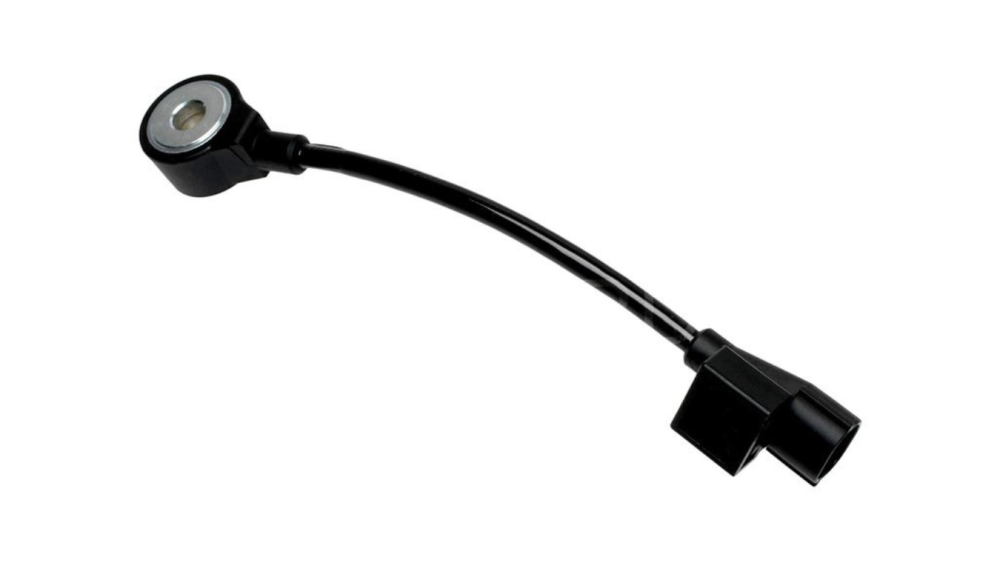
Typically shaped like a doughnut, this sensor listens for the telltale sounds of predetonation, which indicates mistimed explosions or combustion of the air-fuel mixture in the engine cylinders. Furthermore, it acts as a layer of protection for your vehicle that helps maintain optimal engine performance and prevent damage in the long run.
How Does a Knock Sensor Work?
A knock sensor monitors your engine for abnormal vibrations from knock, using piezoelectric crystals that compress under stronger-than-usual vibrations. This compression generates a voltage sent to the PCM.
When the key is on and no knock is detected, the knock sensor typically reads around 2.5 volts, a baseline voltage sent from the PCM. While this value can vary slightly by platform, it remains close to this range.
PCM algorithms recognize only vibrations within a 6000-8000 Hz frequency range and within a specific “knock detection window.” Any vibrations outside this frequency or window are ignored.
When knock is detected, the PCM can take protective actions, like reducing engine timing or lowering boost pressure (for supercharged or turbocharged engines). While this decreases power output, it also helps protect the engine.
Where is the Knock Sensor Located?
The knock sensor is usually mounted on the left side of the engine block, just beneath the intake manifold. By being directly attached to the engine block, it can “listen” for and detect unusual vibrations that may indicate pre-detonation or engine knocking.
Knock Sensor Replacement Cost
The knock sensor is a relatively simple device, so they don’t usually cost much. Sensors range from around $10 to $100 on the high end. If you take your car to a shop to have it replaced, your bill will be mostly labor, given the amount of work that is sometimes necessary to reach the sensor. Labor rates vary significantly based on your car’s year, make, model, where the part is bought, your location, and the complexity of the repair, among other factors.
FAQ
How long can I drive with a bad knock sensor?
Although it’s possible to drive briefly with a faulty knock sensor, it’s generally not advisable. A bad sensor won’t cause problems on its own, but without it monitoring the engine and sending accurate signals to the vehicle computer, you could experience poor engine performance, reduced fuel efficiency, and potential engine damage.
Can a knock sensor cause a misfire?
No, a knock sensor itself cannot cause a misfire. However, it can lead to reduced performance or rough engine running, which can be misdiagnosed as a misfire. You’ll need an OBD-II scanner to know for sure, as misfires often generate diagnostic trouble codes.