Racing Suspension Springs & Components
-
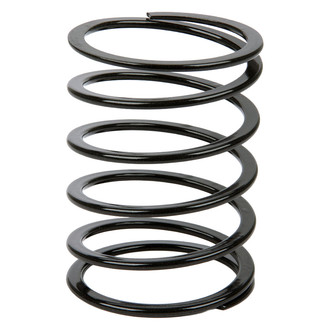 Eibach® - Coilover Helper Spring$55.00 - $60.00
 -
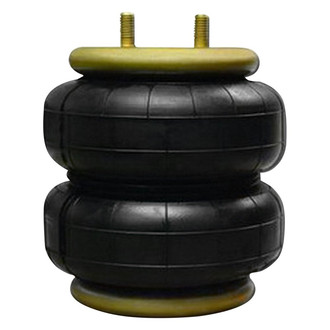 Firestone Suspension® - Ride-Rite™ Air Helper Spring$236.65 - $287.37
 -
-

-
-
-
-
-
-
- Firestone Suspension® - Ride-Rite™ 255C1.5 Air Helper Spring (6957)$236.65 + Free Shipping with iD FastTrack
-
-
-
- Firestone Suspension® - Ride-Rite™ Double Convoluted Air Helper Spring (6872)$240.11 + Free Shipping with iD FastTrack
- Firestone Suspension® - Ride-Rite™ Double Convoluted Air Helper Spring (6959)$236.65 + Free Shipping with iD FastTrack
-
-
- Firestone Suspension® - Red Label™ Double Convoluted Air Helper Spring (8781)$261.76 + Free Shipping with iD FastTrack
-
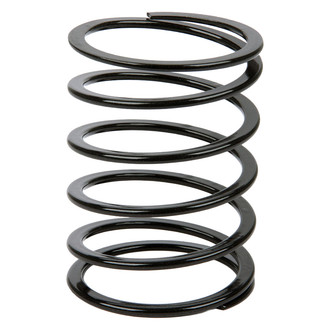
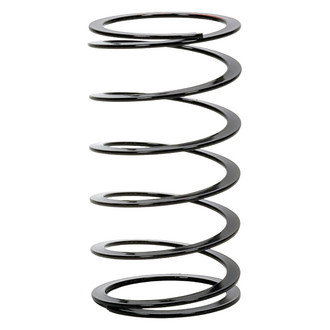
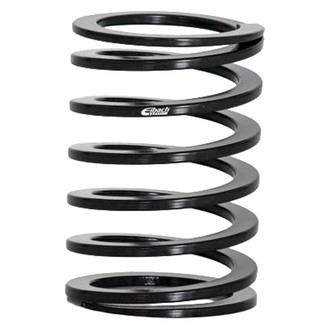
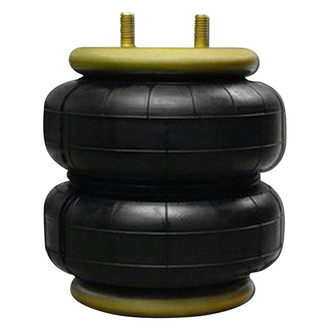

The primary purpose of a track-ready suspension setup is to maintain tire traction. Pitching your car into corners reduces the grip of the outside tires, while weight transfer from front to rear and vice versa under hard launch and braking can cause tire lift-off. Racing springs provide the stiffness required to keep the tires in contact with the track. They are also the major components of lowering kits. Reducing the ride height brings a number of benefits, including lower center of gravity for reduced weight transfer and even weight distribution.
Race car suspensions are commonly associated with stiff springs. They improve cornering, acceleration, and braking through reduced body roll and maintain geometry in sharp turns. Racing springs feature carefully chosen rates to reduce the lowered suspension travel. One more reason why these components are quite firm is aerodynamics. When the race car travels at high speeds, it is subjected to great forces pushing it down. Without the springs being stiff enough, the downforce would result in the car eventually bottoming out. The higher the downforce, the higher the spring rate to withstand the load.
Spring rate is the measure of stiffness. It is a ratio that shows the spring’s resistance during compression (bump). In numbers, it is the amount of weight needed to compress the spring by one inch. The higher the spring rate, the firmer the setup. Going too stiff can overload your tires and cause loss of grip over irregularities, which spoils the whole point of racing suspension mods – maximizing tire contact with the road. That’s why the springs should still be soft enough, especially in the case of drag cars which need to maintain mechanical grip. Changes in suspension rate should be compensated by altering the ride height.