Racing EFI Systems
-
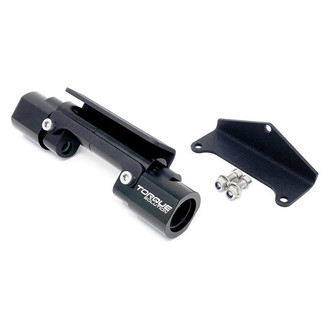 Torque Solution® - Flex Fuel Sensor Bracket (TS-UNI-637)$135.25 + Free Shipping with iD FastTrack
 -
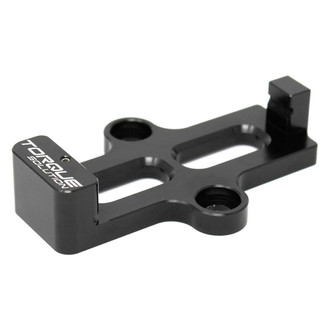 Torque Solution® - Flex Fuel Sensor Bracket (TS-UNI-625)$79.48 + Free Shipping with iD FastTrack
No matter whether it is a naturally-aspirated or turbocharged engine, the right air-fuel mixture is what determines its smooth and efficient operation. For a gasoline engine, the ideal A/F ratio is 14.7:1, which stands for 14.7 parts of air to 1 part of fuel. For many decades, this has been the job of carburetors. However, even the best modern-day carb is far from perfect since it’s not able to provide an engine with the right air-fuel mixture across a wide RPM range, especially if the motor has four or more cylinders, which is why almost all vehicles today, including race cars, use a more advanced way of preparing an air-fuel mixture, which is electronic fuel injection.
An electronic fuel injection system is a complex arrangement of different parts and components, including a fuel delivery system itself with its high-pressure electric fuel pump and injectors, a fuel pressure regulator, fuel lines, wires, various sensors, and an engine control unit. Without exaggeration, the latter can be considered as the brain of a vehicle that manages every aspect of engine operation. It controls the fuel mixture, an idle speed, ignition timing, and, sometimes, even valve timing, as well as performs several other tasks. The ECU is fed with data from different sensors, compares this information and makes a decision on how much fuel must be injected into the air that comes from the intake manifold, or which spark plug must be used, etc.
There are several types of fuel injection systems, including single point or throttle body, multipoint, sequential and direct injection setups. The first one is the simplest and least efficient type of EFI systems, so it is almost not used for racing applications, while the latter one is the most advanced type of fuel ignition, so most likely your modern-day race car is equipped with it. Unlike with multipoint and sequential EFI systems where fuel is sprayed by injectors into intake ports to be mixed with the incoming air and then enter the engine, in a direct injection setup, injectors are placed in the cylinder head and spray fuel directly into the combustion chamber where it mixes with the air. This significantly improves performance and reduces fuel consumption.