

The throttle body plays a crucial role in maintaining your vehicle’s performance by regulating the airflow into the engine. Keeping it free of debris and impurities is essential to ensure that your vehicle runs smoothly.
When you start noticing symptoms that may indicate a bad throttle body, consider taking the time to clean it before you decide to get it replaced. But how do you clean a throttle body yourself? Read on.
8 Steps to Cleaning a Throttle Body
Cleaning the throttle body is a simple task that can be completed in as little as 15 minutes. This step-by-step guide will show you how to clean your throttle body effectively and safely, restoring optimal engine performance.
But first, a word of caution:
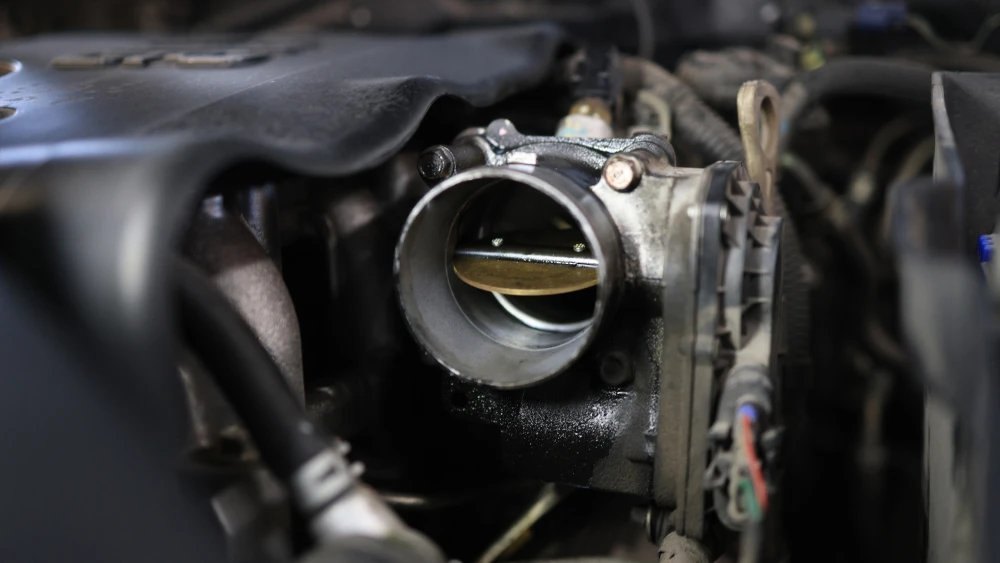
Remember to keep your fingers out when working with electronic throttle bodies. Have an assistant switch the key on without starting the engine, then have them press and hold the accelerator pedal to the floor. By doing this, the throttle plate will be open wide and you can clean it, but again, keep your fingers out because the motor that drives the throttle plate also drives it closed and IT WILL CUT YOUR FINGER OFF.
Even if the electronic throttle body has been removed, opening it by hand will (on some throttle bodies) destroy the mechanism so that the throttle body will need to be replaced.
Again—keep your fingers out of the electronic throttle body.
Prepare Your Tools and Materials
You only need a few basic tools—most of which you likely already have in your garage. If you’re wondering what to use to clean your vehicle’s throttle body, here’s a list to get you started:
- Ratchet and socket set
- Screwdriver or nut runner/socket for the clamp
- Soft-bristled brush or old toothbrush (a new toothbrush will work too)
- Throttle body spray cleaner or carburetor spray
- Protective eyewear and gloves
- Flashlight or other light source
Detach the Negative Battery Cable (If You Want to Be Extra Careful)
Before working under the hood, it’s important to turn off your vehicle and disconnect the negative terminal of your battery. This precaution is essential to eliminate the risk of electrical shocks.
Of course, if you’re cleaning an electronic throttle body, you’ll need to leave the battery connected and you’ll need an assistant. You aren’t likely to get shocked by the 12 volts from the battery, but if you short power to ground anywhere, you may see sparks and cause issues with blown fuses.
But to be frank, this isn’t likely to happen when cleaning the throttle body.

Don’t forget to wear your protective gloves and safety goggles as well. Most mechanics will wear no gloves at all—but if they do, they’ll likely wear nitrile or soft leather gloves rather than cloth gloves. But still, cloth gloves are okay.
Remove the Air Intake Components
Use an appropriate tool such as your screwdriver or socket wrench to detach the air intake hose from the throttle body. It’s actually best to completely remove that hose, and sometimes removing the breather housing like you do when replacing the air filter is a good idea too, just so the hose will stay out of the way.
Disconnect the mass airflow sensor if it’s part of that air cleaner cover and remember to reconnect it after. You don’t need to remove the throttle body (in most cases) to clean it, but you can if you want to—just be aware that if you remove it, you may need a new gasket.
Unplug Electrical Connections (If You Remove the Throttle Body)
Carefully unplug electrical connectors that are attached to the throttle body, such as the throttle position sensor and mass airflow sensor. Handle wires with care to avoid damage.

Remove the Throttle Body (If You Don’t Plan to Clean It In Place)
While it’s possible to clean a throttle body without removing it from the vehicle, it may be better to remove the component for easier access to hard-to-reach areas. Use the appropriate tools, such as your socket wrench, to retrieve the throttle body, and carefully set aside any bolts, gaskets, and other small components that you remove for easier assembly when you’re done.
Again, if you plan to remove it, you’ll need to have a new gasket ready.
Clean the Throttle Body
Make sure you’ve got your protective eyewear and nitrile (not cloth) gloves to prevent the cleaner from getting on your skin—some of it can go into your bloodstream if it touches your skin.
Start by spraying the throttle body cleaner to loosen up the grime inside and around the component. Usually, the spray will have enough pressure to wash the grime away with minimal brushwork. Then, use a soft brush to carefully remove any remaining dirt and buildup.
Be cautious around sensitive areas to avoid damaging the special coating in the throat of the throttle body. Older throttle bodies won’t usually have a coating, but newer ones typically do. It’s there to minimize the need for cleaning, believe it or not.
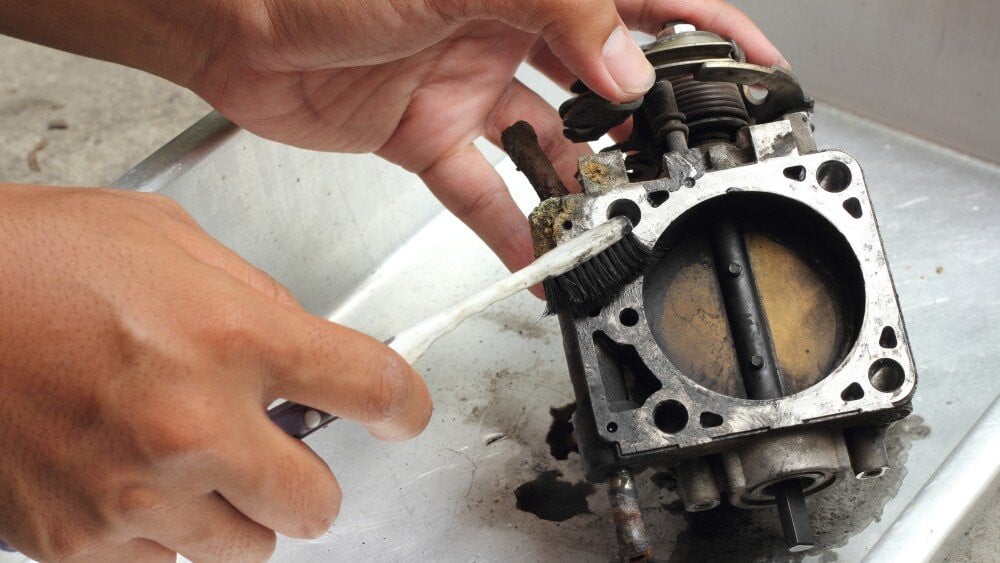
Finally, thoroughly wipe away the residue with clean rags.
It’s important to note that, while some people do use them, some experts warn against the use of WD-40 as it may leave unwanted residue. But even if you did use it to clean your throttle body before reading this, you haven’t ruined anything, so don’t stress out about it after the fact.
As for carburetor cleaner, it’s fine if you aren’t spraying it on plastic parts. It won’t damage the metal parts of the throttle body or throttle plate, because those parts are made of the same metals used in carburetors anyway (unless you have a plastic throttle body).
We recommend using specially formulated products like Permatex® Throttle Body, Carb and Choke Cleaner or Johnsen’s™ OTC Compliant Throttle Body & Air Intake Cleaner.
Reassemble the Components
Once all surfaces are clean and dry, you can proceed to reinstall the throttle body. Make sure all bolts and gaskets are properly aligned and tightened according to your vehicle’s specifications. Reconnect all wirings and hoses that were removed, and don’t forget to reconnect the negative battery cable to restore power.
Test the Engine
Start your engine and let it run idle for a few minutes. Put the vehicle in park or neutral (or disengage the clutch if you have a manual transmission) and rev the engine, listening closely for any unusual sounds. The throttle should be responsive, with no rough idling, stalling, or related warnings on the dashboard.
Drive the vehicle, making a lot of stops, both with and without the A/C engaged.

In many cases, you should notice smoother vehicle performance after cleaning the throttle body. If you notice any irregularities or persistent problems, consider inspecting other components for hidden issues or consulting a mechanic for further diagnosis.
If the throttle body includes an idle air control valve and you didn’t disconnect the battery, you should have cleaned those passages as well. And because of adaptive learning, you may notice a higher idle speed until the PCM/ECM stores the new IAC numbers. Likewise, on some vehicles, if you remove the battery terminal or replace the battery without cleaning the throttle body, the engine may not idle until it learns the profile it stored before the battery was disconnected.
How Often Should You Clean the Throttle Body?
The general recommendation is to clean the throttle body every 25,000 to 50,000 miles, although it will still depend on your driving habits, fuel type, and even your vehicle’s age. This should help prevent any sticking due to carbon buildup on the throttle plate, as this can lead to restricted airflow, decreased power, fuel inefficiency, and other performance issues.
How Much Does It Cost to Clean the Throttle Body?
Throttle body cleaning is a pretty straightforward task, but you might be wondering about how much it costs to clean the throttle body if you decide to have it done by a professional. Generally, it can range from $50 to several hundred dollars, depending on the shop and the complexity of the job. One of the biggest factors that influences the cost is the accessibility of the throttle body. However, if your throttle body is right on top of the engine, like in most cars, the process will relatively be simple and cost-effective.
FAQ
Can you use brake cleaner to clean the throttle body?
Yes, typically you can use brake cleaner to clean a throttle body, as long as it’s safe for rubber and plastic parts. Nonetheless, brake parts cleaner doesn’t cut through the deposits in a throttle body like carburetor spray or throttle body cleaner.
Is it better to clean or replace the throttle body?
Whether you should have the throttle body cleaned or replaced depends on the condition of the component. Dirty throttle bodies can often be salvaged with routine check-ups and cleaning, while damaged, corroded, or malfunctioning throttle bodies due to sensor or electrical issues will need to be replaced as soon as possible to avoid issues with your vehicle’s performance.