

The Toyota Tundra looks and feels like an all-American pickup truck while staying true to the famed durability and efficiency of a Toyota vehicle. But how does it perform, reliability-wise?
Let’s learn more about the Toyota Tundra and how it lives up to its rugged image.

Are Toyota Tundras Reliable?
Toyota Tundras are considered generally reliable vehicles. RepairPal gave the truck an above-average reliability rating of 3.5 out of 5. It also ranked 6th in RepairPal’s lineup of 17 full-size pickup trucks.
In terms of repairs, the Toyota Tundra has average ownership costs, with annual repair costs coming in at around $605. Owners say that repairs tend to be more serious than the norm, but occur less often.
Consumer ratings on JD Power also gave the Tundra above-average scores, citing its incredible quality, overall reliability, and good resale value. The driving experience could use some improvements, as some owners have noticed a rougher drive with the vehicle.

The Tundra also gets above-average reliability scores from US News and World Report as owners rave about the truck’s spacious interiors, comfortable ride, and excellent cabin storage. Many owners also note poor fuel economy as well as subpar towing and hauling capacity as points that needed more development.
Overall, the Toyota Tundra is a good choice if you’re in the market for a beefy and reliable full-size pickup truck.
What Are the Most Common Issues with Toyota Tundra?
The Toyota Tundra has several points for improvement and issues even as a reliable vehicle. Here are the most common ones reported by owners, including the models affected.
Exhaust Manifold Failure
This issue is typical in models with V8 engines. Some owners have noticed a ticking noise from the engine compartment, most pronounced while the engine is still cold. According to the same reports, the issue is due to a leaking exhaust manifold.
Affected Model Years:
- 2000
- 2001
- 2002
- 2003
- 2004
- 2005
- 2006
- 2007
- 2008
- 2009
- 2010
- 2011
- 2012
Lower Ball Joint Issue
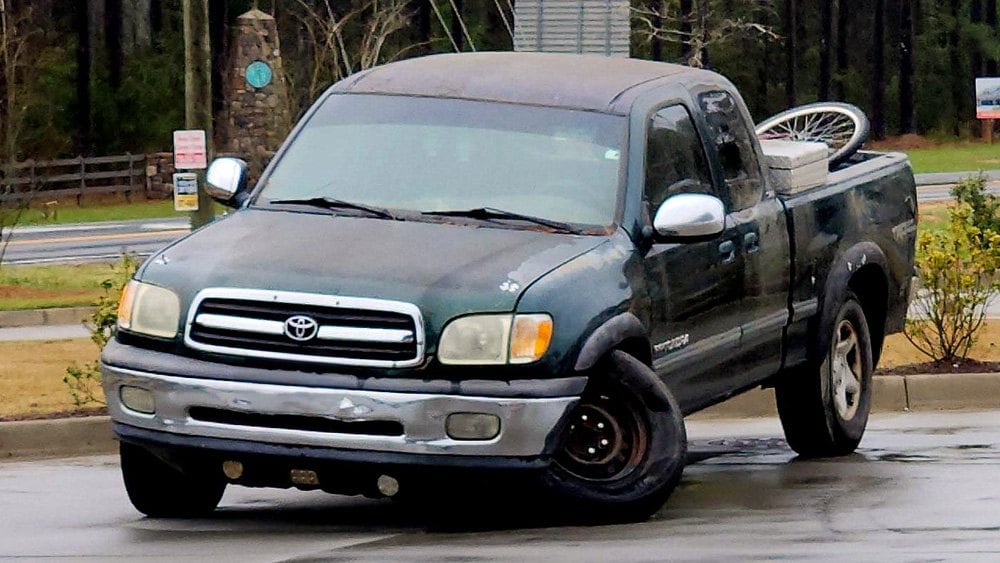
Toyota issued a recall on a few Tundra model years due to lower ball joint issues. This is due to premature wear that may have been caused by improper finishing during production. The recall advised the replacement of ball joints in the affected units.
Affected Model Years:
- 2000
- 2001
- 2002
- 2003
- 2004
- 2005
- 2006
- 2010
- 2012
Issues with Air Injection Pump
Some owners have reported hearing a noise like a vacuum cleaner during a cold start. This issue is due to a damaged secondary air pump, which can cause poor fuel economy and failed smog tests.
Affected Model Years:
- 2000
- 2001
- 2005
- 2006
- 2007
- 2008
- 2009
- 2010
- 2011
- 2012
- 2013
Failed Oxygen Sensor
Owners have complained about the illumination of the check engine light due to the failure of one or more oxygen sensors in their Toyota Tundra. Replacing the sensor should fix the issue.
Affected Model Years:
- 2000
- 2001
- 2002
- 2003
- 2004
- 2005
- 2006
- 2007
- 2008
The “Strawberry Milkshake” Phenomenon
The term “strawberry milkshake” is due to the color and consistency of the fluid found in the coolant reservoir, transmission, and radiator. This happens when the automatic transmission fluid (ATF) and engine coolant mix in the radiator, engine, and transmission.
This phenomenon can cause severe damage if not addressed immediately. Fixing the issue may require radiator replacement and the complete flushing of the engine cooling system and transmission fluid.
Affected Model Years:
- 2000
- 2001
- 2002
- 2003
- 2004
- 2005
- 2006

What Are the Best Model Years for the Toyota Tundra?
Summing up the reliability scores from RepairPal, JD Power, and US News and World Report, here are the best model years for the Toyota Tundra:
- 2009
- 2015
- 2019
- 2020
- 2021
FAQ
Where are Toyota Tundras made?
Although Toyota is a Japanese brand, the company has production facilities all over the world—including in the United States. Originally, the Tundra was produced in the Toyota plant in Princeton, Indiana. This was where the first generation of Tundras was manufactured back in May 1999. As demand for the vehicle grew, they moved the production to San Antonio, Texas to scale up production. Toyota Tundras have been produced there since 2008.
How many miles can a Toyota Tundra last?
According to owners, the average lifespan of the Tundra is around 150,000-250,00 miles. With proper care and maintenance, it can surpass 300,000 miles. Sticking to regular maintenance schedules always helps to avoid any serious damage and prolong the life of your vehicle.