

If your vehicle has low oil pressure, it can lead to engine performance issues and more serious problems down the line. In this guide, we help you identify the signs of low engine oil pressure, what could potentially be causing the problem, and what you can do to fix it.
What are the Signs of Low Oil Pressure?
Luckily, finding out whether you have low oil pressure won’t be too hard, because there are usually only two clear symptoms:
Low Oil Pressure Light
The first sign of low oil pressure is usually the oil pressure light turning on. This warning is automatically triggered when the oil pressure sensor detects that oil pressure levels have dropped below a certain threshold.
Of course, make sure the light or gauge isn’t being triggered falsely—but always assume it’s telling the truth first!
Strange Engine Noises
Low oil pressure means that there is insufficient engine oil to lubricate the engine’s components. If this is the case, odd sounds will typically be heard from the engine, usually from the valve train area first because that’s the farthest pressurized lube point in the oil gallery from the oil pump.
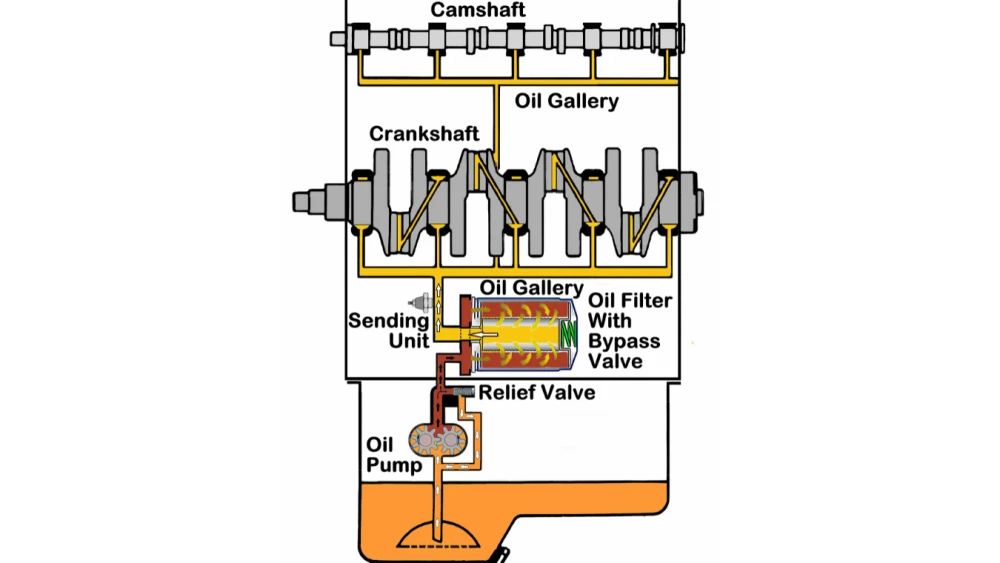
Lifters are pressurized by oil and will click and clack when the oil pressure drops below a certain threshold.
Additionally, engines with oil-driven timing chain tensioners will develop a timing chain rattle due to low oil pressure. Usually, at least 25 psi of oil pressure is required for the tensioners to apply sufficient pressure to the timing chain.

When the oil is colder and thicker, the pressure may be enough that no noises will be heard, but as the oil thins when it becomes hot, the pressure will drop if there are worn bearings that allow it to escape the gallery.
What Causes Low Oil Pressure?
Low oil pressure can happen for many reasons. Here are the most common ones:
Low Oil Levels
Most cases of low oil pressure are simply due to insufficient oil. If the oil levels are too low, the oil pump cannot effectively generate enough pressure to circulate the oil inside the engine.
Using the Wrong Type of Oil
If the engine oil is too thin or too thick, it may not be able to circulate properly. Oil that hasn’t been changed for a long time will also thicken and cause the same result.
Oil Leaks Past Worn Bearings
Oil can escape from the bearings and journals when a bearing wears enough to allow it. This will usually happen first at the cam bearings because they’re farthest from the oil pump in the gallery and the first bearings to suffer from lack of lubrication.
When a mechanic is searching for a low oil pressure issue that they believe is bearing-related, they will pressurize the oil gallery with shop air and listen for a loud air leak within the engine. This involves removing the oil pan to pinpoint the source of the bearing wear that is causing low oil pressure.

Faulty Oil Pump or Stuck Relief Valve
A worn, defective, or improperly installed oil pump is also a known cause of low oil pressure. In such cases, the pump is not generating enough pressure to circulate the oil inside the engine.
The oil pump is a positive displacement pump, but it cannot produce pressure without a relief valve. Sometimes the valve is built into the pump, while other times it it is built into the cover where the pump mounts. Either way, every oil pump works in conjunction with a relief valve.

If the relief valve sticks open or if the spring breaks, there will be NO oil pressure even though the oil pump is working as it should.
Oil pumps can also wear out and render them unable to produce enough pressure.
What Does Low Oil Pressure Mean?
Low oil pressure means the oil inside the engine isn’t pressurized enough to properly lubricate the engine’s moving parts. Lack of pressure also means the oil won’t be able to remove harmful particulates or draw heat from engine components as effectively.
Because lack of oil pressure can have severe effects, it’s important to address any low engine oil symptoms as soon as possible.
How to Check Your Oil Pressure

We recommend that you take your vehicle to a mechanic to check the engine to get accurate oil pressure readings. However, there are also a few ways for you to indirectly assess any potential oil pressure issues:
Check the Oil Pressure Gauge
Some vehicles have a simple pressure gauge next to the oil pressure light that provides a real-time reading of current oil levels. You can also connect an external gauge to the vehicle’s oil pressure port to check current pressure levels.
Verify the Oil Level
You can use the engine’s oil dipstick to determine whether there is enough oil for the pump to pressurize. If the oil level is below the recommended range indicated on the stick, more oil must be added or replaced entirely.
Use an Oil Pressure Tester
Oil pressure test kits allow you to get more detailed readings from the engine. The tester is typically connected to the oil pressure sender port to take pressure readings while the engine runs at a specific RPM.
What Should Your Oil Pressure Be?
The ideal oil pressure varies depending on the vehicle’s make and model, but the general rule is that it should be between 25-65 PSI at operating for the oil to circulate properly inside the engine. You can also check your vehicle’s owner’s manual for specific recommendations.
How to Fix Low Oil Pressure
Fixing a low oil pressure issue can vary depending on the cause and severity. Some of the basic repairs you can make include:
Adding More Oil
If the oil level is too low, replenishing it to the recommended levels should help restore normal pressure.

Getting an Oil Change
If the engine oil hasn’t been replaced for a while or the vehicle hasn’t been driven for some time, the engine oil and the oil filter must be replaced.
Checking and Repairing Leaks
Leaky oil gaskets, valves, and lines will have to be replaced, and loose engine components and hardware will also have to be re-tightened.
Replacing the Oil Pump
If the engine oil levels are good but the oil pump isn’t generating enough pressure, it might be malfunctioning and will need to be replaced.
Replacing the Oil Pressure Sensor
A faulty oil pressure sensor may sometimes generate a false reading due to a lack of calibration or malfunction. A mechanic will have to repair and recalibrate the sensor or even replace it altogether.
FAQ
What causes low oil pressure at idle?
Low oil pressure when the vehicle is idle can mean a serious problem with the engine. In most cases, it is due to a faulty oil pump, worn engine bearings, or a combination of both. The drop in oil pressure is most noticeable when idling because the pump isn’t working as hard to keep the pressure up.
Why does my oil pressure drop when I stop my vehicle?
It is normal for oil pressure to drop slightly when the vehicle comes to a stop. This is because the oil pump slows down significantly at lower RPMs. However, if the oil pressure drops drastically or the gauge reads zero, it could indicate a more serious issue.