

The harmonic balancer or vibrational dampener is one of your engine’s moving parts and is vital in keeping everything running smoothly. If the harmonic balancer goes bad, it can result in major engine issues.
This guide will help you spot the symptoms of a bad harmonic balancer and learn more about this component to help you diagnose your vehicle.
What are the Signs of a Bad Harmonic Balancer?
Some of the most common symptoms of a bad harmonic balancer include unusual engine noises and vibrations, wobbling of the balancer, ignition timing issues, and more. Here’s an in-depth look at the signs you should watch out for:
Unusual Engine Vibrations
The primary job of a harmonic balancer is to dampen the vibrations in the crankshaft. If this part fails, you might notice unusual vibrations coming from your engine.

Odd Engine Noises
Another common sign of a bad harmonic balancer is weird engine noises. These often manifest as knocking, rattling, or squeaking, depending on the engine speed. Sometimes, the noise can be so bad that people mistake it for a malfunctioning engine.
A damaged dampener can sometimes cause unusual movement in the drive belt or the automatic drive belt tensioner. This results in distinct clicking or squealing noises while the engine is running.
Ignition Timing Issues
Vehicles with distributors have adjustable ignition timing, aided by timing marks on the harmonic balancer’s outer edge. A damaged harmonic balancer can lead to ignition timing issues, potentially causing engine knocks, poor performance, reduced power or acceleration, and overheating.
Balancer Wobbling
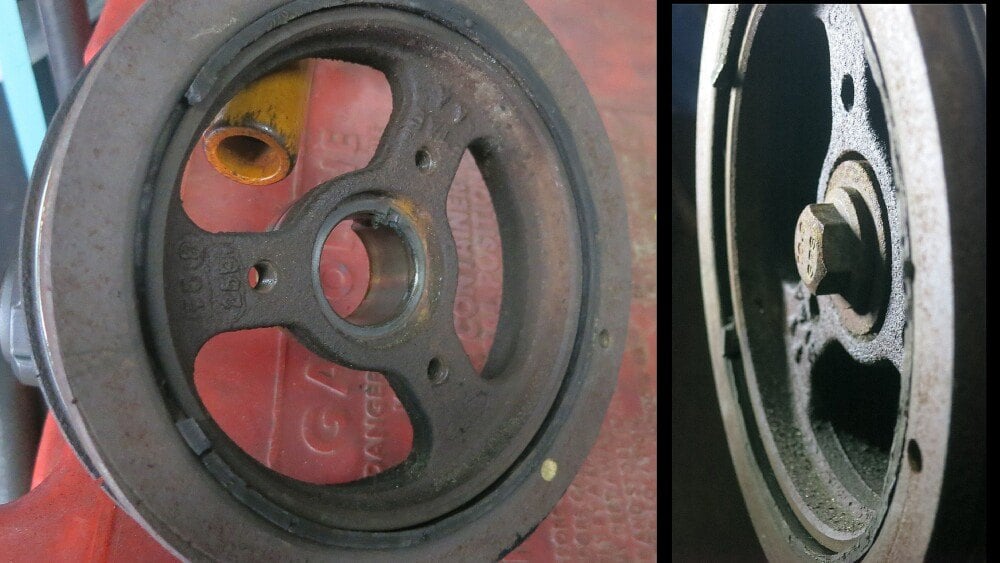
A quick inspection of the part can also help you determine if there’s an issue. The harmonic balancer includes a rubber insulator. If this gets damaged, the balancer can move out of place, which results in a noticeable wobble of the entire component.
Visible Wear and Damage
While you’re checking the harmonic balancer for any wobbling, do a visual inspection as well. A bad balancer can have worn rubber insulators or a visible separation of the main hub and the outer part of the balancer.
Many balancers have timing marks on the outer hub. If the hub detaches from the rubber insulator and slips out of index, it will not only vibrate due to improper balancing of the crankshaft, but it will also shift the timing marks out of index with the crankshaft. This misalignment can cause issues when a mechanic tries to find Top Dead Center on cylinder one and makes it impossible to set the timing with a timing light since the marks on the balancer are used for that.
What Does a Harmonic Balancer Do?
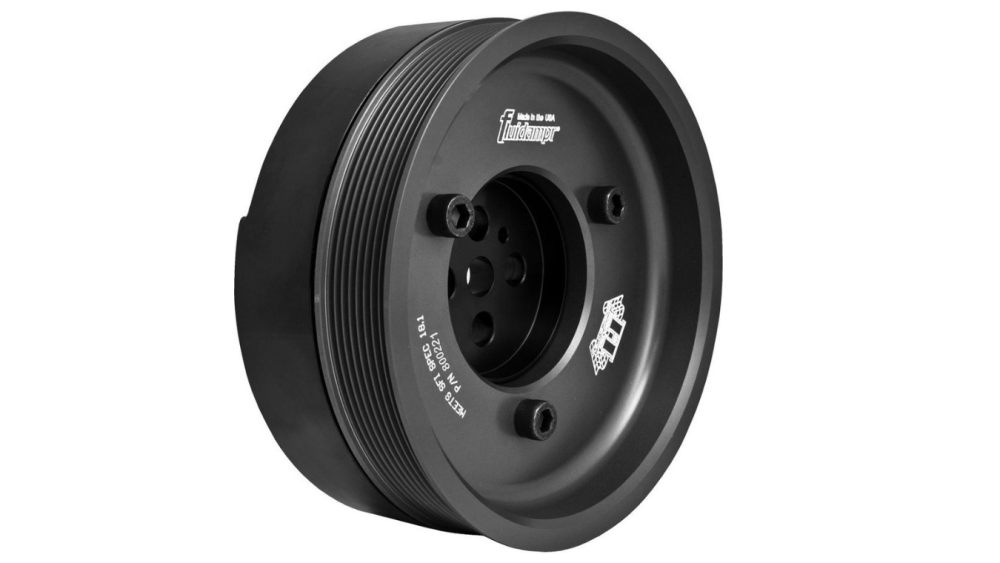
The harmonic balancer, also called the torsional vibration damper, vibration damper, or crankshaft damper, is an engine component that dampens the vibrations exerted on the crankshaft. It is attached to the front of the crankshaft and will either have the crankshaft pulley bolted to it, or the crankshaft pulley will be part of the balancer.
It is comprised of a center hub, an inertia ring, and a rubber insulator. In some vehicles, the harmonic balancer uses other materials or a specialized fluid as an insulator.
The center hub is fastened to the end of the crankshaft with a single large bolt, and the crankshaft pulley(s) that provide power to the accessory drive belt(s) will either be part of the balancer or will be attached to the balancer with four bolts.
How Does a Harmonic Balancer Work?
Since the harmonic balancer is made of both rubber and metal, the rubber component absorbs the vibrations created by the pistons and connecting rods driving the crankshaft. The weighted outer hub of the balancer, combined with the flexible rubber, helps reduce the natural torsional twisting forces acting on the crankshaft.
On the opposite end of the crankshaft, a heavy flywheel (for manual transmissions) or a flex plate bolted to a heavy torque converter (for automatic transmissions) also helps to neutralize crankshaft vibrations.
At certain engine speeds, torsional vibrations in the crankshaft can resonate and amplify. The harmonic balancer works to dampen these resonant vibrations, protecting the engine from excessive wear.
Where is the Harmonic Balancer Located?
The harmonic balancer is typically located at the front of the engine. It is attached to the crankshaft, usually with a slot in the crankshaft hub and a matching key in a slot on the crankshaft boss. Some balancers are press-fit and must be installed and removed with tools, and others will slip off by hand (as on the older Ford Escorts and 2.2L Toyota Camry).
Harmonic Balancer Replacement Cost
The cost of replacement harmonic balancers can range from $13 to almost $1,200. The exact price depends on several factors, including the materials the part is made of and the specific make, model, and year of the vehicle. Labor costs usually start at around $100 but this will vary greatly depending on the complexity of the repair and other possible factors.
FAQ
Can I drive with a bad harmonic balancer?
While not advisable, you may be able to drive with a bad harmonic balancer depending on its slippage. Drivers often remain unaware of slight slippage, especially if the pulleys are attached to the center, causing minimal or no vibrations. However, if the pulleys are part of the weighted ring and they slip, it can misalign the belt and cause further issues.
Will a bad harmonic balancer damage the engine?
The chances of serious engine damage due to a slipped harmonic balancer are extremely low, but the issue shouldn’t be ignored. Engine damage may occur in some 2000s rear-wheel-drive 4.0L Explorers if the pulley slips and destroys the crank sensor, though this is rare. Some 3.8L GM platforms may experience rubber failure, causing the balancer to make noise, but this seldom leads to engine damage.
What causes a harmonic balancer to go bad?
Heat, exposure, cracking, incorrect installation, removal, and excessive belt tension can cause the harmonic balancer to fail. Dampening crankshaft vibrations generates heat, which can deteriorate the dampening material and cause cracks or bulges. Improper installation or removal can result in the balancer not being properly tightened, causing it to move and shear the key, especially in press-fit balancers.