

Much like their drivers, cars will age and experience issues. Driving habits, road conditions, and general wear-and-tear can contribute to the gradual decline of its parts—including transmission mounts.
In this article, we’ll discuss the role of a transmission mount in your vehicle and the key signs that it may require prompt inspection.
What are the Signs of a Bad Transmission Mount?
How can you tell if your transmission mount is bad? Here’s what to look for when diagnosing your vehicle:
Unusual Noises
The most common symptom of a bad transmission mount is a clunking or banging noise, especially during acceleration, sudden braking, and gear changes. Parts of the transmission mount can wear down or crack, causing noticeable sounds from within the car’s chassis.
Vibrations
Often accompanied by noise, increased vibration can be felt through the chassis and into the vehicle cabin. As your transmission mount wears out, its rubber components can break free or become damaged, preventing it from effectively absorbing vibrations from the transmission and engine whenever your vehicle is running.
A transmission mount exposed to oil leaks can wear out prematurely, allowing vibrations to pass through to the vehicle. Similarly, debris like rocks or mud caught in the mount can also cause vibrations.
Abnormal Transmission Movement
A vehicle’s transmission mount plays a major role in keeping your vehicle’s transmission securely in place. A faulty transmission mount can cause the transmission to move excessively and shift out of place when accelerating, braking, or turning. Of course, you’re more likely to notice a bad transmission mount on a front-wheel drive vehicle than on a rear-wheel drive platform simply because of the dynamics of the powertrain.

Difficulty Shifting Gears
One indication of a failing or damaged transmission mount is when you experience resistance when changing gears. When the transmission is not securely mounted, it may move around excessively or shift out of alignment, making gear shifting much more difficult. You might also notice grinding noises or the need for increased effort to successfully shift gears.
That being said, if the transmission mount is bad enough to cause this issue, there will be other symptoms as well.
What Does The Transmission Mount Do?
Now that you know the symptoms of a faulty transmission mount, let’s explore this component’s role in your vehicle to understand how it contributes to the overall performance, stability, and smooth operation of the transmission system.
What is The Transmission Mount?
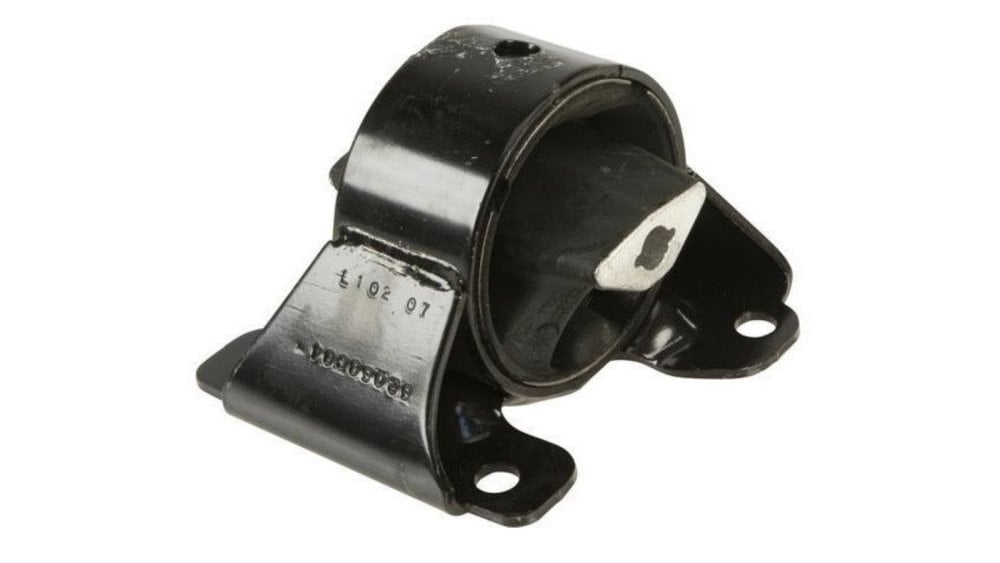
Transmission mounts are metal brackets with rubber cushioning between the section bolted to the engine and the part attached to the frame or crossmember. The number of transmission mounts in a vehicle varies by make and model.
Rear-wheel drive vehicles usually have one transmission mount at the rear of the extension housing and two engine mounts. Front-wheel drive vehicles, on the other hand, may have two engine mounts and two transmission mounts. Keep in mind that parts and service catalogs may not use the same terms to describe engine and transmission mounts, so be careful with that.
What Does a Transmission Mount Do?
A transmission mount’s metal brackets and the rubber between them play a crucial role in supporting the transmission and separating it from the vehicle’s chassis. Inside, it features rubber blocks (sometimes filled with liquid) between the vehicle chassis and the mounting bracket to help absorb vibrations and prevent rattling.
Where is the Transmission Mount Located?
Front-wheel drive vehicles typically have the transmission mount attached to the subframe or engine block. Meanwhile, rear-wheel drive vehicles usually have it located between the transmission and the crossmember.
The location can vary depending on the vehicle car and make.
Transmission Mount Replacement Cost
How much does it cost to replace a transmission mount? The cost typically ranges between $200 and $800, especially if done by a professional mechanic. Several factors affect transmission mount replacement costs, including your vehicle year, make, and model.
To avoid compatibility issues, it’s best to refer to your vehicle’s instruction manual or seek professional assistance. It’s also crucial to replace a faulty transmission mount as soon as possible to avoid more expensive repairs down the line.
FAQ
Can a bad transmission mount cause the car to jerk?
Yes. When a transmission mount’s rubber parts start tearing or showing signs of wear, your transmission may start to move and jerk, especially when accelerating and changing gears.
How long can you drive with a bad transmission mount?
While faulty transmission mounts don’t necessarily prevent you from driving your car, continuing to use the vehicle can potentially cause further damage to the engine and transmission. It’s crucial to address the problem as soon as possible to avoid more costly repairs.