Audio Crossovers
Individual speakers usually can’t encompass the whole audio spectrum, from low to high frequencies. That’s why most high-fidelity speakers are equipped with multiple drivers that can handle different frequency bands. A crossover is essential to split the audio signal into separate frequency bands and feed the correct driver. Full-range car speaker usually have built-in crossovers to filter out frequencies but if you’re into further customizing your sound system, installing a separate outboard crossover is a smart choice that will give you total control over your speakers.
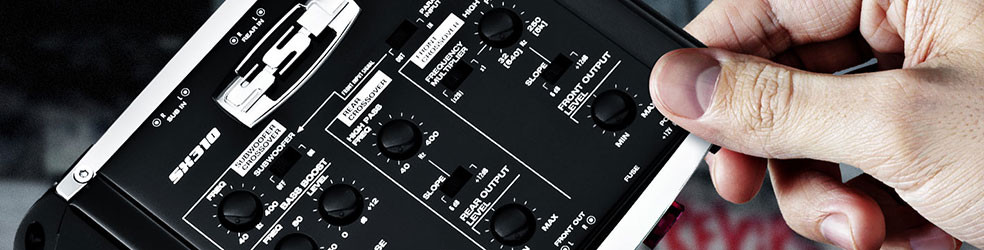
Crossovers use a single input signal and create two or three output signals consisting of separated frequencies that will be individually directed to the correct speaker – highs to tweeters, mids to woofers and lows to subwoofers. With a crossover, your drivers won’t try to put out the notes they are not optimized for. The basic types of crossovers are active and passive. Component passive crossovers are installed between the amp and speakers, or between the receiver and the amp if it’s an in-line crossover. Active crossovers are wired between the receiver and amplifier.
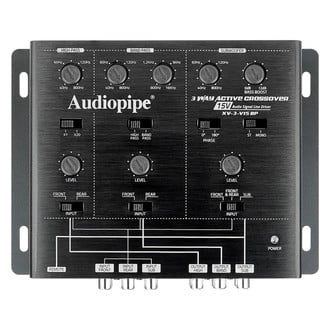
To filter the signal the way you want it, passive crossovers don’t require power unlike active crossovers that also need +12V, ground and turn-on connections, however providing more flexibility and full control when it comes to fine-tuning your audio sound to what’s right for you. The rewards and advantages you’ll get out of an active crossover are worth a little time and effort spent on the installation. With an active crossover, you can adjust the signal level to individual channels of amplification of a tweeter, woofer and/ or sub to your preferences. It will also cut out unwanted frequencies before the amp will try to boost them, so the amp will be fully concentrated on only boosting the right frequencies without wasting precious energy. This gives a huge boost in available power, dynamic range and provides complete control over the tones across the entire frequency range.
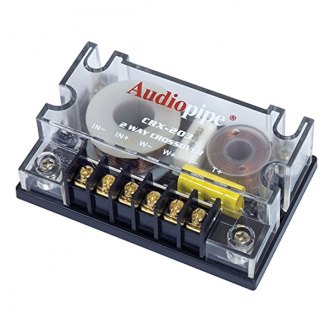
The volume controls of an active crossover on each channel or pair of channels allow you to keep all notes put out by every speaker driver in balance. For music maniacs obsessed with an idea to build an outrageously hardcore competition car audio system that will reimagine the sound quality and performance, adding a high-end active crossover is right what the doctor ordered. Active systems will let you play your music, your way. You’ll enjoy a lifelike listening experience with a clean and crystal clear sound others would envy. The component passive crossovers are “networks” of capacitors and coils that operate on speaker-level signals. After a full-range signal from an amp goes into the crossover, it splits it into high notes which are directed to the tweeter while mid and low notes go to the woofer, respectively.
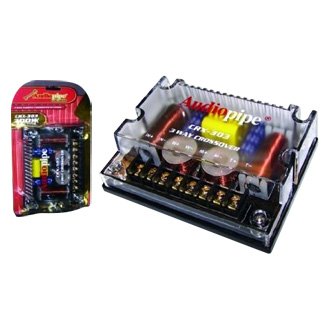
Most of these crossovers give you an option to turn down the tweeter if it’s too loud for the woofer. When using a passive crossover, speakers change their impedances which causes inconsistent vocal sound definition. In-line passive crossovers hook up before the amp and come set to a specific frequency without possibility to adjust them. They ensure that the energy won’t be wasted to boost frequencies you don’t want. This type of passive crossover is a perfect way to sharpen sounds in a component speaker system. Evolve you car audio with high-end active and passive crossovers offered on our virtual shelves, including 2 way/ 3 way crossovers w/o remote subwoofer level control and variable crossovers. Designed using cutting-edge technology, they’re sure to improve any vehicle's customized system configuration.