The Anatomy of a Banks Power Billet Torque Converter Clutch
Forged-Steel Billet Front Cover
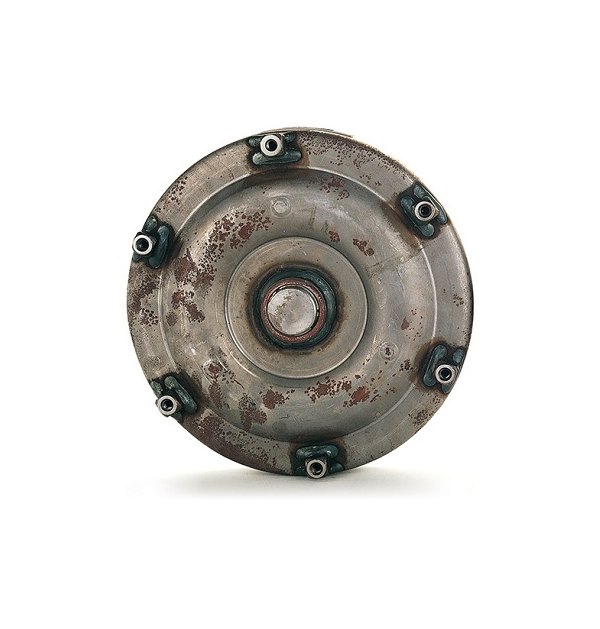
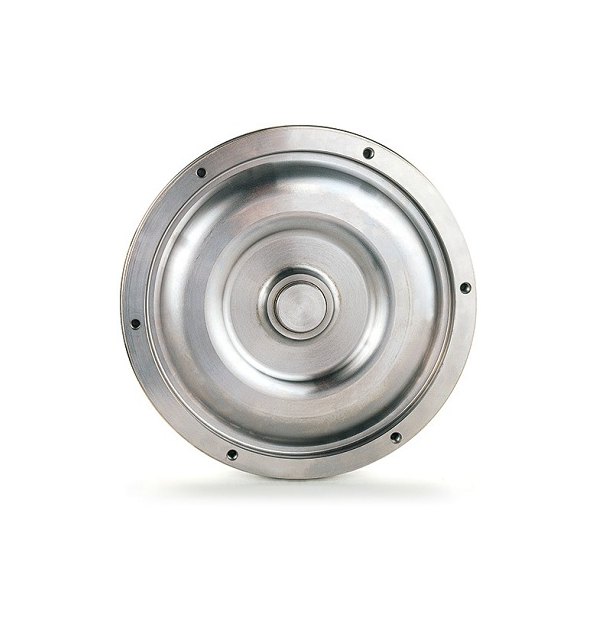
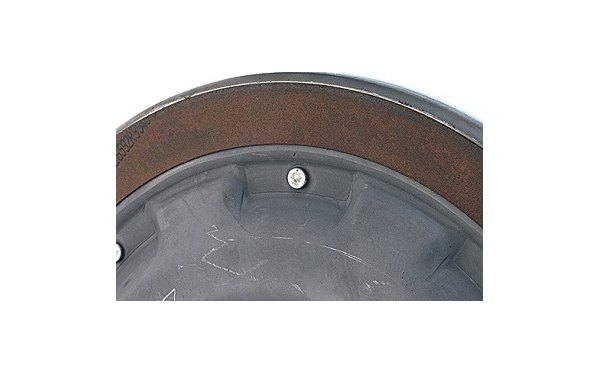
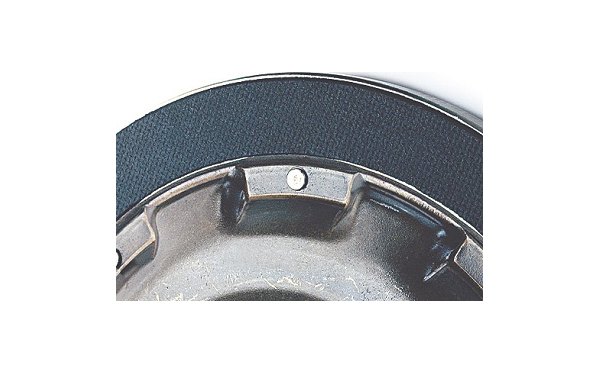
Banks replaces the stock cover stamped from low-carbon steel that’s prone to warp with a thick, single-piece cover CNC-machined from forged steel. Forging "networks" the natural grain for equal strength in all directions, so the cover remains uniformly flat under the extremes of force and heat. Unlike inferior covers that go by the name "billet," Banks does not weld a disc or ring to the sidewall, so there are no internal high spots caused by heat, or attachment posts that weaken with time.
Stock cover attaches to engine with welded posts Banks machines connectors into forged-steel billet
Lockup Clutch
As velocity increases, transmission speed approaches engine speed, without quite catching up. Any difference in engine and transmission rates wastes power and fuel. A lockup clutch counters this inefficiency by locking the torque converter’s two halves together once they are up to speed. Banks’ heavy-duty lockup clutch is sized for maximum contact area, and utilizes a ceramic-carbon material that resists slipping, heat and wear far better than the factory’s cellulose material.
Stock paper-coated clutch surface wears away and slips Banks’ ceramic-carbon clutch surface grips and lasts
Turbine Hub
The center of the turbine is where power transfers from the torque converter to the transmission’s input shaft. Banks replaces the factory-riveted hub that shifts and wears out with the firm hold and durability of a welded, hardened-billet spline.
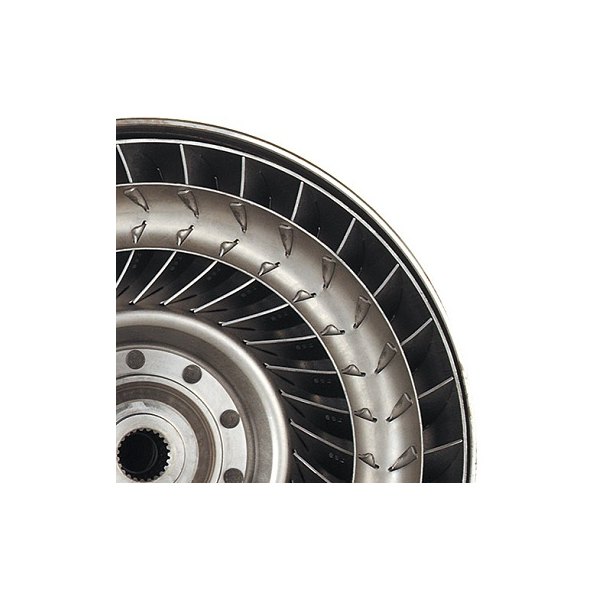
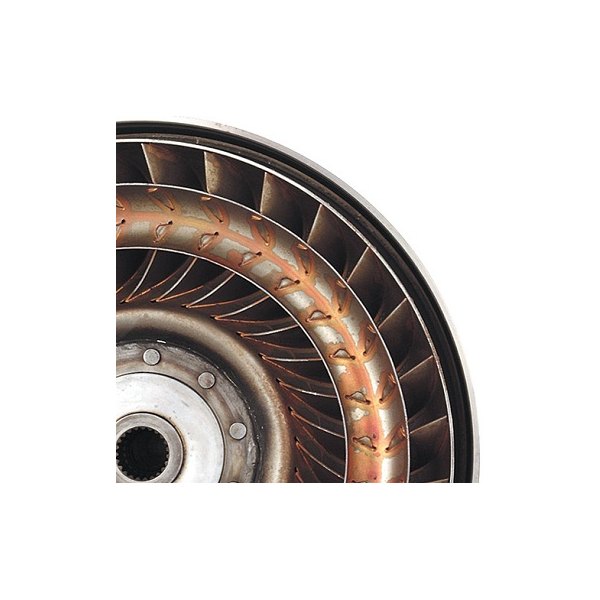
Stock turbine shell’s cut-rate construction compromises fluid flow Banks furnace-brazing streamlines flow and never leaks
Furnace-Brazed Turbine
Banks furnace-brazes the fins solidly onto the turbine shell, forming an integral piece, eliminating the loosening that occurs in standard "insert-and-bend" construction, and the warping common with welded fins. Banks’ method streamlines and seals the trans fluid’s flowpath, so the fluid moves faster and stays cooler, producing more power.
CNC-milled Stator
Banks’ stator is CNC-milled to exact an aggressive blade design that lowers "stall speed"—the point at which power is transferred from the engine to the transmission—so it coincides with the engine’s natural torque curve. The stock stator’s stall speed occurs from 2000 to 2500 rpm, well above a diesel’s torque peak. Banks makes the most of power and efficiency by matching the stall speeds to Dodge’s 1600-1900 rpm peak-torque window, and to Ford’s 1400-1900 rpm high-torque plateau.
Torrington Thrust Bearing
Where the factory uses a plastic washer, Banks supports the stator against the turbine with a Torrington sealed-roller bearing that stands up to heat without deforming or deteriorating.
Hardened Pump Drive
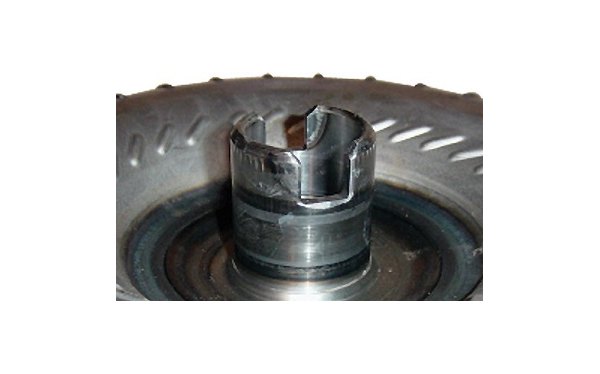
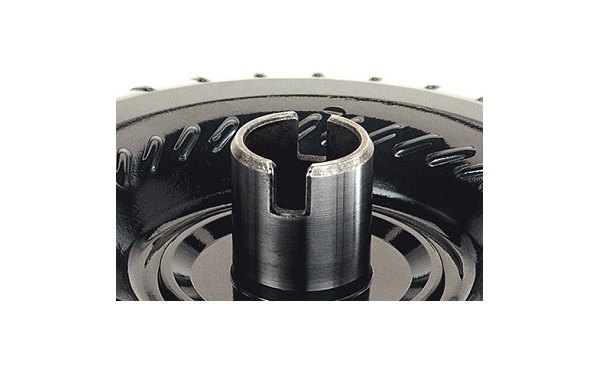
The back cover doubles as a centrifugal pump. Integral to the cover is a pump drive hub, which mates to the transmission. In stock form, this area tends to chip and crack. Banks overcomes the problem with a hardened pump drive that withstands twisting force. Finally, the complete torque converter is pressure tested to assure perfect sealing.
Stock hub cracks and wears Banks’ hardened hub withstands massive torque