
What is Alloy?
Aluminum alloy wheels’ manufacturing process has developed a lot since 1970s. Due to sophisticated wheel design, casting has become the dominant manufacturing process. Alloy wheel material has evolved too: car wheels alloys now contain 7 to 12% silicon content, and varying contents of magnesium in addition to aluminum, in order to meet the demand for metal-mold casting properties, corrosion, and fatigue resistance.
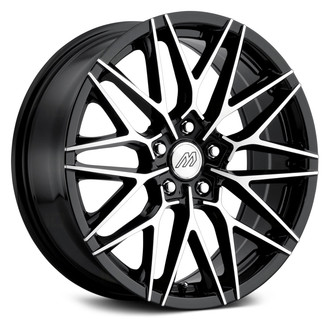
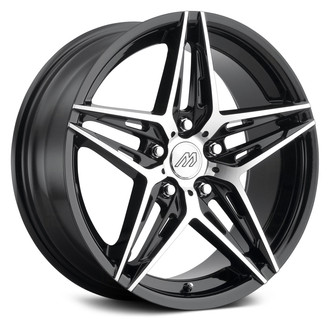

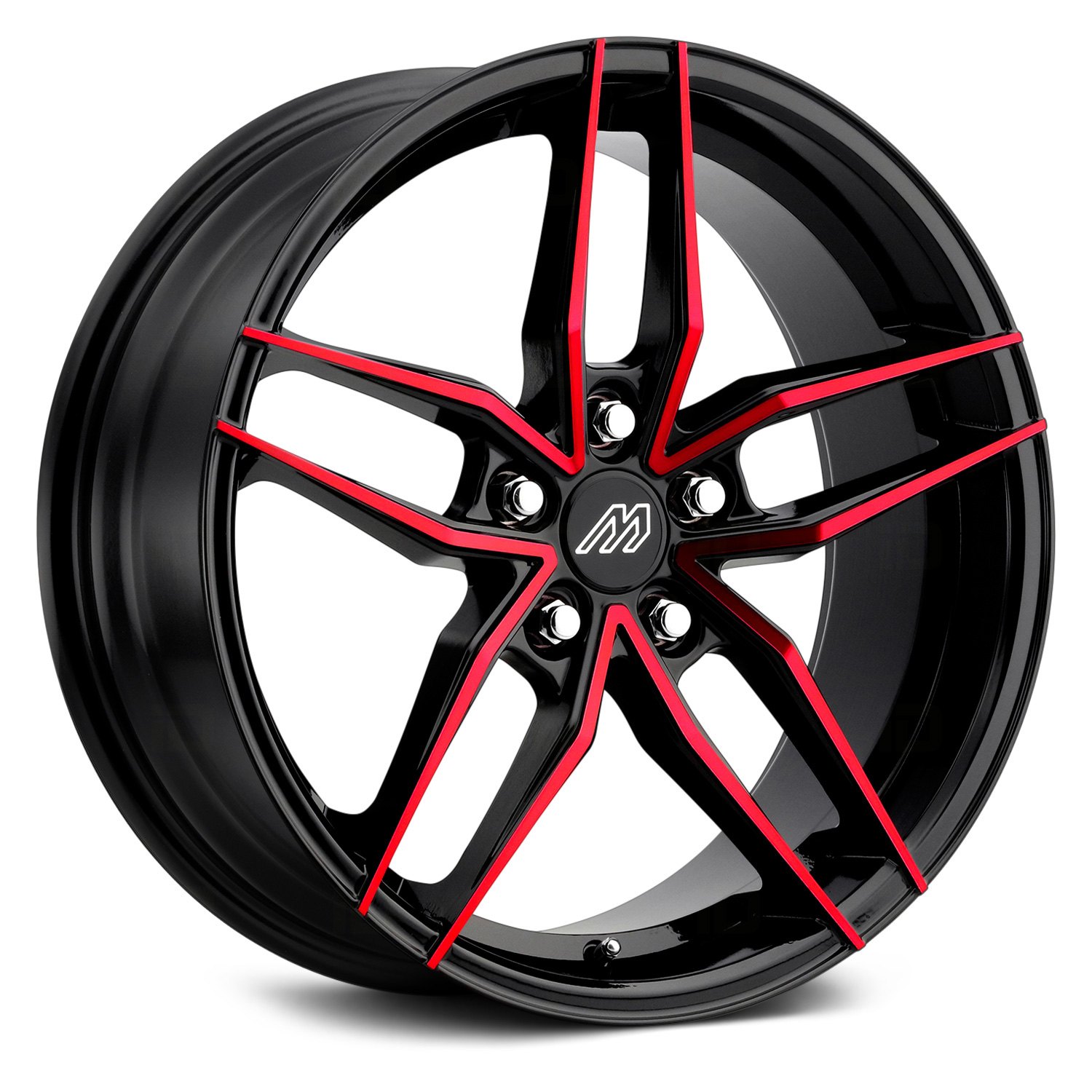
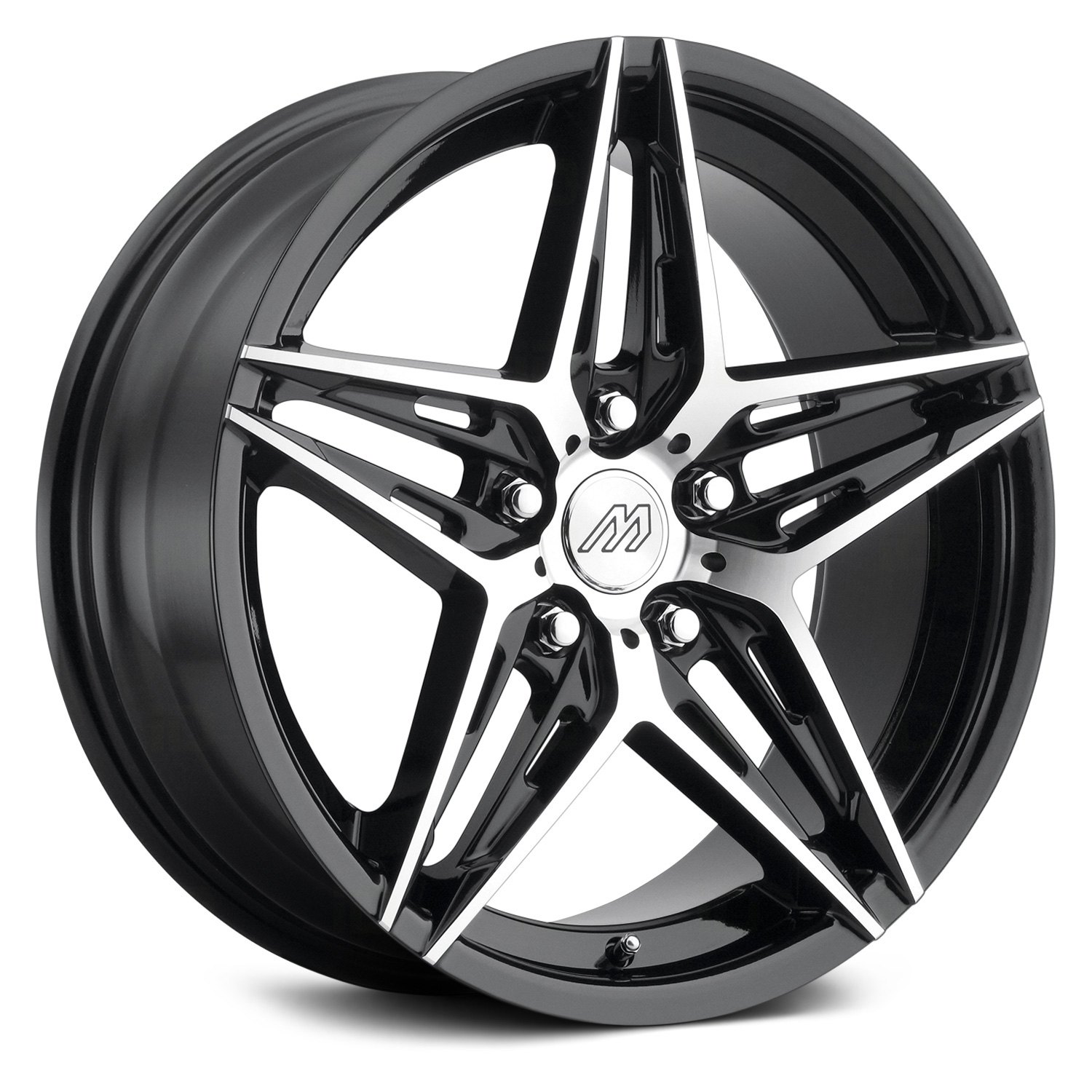
Alloy wheels are typically created via casting or forging, though other production methods throughout their history have included gravity casting. In the end, they’re touted for being lighter than steel wheels, and those that are forged are generally also more durable than those that are cast. Whether created via casting or forging, the manufacturing methods allow complex designs to be created, which helps alloy wheels achieve the look that many drivers yearn for to complement the styling of their vehicles. Alloy wheels are generally more expensive to produce than steel wheels, and because of this they’ve historically been more of an aftermarket option. However, that changed around the turn of the century, and more automakers are currently offering alloy wheels even on certain trims of compact, sub-compact and budget vehicles.
Components which are manufactured from cast alloys have been widely utilized in automotive industry due to their high strength-to-weight ratio, low cost, and better fuel consumption. The strength of the spot welds in the unibody vehicle structure determines the integrity of the structural performance during the vehicle operations. Automotive wheels have a complicated geometry and must satisfy manifold design criteria, such as style, weight, manufacturability, and performance. Nowadays, reduction in wheel weight is a major concern in the wheel industry. Optimization of milling is very useful to reduce cost and time for machining mold. The efficiency of machining operation especially milling process is always determined by the material removal rate, tool wear and cycle time.
- Alloy Wheel Advantages
-
The alloy material has many advantages over others, many of which translate over into wheel benefits as well. Here’s a look at some of the top benefits to outfitting a vehicle with alloy wheels:
- Aesthetics.Alloy wheels typically just look far more stylish than others. This is largely due to a more complex manufacturing process used to create alloy wheels, which lends itself to more creative and even custom designs. Put a steel wheel up against an alloy wheel, and it’s clear which one is better looking.
- Performance.Looks aren’t the only thing that alloy wheels have going for them, they can also help improve vehicle performance. For instance, alloy wheels are significantly lighter than steel ones, which helps a vehicle in terms of fuel economy, braking and accelerating. Steering and handling is also often improved with alloy wheels. The lighter wheels also help limit wear and tear on other vehicle components, like the engine, transmission, and suspension. Alloy wheels also permit better heat conduction and dissipation, which directly translates to better braking. These enhanced heat dissipation properties also mean that a vehicle’s tires are less likely to prematurely wear out, as they’ll remain cooler.
- Lightweight.Though this benefit was mentioned in the above point, it’s worth mentioning again – alloy wheels are significantly lighter than their steel counterparts, which helps improve a vehicle’s fuel economy, reduce strain on various components and enhance its handling. Keep in mind that every 10 percent reduction in weight that can be achieved translates to up to a 7 percent enhancement when it comes to fuel economy. That’s big.
- Corrosion-resistant. A final key benefit to alloy wheels – and the alloy materials – is that they are more corrosion- and rust-resistant compared to steel and other metals. After all, if you’re going to pay more money to have alloy wheels – whether via aftermarket option or on the lot – it’s going to behoove you that they’re going to last for a while. Thanks to the material and the way that they’re manufactured, you can count on them to look good and be long-lasting.
- Design and material selection considerations
-
Design or material selection considerations can be the next:
- Stiffness. Structural stiffness (design dependent) is the basic value to consider when designing an aluminium wheel to achieve at least the same vehicle behaviour as with an equivalent steel wheel.However, material stiffness (Young’s modulus) is very little depending on alloy and temper.
- Static behaviour. Yield strength is considered to avoid deformation under maximal axial efforts (accelerations and braking) and radial ones (plus turning). Misuse cases are considered in relation to tensile strength. Yield tests under pressure are also conducted to check this behavior.
- Fatigue behaviour. This is the most important parameter for dimensioning. Finite element software is systematically used during design. Service stresses are considered, including multi-axial stresses as of recently. Rotary bending and rim rolling tests are used to verify these calculations.
- Crash worthiness. Mainly, but not only, linked to stress/strain curves in large displacements. Crashworthiness is beginning to be now simulated. However, impact tests systematically check the resistance to accidental collisions such as pavement impacts.
- Cooling. Whatever the type of wheel (cast, forged, strip, mixed wrought-cast, etc.), aluminum dissipates heat more quickly than steel. Further, aluminum wheels act as a very efficient heat sink. This results in significant improvements in braking efficiency, and a reduced risk of tire overheating.
- Style – weight saving. Reduction of the unsprung weight of vehicles is a key priority. A compromise has to be accepted if styling requirements dictate different production technologies.
- Dimensional. A perfect mass balance is a key parameter to avoid significant vibrations. As a result, cast and forged wheels are machined. Lightness also reduces vibrations of aluminum sheet wheels.
- Corrosion. Cast and forged wheels are painted or lacquered after chemical conversion. Strip wheels are polished and varnished or also painted.
- Manufacturing
-
Wheel manufacturing process is dominated by aluminum. Aluminum penetration in wheels was in the year 2000 for European vehicles about 30 to 35%, compared to largely more than 50% in USA and Japan. This is representing more than 14% of the average aluminum content of a vehicle and is expected to rapidly increase. In the US, the repartition of aluminum in wheels was in the year 1999: 82% cast, 11% forged (including all vehicles), 4% for sheet and 3% for plate. In Europe, the share of casting is slightly higher (more than 85%) due to the lesser extent of forged wheels for trucks (including light ones). However, many developments are on the way to reduce weight of present aluminum wheels without fully sacrificing style. With this purpose, a really attractive compromise could consist in cast central discs (or forged when competitive), assembled (mainly by welding) to extruded or laminated rims.
- Casting processes
-
The main advantages of aluminum cast wheels, when compared to steel or other aluminum wheels are:
- A high styling versatility
- Weight (equal or less than steel without styling)
- Dimensional accuracy (mass distribution)
- Recycling ability
- Static and dynamic behaviour
The major casting processes for wheels are:
- Low-pressure die casting (mainly)
- Gravity permanent mould casting (less used)
- Squeeze-casting process (marginally used)
Rarely used are the following processes:
- Counter pressure die casting
- Casting-forging (Cobapress)
- Thixocasting
- Processing after casting
-
After casting, wheels are 100% x-ray inspected and then eventually heat-treated prior to machining. This step is followed by a pressure tightness testing before drilling valves and bolt/nut holes. After a cosmetic inspection wheels are then painted or varnished. This process includes pretreatment (degreasing, phosphatizing and/or chromatin, etc.). 3D dimensional controls, dynamic balance checking, bending and rim roll fatigue as well as impact tests are statistically performed.