
Tire Maintenance
- How To Read Your Tire Sidewall
- The D.O.T. Number
- Checking air pressure
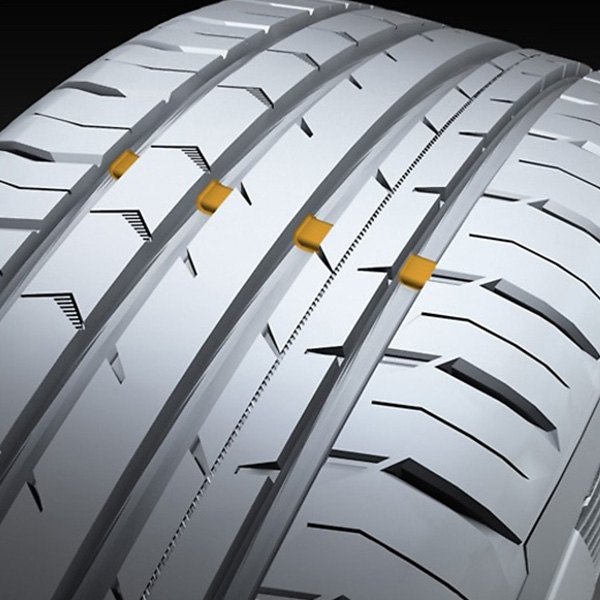
- Tread wear indicators (TWI)
- Tire Storage
Metric or P-Metric Sizing
A tire sidewall showing its size in metric lists the width first, then the sidewall height (shown as a percentage of the tire width), followed by a letter to designate what type of carcass construction, and lastly the wheel/rim size.
Let’s look at the sidewall of this 245/245ZR17 G-Max AS-03:
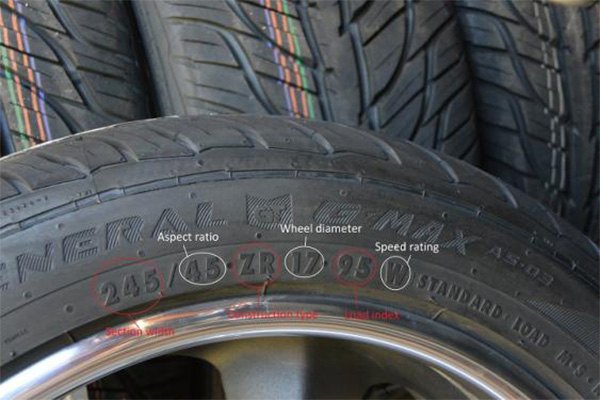
- 245 is the section width (mm)
- 45 is the aspect ratio (%)
- ZR with “R” representing radial construction & “Z” showing it’s rated for 149mph +
- 17 is the wheel diameter (inches)
- 95 is the load index
- W is the speed rating
This G-Max tire is 245mm wide (about 9.6 inches wide), 25.6 inches tall, and fits a 17-inch wheel. It has a carrying capacity of 1,521 lbs and a maximum operating speed of 168 mph. Note that metric sizing uses both millimeters and inches, and requires conversions. Also, the speed rating references the testing and does not imply that the consumer drive at these high rates of speed.
U.S. Sizing
Certain light truck and heavy-duty tires use American (standard or imperial) measurement in inches. The tire height (or diameter) is most often listed first, followed by the section width, then the carcass construction type, and lastly the wheel size that the tire fits.
Let’s take this 33x12.50R17 Grabber AT2 for example:
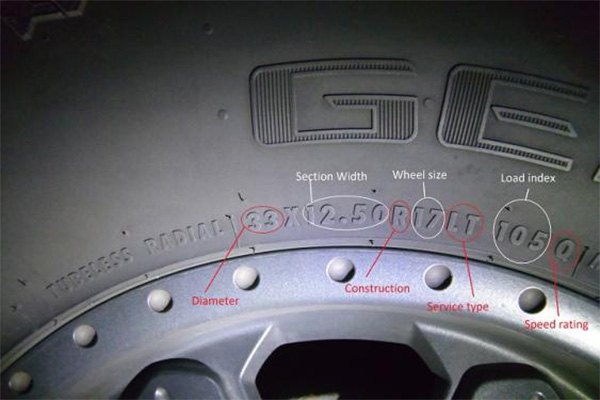
- 33 is the tire height, or diameter (inches)
- 12.50 is the section width (inches)
- R represents the carcass construction (radial)
- 17 is the wheel diameter (inches)
- 105 is the load index
- Q is the speed rating
- The tire is 33 inches tall, has a width of 12.50 inches, and fits onto a 17-inch wheel. It has a carrying capacity of 2,039 lbs and maximum operating speed of 99 mph.
Tire diameter
For American standard sizing, the tire height, or diameter, is listed directly in inches. On a metric tire, you’ll need to do some math. For metric sizing, take the section width and convert it to inches (divide by 25.4), then multiply that by the aspect ratio (shown as a percentage) to get the sidewall height. Next, take the sidewall height, double it, add the wheel diameter, and you’ll have the diameter of a metric tire.
Section width
This is shown in either millimeters or inches, but it refers to the overall carcass width, not the tread width.
Carcass construction
Most light truck and passenger vehicle tires built today are built with radial construction (“R”). This is shown before the wheel size. There are three basic types you can find produced today:
- R Radial
- B Bias belted
- D Diagonal bias
Wheel size
Wheel size is shown in inches, regardless if it’s a metric or American sized tire.
Load Index
The load index shows the tire’s weight carrying capacity. While the load index is a numerical value, it is just a representative symbol for a certain carrying capacity and does not numerically correspond to carrying capacities (Example: Load index 85 indicates a carrying capacity of 1,135 pounds, not 85 pounds or 850 pounds or 8,500 pounds).
Speed Rating
Speed ratings are represented by letters ranging from A to Z. Each letter coincides to the maximum speed a tire can sustain under its recommended load capacity. For instance, S is equivalent to a maximum speed of 112 mph. Even though a tire can perform at this speed, General Tire do not advocate exceeding legal speed limits.
Speed rating Maximum operating speed
Rating Symbol Speed P 93 mph Q 100 mph R 106 mph S 112 mph T 118 mph H 130 mph V 149 mph W 168 mph Y 186 mph (Y) Above 186 For tires with a maximum speed rating above 149 mph, a ZR may appear in the size designation. For tires above 186, a ZR must appear in the size designation, and will include a Y speed symbol in brackets.
Service Type
Prior to (or sometimes following) the tire size—on both American and metric sizing—a tire may or may not have a letter showing the service type. Most consumers will deal with tires stamped with either “P” standing for passenger vehicle tire, or “LT” standing for Light Truck. But there are a number of others.
Here’s a quick reference guide:
- P Passenger tire, often referred to as “P-metric”
- LT Light Truck tire
- T Temporary tire, or spare tire
- ST Trailer tire (Special Trailer service)
- C Commercial tire
How can I find the D.O.T. number for my tires?
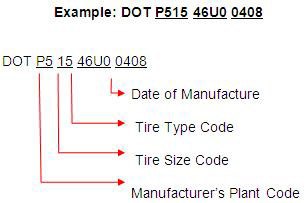

Tires made for use in the United States are required to have the DOT serial number and date located on one sidewall of the tire near the rim. The sample shows a tire manufactured during the 4th week of 2008. If the date of manufacture is not present on the outside, it will be located on the opposite side of the tire.
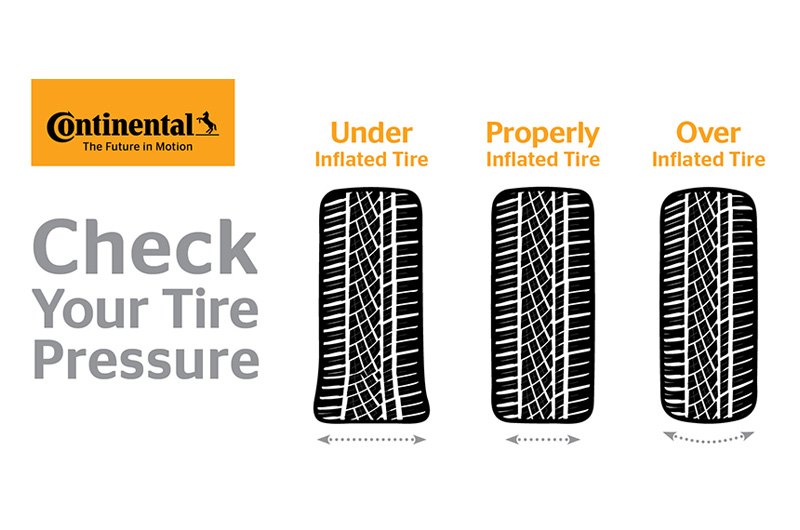
Check the pressure in your tires at least monthly and before long trips when your tires are cool (after the vehicle has been stopped 3 hours and then driven less than one mile).
Adjust inflation pressure to the vehicle manufacturer's specified pressure while tires are cold. Never "bleed" or reduce air pressure when tires are hot. It is normal for inflation pressure to build up in your tires as a result of driving.
Use an accurate tire gauge to check pressure and maintain it at the level recommended by the vehicle manufacturer.
Don't forget to gauge inflation pressure in your standard size or temporary spare tire (your temporary spare requires a higher inflation pressure). Remember: under inflation is the most common cause of sudden air loss or sudden failures in any kind of tire.
Tread wear indicators - Cross ribs evenly spaced around the circumference of the tire in the main longitudinal tread grooves which become level with the tread surface when the remaining tread depth is down to approx. 2/32", (1.6 mm).

If stored in unfavourable conditions, or if not properly handled, tires change their physical properties. This can lead to a shorter service life, and the tires may even deteriorate to the extent that they become unusable. Correctly stored and handled tires retain their properties virtually unchanged for several years.
- Tires should never be stored in the open air, even under a protective covering.
- Tires should be stored in a cool, dry area, moderately ventilated and away from direct sunlight.
- Storage temperature must not exceed normal room temperature. In heated areas the tires must be shielded from the heat source.
- The tires must be protected from direct sunlight and continuous changes of air. As ozone is particularly damaging, to tires the storage area must not contain any devices (electric generators or compressors) that generate ozone.
- Solvents, fuels, lubricants, chemicals etc. should not come into contact with tires.
- If possible, store tires vertically rather than stacking horizontally to reduce stress and tire distortion. Also, place on a piece of clean wood and not directly on the ground.
- If you don't store your tires in individual bags, and instead stack them, make sure to stack them "white to white" and "black to black" to prevent staining of the white rubber as white and black rubber are compounded differently.
Loose tires or tires mounted on rims, but not installed on a vehicle
- Mounted tires should preferable be inflated to 15 psi.
- Be sure to adjust the tires to the recommended inflation pressure before mounting on the vehicle.
Tires installed on a vehicle in long term storage
- If possible, store the vehicle on blocks to remove all weight from the tires and cover the tires to protect them from environmental exposure.
- If the vehicle cannot be blocked up from the storage surface, completely unload the vehicle, so minimum weight will rest on the tires. The storage surface should be firm, reasonably level, well drained, and clean.
- In cases where the tires will be supporting the vehicle, it is permissible to inflate the tires to the maximum pressure listed on the sidewall. Be sure to return the inflation pressure to recommended usage pressure before operating the vehicle.
- In cases where the tires will be supporting the vehicle, it is recommended that the vehicle be moved every month to minimize ozone cracking in the bulge area and also to minimize a "flat spot" from developing. If the tires do develop "flat spots," they will usually disappear in a short period of service.
Before Returning Tires (including full-size spares) to Service
- Inspect tires to be sure they are clean and free from foreign objects.
- Remove any water that has collected in an unmounted tire.
- When using a spare tire, have it checked for proper inflation pressure and condition such as cracking in the tread or sidewalls, weather checking, and other signs of prolonged storage by a full-service tire dealer, before placing it in service on the vehicle.
Full-Size Spare Tires
Full size spares, of the same size and type as the road tire, require special maintenance considerations. The spare tire position on the vehicle is frequently not suitable for long term storage for full size spare tires that are not properly maintained /rotated as recommended. Tires contain special ingredients such as waxes, etc. to protect the rubber. These special tire ingredients normally migrate throughout the tire when in service and protect the tire against deterioration caused e.g. by sunlight, humidity and ozone. Therefore, full size spares that are left for prolonged periods of time in the spare tire position should be inspected, properly inflated just like road tires, and included in the regular tire rotation.