
Buying New Tires
Cooper makes it easy to tell when you need new tires and provides helpful tips on what to consider as part of your next tire purchase.
- Do I Need New Tires?
- Tire Size
- Weather
- Driving Style
- Maintenance
Are my tires too worn? The Penny Test and other considerations

If you are wondering if your tires are worn but don’t know how to check them yourself, the easiest way is to perform the penny test. The tread on your tires should be more than 2/32 of an inch deep. To check, insert a U.S. penny into the tread of your tires with Lincoln’s head facing down. If the top of Lincoln’s head is covered by tread, there is at least a minimum acceptable amount of tread. If the top of his head is visible at any point, your tires are worn out and need to be replaced.
However, even before the tread is worn, tires should be regularly inspected for cuts, cracks, splits, punctures, bulges and uneven wear patterns. Uneven tread wear can include more wear on one tread edge than the other, a rippled pattern of high and low wear or even exposed steel wire within the tire. These are serious conditions that need to be checked by a tire professional, who can help you to determine if a new tire is needed.
Be sure to check the age of your tires too. Cooper recommends that all tires, including full-size spares, that are 10 or more years from their date of manufacture, be replaced with new tires. In some cases, a vehicle manufacturer may have a recommendation for tire replacement earlier than 10 years. If so, you should follow those vehicle manufacturer's recommendations for their vehicle.
Know the size of tires that your vehicle requires

So, you’ve decided you need new tires. Much like shoes, tires come in many shapes and sizes, and it is critically important that you know the right size of tires for your vehicle. Finding your tire size is fairly easy. You can find the right tire size for your vehicle by using our online tool or you can find the tire size by consulting the information placard which can be found on the driver’s side doorjamb, glove box or fuel door. Another place to find this can be in the vehicle manufacturers’ manual.
The placard contains not only your tire size, but all technical specifications relating to your tire including the load carrying capacity (the maximum weight or load allowed for a tire), speed rating (the maximum speed allowed for a tire) and recommended inflation pressures.
The new tires must have a maximum load carrying capacity equal to or greater than the maximum load carrying capacity specified on the tire placard on the vehicle. In addition, refer to the tire placard for the recommended inflation pressures of the tires. These pressures must be maintained as a minimum. Do not exceed the maximum pressure indicated on the tire sidewall. Tires which are loaded beyond their maximum allowable loads will build up excessive heat that may result in sudden tire destruction. If the vehicle tire placard and/or owner's manual specify a particular speed rating for the tires, the new tires must have the same or higher speed rating to maintain vehicle speed capability.
If you don’t have the information handy to determine your tire size, our tire guide can at least help you narrow down the choices by car/minivan, SUV/CUV or truck/pickup truck. And you should always consult a tire professional to have all your questions answered before making any tire purchase.
Determine your needs based on the weather

In this step you can significantly narrow choices by determining if you want dedicated winter tires, dedicated summer tires (usually for sports and high performance cars and are not meant for cold weather or snow), or all-season tires.
Some tips to determining the difference between all-season and dedicated winter tires: if you live in an area that sees all four seasons, and the winter snowfall is light, all-season tires might be a great option for you. However, if you live in an area that routinely experiences extremely cold temperatures and/or heavy snowfall, you should consider having a set of dedicated winter tires.
Think about your driving style

There are many factors to consider when selecting tires to fit your needs, such as ride comfort, handling, traction, performance and price, to name a few. The options can be overwhelming, but you can narrow your choices significantly by identifying the factors most important to you.
Some typical questions to ask:
- Do you have a long commute or take a lot of road trips? If so, you’ll want to consider the expected mileage of the tires, ride comfort, fuel efficiency and if the tires are quiet.
- Do you have a sports car or do a lot of spirited driving? Tires that focus on handling and are developed for high performance cars may be what you need.
- Do you drive in a lot of rain? You may want to consider the wet braking distance of the tires.
- Do you do a significant amount of off-road driving? If you only occasionally drive off-road, say down a dirt trail to go camping, then all-terrain tires might be a good option. However, if you spend a significant amount of time crawling over rocks and through mud tackling adventure, then dedicated off-road tires may be what you need.
- Consider the mileage warranty. Mileage warranties can be an important consideration when comparing tire options.
Maintenance
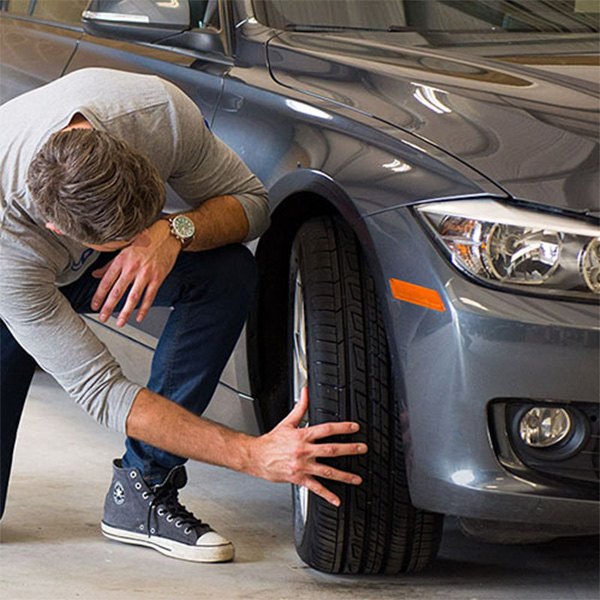
Now that you are a new proud owner of a new set of tires, it is important to maintain them. The four tires on your vehicle are the only parts to come in contact with and keep you connected to the road. For safety and good performance, you must properly care for, maintain and inspect your tires. Here at Cooper® we want you to maintain your tires in order to receive optimum performance, to get the full life from your tires, as well as to help keep you safe.
Some final thoughts
- New is best! - Cooper recommends that you never purchase or install used tires. Not all tire damage that can lead to tire failure is outwardly visible. Such damage can eventually lead to tire failure. Used tires, especially tires with an unknown history, should be considered dangerous.
- Buying all four is the safest! - When replacing tires on a vehicle, it is recommended and preferred that all four tires be replaced at the same time. However if you can only purchase two new tires at a time, the new pair should always be installed on the rear axle for both front and rear-wheel drive vehicles. Many people assume that new tires should go on the front, especially if they have a front-wheel drive vehicle; however, this is not correct.