
BFGoodrich - Driving Tips
- Oversteering/Understeering
-

When you take turns in both wet and dry conditions (but especially wet), you can easily lose control by oversteering or understeering. Learn what these problems are and how to beat them by watching the video below.
Note: A “cool” form of oversteering is called drifting. It’s a technique where the driver intentionally oversteers, but maintains control around a corner at high speeds. Drifting competitions are held around the world. Lawyer’s Note: BFGoodrich does not condone drifting - unless under the supervision of a professional and within a safe, controlled, professional course or environment.
- Winter Driving
-

You don’t have to live at the North Pole to benefit from winter tires. If you frequently encounter snow or ice, or if the temperature is consistently below 45 degrees, well, you may want to think about moving. However, if you like that kind of weather, your tires are going to need the extra grip and turning capabilities that only winter tires can deliver. Even if you have 4-wheel drive or all-wheel drive, you still need winter tires on the front and back to combat the elements and stay safe.
WINTER DRIVING TIPS
Driving safely in winter conditions requires knowledge, skill and four winter tires with proper tread.
- Drive with two hands. Always.
- Before turning, slow down while traveling in a straight line.
- While turning, maintain a slow and regular speed. If you accelerate suddenly, your tires could lose traction.
- While turning, don’t make any sudden steering wheel movements.
- Only brake in a straight line before the turn, and do so gradually. Do not brake during the turn.
- Increase your following distance from other cars significantly.
- If your wheels lock and slide, release the brake pedal to recover traction, then slowly brake again.
- Try to avoid changing lanes in slush. It’s safer to change lanes when slush is not on the road.
- If using chains, check for proper clearance between the tire and the vehicle, as well as the clearance between dual tires.
- Wet Driving
-
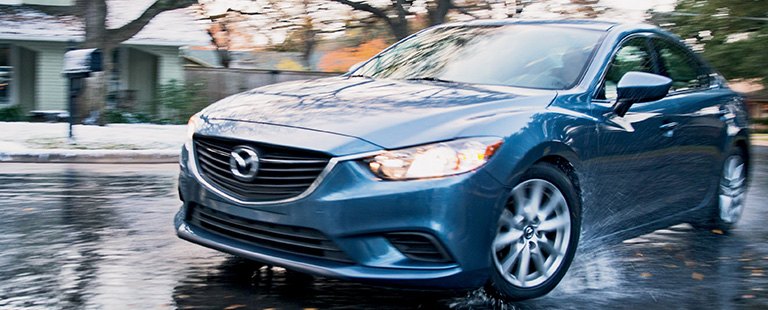
There’s a trick to driving in wet conditions. You ready? Here it is. SLOW DOWN. Seriously, if more drivers would heed this advice in the rain, accidents would dramatically decrease. Wet weather doesn’t get the same attention as snow and ice, but it should. Wet roads present similar dangers-like less grip and longer stopping distance.
To watch wet weather driving techniques, watch the video below, which was shot on a professional wet track with a professional driver.
WET DRIVING TIPS
- Make sure your tires offer the proper amount of tread (click here to learn the Penny Test).
- Own tires that offer maximum grip in wet weather, like the BFGoodrich® g-Force Super Sport A/S®.
- Drive with two hands. Always.
- Slow down before turning, and maintain a consistent speed throughout the turn.
- While turning, don’t make any sudden steering wheel movements.
- Only brake in a straight line before the turn, and do so gradually. Do not brake during the turn.
- Increase your following distance from other cars significantly.
- If hydroplaning, do not accelerate or brake suddenly. Keep your foot lightly on the gas and steer the car forwards until your tires regain traction.
- Road Trips
-

Luggage is packed. Gas tank’s full. GPS is set. Sunglasses and seatbelt are on. You’re ready to roll, right? Wrong. You still need to check your tires. After all, they’re the only thing between you and the open road. Just follow this simple checklist and you’ll know your tires are fully prepped for your road trip:
ROAD TRIP CHECKLIST
- Make sure your vehicle is up-to-date on all inspections.
- Check your tires’ air pressure and compare to the sticker in your door jamb.
- Check your tires’ tread both visually and with the penny test.
- Gas Mileage & Tires
-
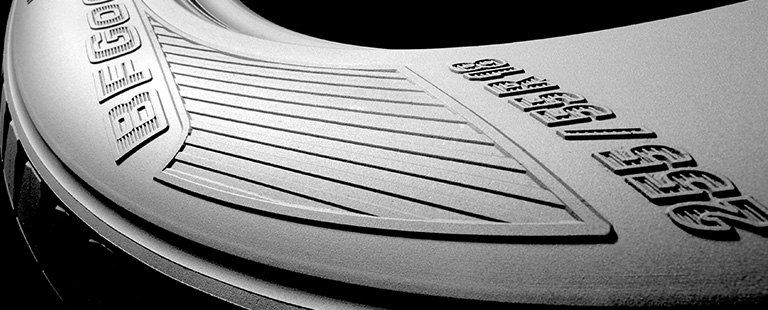
Some tires grip better. Some last longer. But did you know some tires are actually designed to give you better gas mileage? Now, there’s a bonus.
The most important gas mileage features in a tire are:
PROPER AIR PRESSURE
Under-inflated tires are one of the biggest causes of excess fuel usage in the world. The American Automobile Agency has stated that operating a vehicle with underinflated tires can result in a 25-percent reduction in fuel economy. Ouch.
TIRE CONSTRUCTION
The lower the rolling resistance, the less effort from your engine, the better the gas mileage. This is why passenger tires offer better gas mileage and longer tread life than SUV/Light Truck tires and winter tires, whose heavier tread patterns are designed with maximum traction in mind.
- Off-Road Driving
-
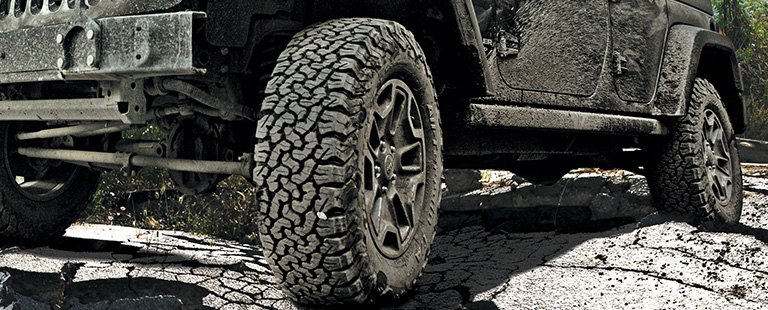
If you’re going to learn, learn from the experts. BFGoodrich® Tires has 27 SCORE Baja 1000 wins and 70 overall four-wheel SCORE Desert Race Titles. So yeah, we own the off-road. Off-road driving can be fun, especially when it’s intentional. But, it’s an entirely different kind of driving altogether. We recommend you understand the basic techniques, so you don’t get stuck in a precarious situation.
SAND, SNOW AND MUD
- Deflate your tires a bit to increase your tire footprint for better traction.
- Use steady momentum all the way through.
- In sand and snow, if your wheels start to spin, ease off the gas a little to let the tires slow down and regain traction. In mud, maintain some wheel spin to help clear mud from the drive tires.
ROCKS, LOGS AND DITCHES
- Approach obstacles at an angle, so that only one tire engages, leaving the other three tires on solid ground for traction.
- To protect the fragile components on the underside of your vehicle, it’s best to drive over an obstacle by placing one tire on it, then gently driving over it.
HILLS
- Approach the hill straight on, so the weight is distributed equally, providing equal traction to all four tires.
- Use as high a gear as the vehicle will handle comfortably on the hill. If the gear is too low, you will spin the tires. If it’s too high, you won’t have enough power.
- Always prepare for a failed climb and have an escape plan.