
Frequently Asked Questions
- Where do I find the Snell, FIA or SFI rating on my helmet?
-
The homologation label is located on the inner liner of the helmet in the back under the fit pad. Simply lift the pad to locate label. Please note removing the label will void the homologation.

- Why do I feel forehead pressure when I try on the helmet for the first time?
-
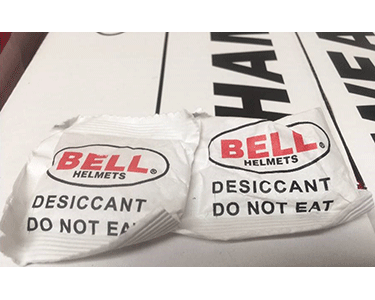
Make sure to check under the fit pad and remove any desiccant (moisture absorbing) packets. These packets can make the helmet feel like it is incorrectly sized or cause pressure points and tightness in the forehead area. If no desiccant packets are present, try the helmet on a second time for an extended period - keep in mind that padding breaks in over time. If the helmet is still too tight, have someone re-measure your head to confirm sizing – you may need to move up to the next size. If you are going to wear a head sock or balaclava with the helmet, Bell recommends using the head sock when trying on the helmet for proper fit.
- Will my Bell helmet work with head and neck restraint devices?
-
For the Snell SA 2015 standard, all Bell models are produced with M6 terminal hardware incorporated into the helmet shell and certified for use with head and neck restraint devices. Models designed specifically for karting will not include M6 terminals and are not appropriate for head and neck devices. Bell recommends contacting the head and neck restraint supplier to confirm the anchor system required for the specific device.

For Snell SA2010 or older models, many helmets are pre-drilled and do not have M6 terminal hardware in the shell. For pre-drilled models, the head and neck restraint device will have an anchor option with back plate hardware. Please remember when installing, the back plate anchor hardware must be inserted between the shell and the helmet liner with the threads matched up to the pre-drilled hole in the shell. Please contact the head and neck restraint manufacturer for specific instructions or contact Bell Racing if you have questions.
Pre-Drilled - Helmets have removable rubber plug that will expose pre-drilled hole

- How do I know what helmet model I have and what shield it takes?
-
Every Bell racing helmet has the model name and date of manufacture stamped into the chin strap d-ring. The shield type and date of manufacture is stamped on the side of the shield (driver's right)

- How do I locate the size of my current helmet?
-
There is a size label sewn into the back of the helmet’s interior fit pad. To locate the label, simply lift the interior padding at the very back of the helmet and look on the foam side of the fit pad.

- How Can I Tell If My Helmet Has Been Damaged?
- If at any time you are unsure or have questions about your Bell helmet’s condition, you can send it to Bell for a free inspection. Their technician will thoroughly inspect your helmet, note any damage found and make recommendations on whether the helmet should continue to be used.
- Can I Use My Bell Bicycle Helmet for Other Sports/Activities Besides Cycling?
- Each Bell helmet is certified for a specific activity and should only be used for that sport. Almost all the helmets listed on the Bell Bicycle site are ONLY for cycling, with the exception of the Segment, Faction and Fraction helmets which are certified for skate use as well as cycling.
- Can I Paint My Helmet?
- Bell does not recommend paints or solvents of any kind be used on the helmets. They can damage a helmet so that its protective capabilities are significantly reduced.
- How Often Should a Helmet Be Replaced?
-
Bell recommends replacing the helmet every three to five years depending on the amount of use and its condition. If the helmet has been involved in an accident, it should be inspected carefully and replaced if there are any signs of shell delamination or liner compression. If the driver loses consciousness during an accident the helmet should be replaced immediately. Bell offers free inspections to customers to help determine if the helmet is sound to continue to use as head protection.
- What Do I Do If My Helmet Becomes Damaged?
- Helmets don’t last forever. If the helmet is visibly damaged (cracked outer shell, crushed or cracked foam liner or any other damage) don’t use it. Some or all of the helmet’s protective capacity is used up when impacted, and the damage to a helmet is not always visible.
- How Do I Store My Helmet?
- After each use, allow the helmet to air dry and then store it in a cool, dry place where it won’t get damaged. Note: excessive heat can damage your helmet. For example, in direct sunlight a dark gear bag, the interior of a car, or an automobile trunk can get hot enough to cause heat damage (damaged helmets will appear to have uneven or bubbly surfaces). Therefore, when not being used for a period of time we recommend that the helmet be placed back into its box or case and stored in a cool, dry place.
- How Do I Take Care of My Helmet?
-
Cleaning Your Helmet
Helmets are made of materials that can be damaged by many commonly available cleaners. Petroleum based solvents or cleaners are especially dangerous. They can damage a helmet so that its protective capabilities are significantly reduced. Many times this damage is not visible. For best results, clean the helmet using a soft cloth or sponge, warm water and mild soap (such as a mild dish soap).
Lice Removal- Step 1 – Do not use spray of any type
- Step 2 – Place the helmet into an airtight plastic bag for 48 hours. Then, remove the pads and use a soft cloth or sponge, warm water and mild soap to clean the surface.
- Step 3 – Discard the pads and plastic bag (keep bag out of reach of children due to suffocation hazard) and visit your local Bell dealer for replacement pads.